
Water Sports
Canyoning Backpacks: Drainage, Fit, and Material Considerations
Explore key features of canyoning backpacks, including drainage, secure carrying, durable materials, and design considerations for outdoor adventure operators.
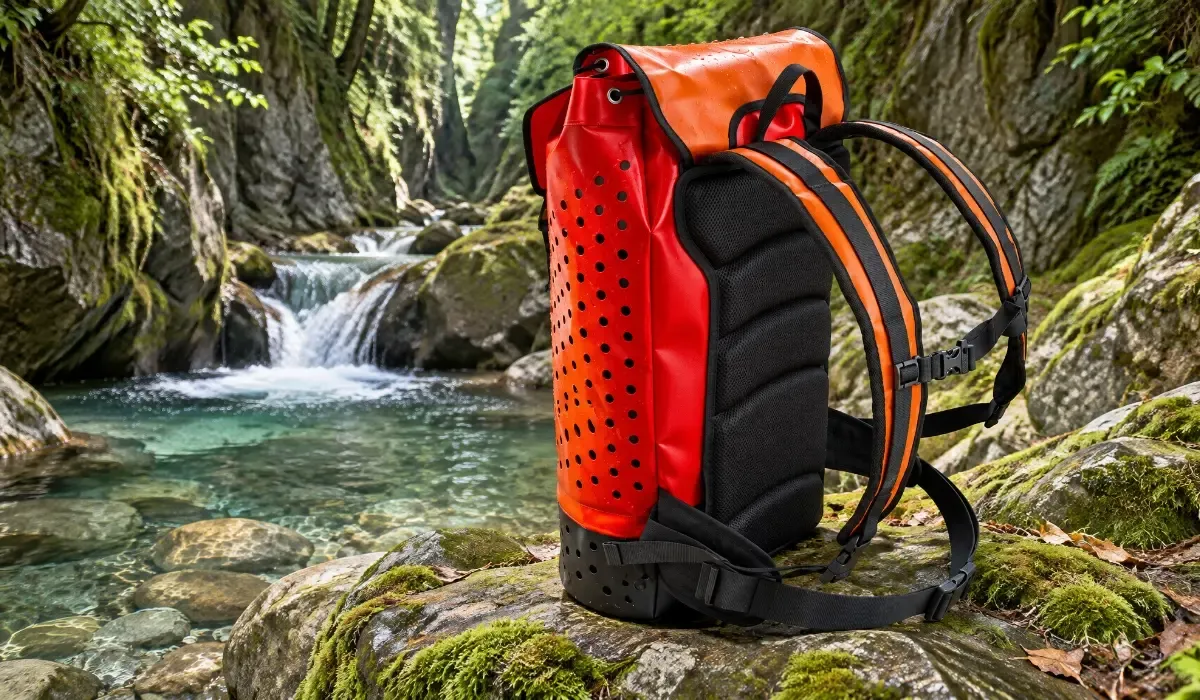
Canyoning Backpacks: Drainage, Fit, and Material Considerations
Canyoning involves moving through natural watercourses, descending waterfalls, swimming through pools, and navigating rocky terrain. Unlike ordinary hiking, these activities expose backpacks to continuous water contact, abrasion, and frequent handling.
This is why a canyoning backpack needs a different design approach from a conventional outdoor backpack.
Rather than focusing on keeping water out, most canyoning backpacks are designed to allow water to drain quickly while keeping equipment secure and comfortable to carry.
For outdoor adventure operators, canyoning equipment brands, and retailers, understanding these functional requirements is essential when selecting or developing a canyoning gear bag.
So, what makes a good canyoning backpack?
Let's look at the key design considerations.
1. Drainage Design: Why Canyoning Backpacks Need Drainage Holes
Drainage is one of the most important features of a canyoning backpack.
During canyoning activities, a backpack may be submerged in water multiple times. If water enters the bag but cannot escape easily, it can accumulate inside and make the backpack unnecessarily heavy.
A drainage backpack for canyoning is designed to allow water to flow out rather than remain trapped inside.
Why Is Effective Drainage Important?
There are several practical reasons:
- Reduced Water Weight: Water accumulation can significantly increase the overall carrying weight. Drainage openings help reduce retained water.
- Better Equipment Management: Faster drainage helps prevent water from remaining inside the bag after swimming or submersion.
- Improved Handling: A backpack that does not retain excessive water is easier to carry and manage during transitions between different sections of a canyon.
- Reduced Water Retention: Allowing water to escape can help reduce prolonged moisture accumulation inside the bag.
Where Should Drainage Holes Be Placed?
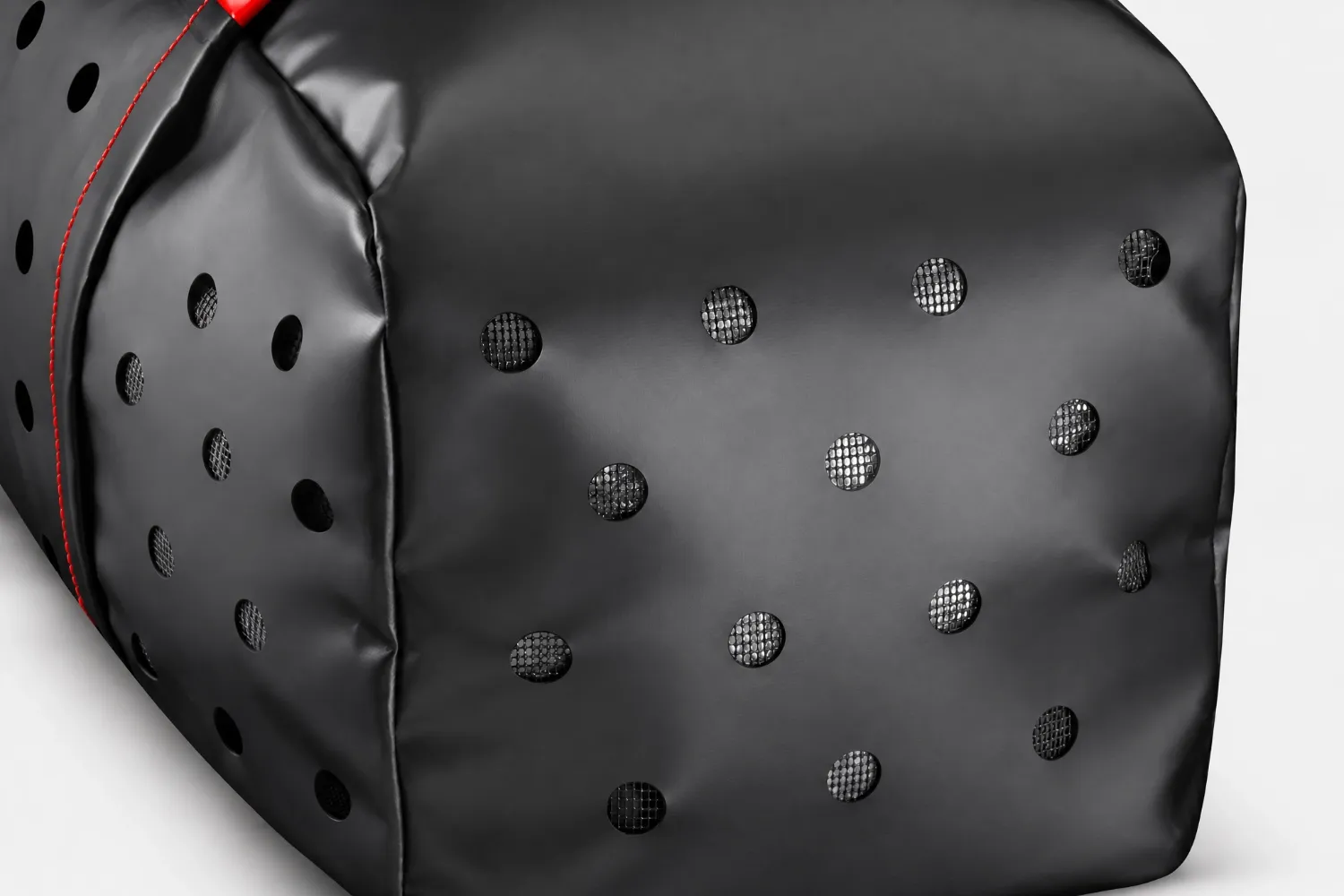
Drainage holes are commonly positioned around the lower section or bottom of a canyoning backpack, where water can naturally collect.
Several design details should be considered:
- Drainage openings should be appropriately sized for effective water flow.
- Their placement should support drainage when the backpack is in its intended carrying position.
- Reinforcement around the openings can help reduce the risk of tearing.
- The drainage design should not compromise the strength of the surrounding material.
Some designs use multiple drainage openings to help water escape more efficiently.
However, the number, size, and location should be determined through practical testing rather than simply adding more holes.
Important: A Canyoning Backpack Is Not a Waterproof Dry Bag
This distinction is particularly important.
A conventional waterproof dry bag is designed to prevent water from entering its storage compartment.
A canyoning backpack with drainage holes serves a different purpose: it allows water to enter and exit.
Therefore, it should not be marketed as a fully waterproof backpack.
For canyoning equipment that must remain dry, such as phones, documents, or sensitive electronics, users should consider separate waterproof pouches or dry bags stored inside or attached to the backpack.
2. Shoulder Straps and Carrying Fit: Stability in Wet Conditions
A canyoning backpack needs to remain stable when users walk, climb, swim, and move across uneven terrain.
Its carrying system should be designed for wet conditions and frequent movement.
Adjustable Shoulder Straps
Adjustable shoulder straps help users achieve a more secure fit across different body sizes.
The straps should be wide and durable enough to distribute the load comfortably without creating excessive pressure.
For commercial canyoning operations, adjustable designs are particularly useful because equipment may be shared among participants.
Chest Straps
An adjustable chest strap helps prevent shoulder straps from moving outward during walking and climbing.
It can improve carrying stability, especially when the backpack contains heavier equipment.
The buckle should be easy to operate, even when users are wearing gloves.
Waist Belt or Hip Support
Depending on the backpack capacity and intended use, a waist belt may help distribute weight and reduce pressure on the shoulders.
However, canyoning backpacks should be evaluated in combination with the user's harness and other safety equipment.
A waist belt should not interfere with harness positioning, attachment points, or emergency release requirements.
Back Panel Design
Unlike traditional hiking backpacks, canyoning backpacks do not always need thick padded back panels.
Heavy padding can retain water and increase drying time.
A simpler, durable back panel may be more practical for some canyoning applications.
The right design depends on the expected carrying load, activity duration, and user requirements.
3. Material Selection: Durability for Wet and Rocky Environments
Material selection directly affects the durability, weight, flexibility, and overall cost of a canyoning backpack.
Because these bags are exposed to water, rocks, friction, and repeated handling, material durability is particularly important.
PVC Tarpaulin
PVC tarpaulin is a practical option for heavy-duty canyoning backpacks.
Its advantages include:
- Good resistance to water exposure.
- Suitable abrasion resistance depending on material thickness and construction.
- A relatively firm structure.
- Compatibility with suitable heat-welding processes.
- Practical maintenance and cleaning.
For rental operations and frequently used equipment, a reinforced PVC construction may be worth considering.
However, thicker PVC materials can increase backpack weight and reduce flexibility.
TPU-Based Materials
TPU-based materials offer another option for waterproof outdoor bag construction.
Depending on their fabric backing and formulation, they can provide flexibility and good resistance to water exposure.
They may be considered for lighter-weight product concepts.
However, material selection should account for abrasion requirements and the specific construction method.
Nylon and Polyester Fabrics
Nylon and polyester fabrics are widely used in outdoor backpacks.
They can offer flexibility and relatively low weight, depending on their construction.
For canyoning applications, buyers should pay attention to fabric strength, coating durability, tear resistance, and drying characteristics.
A lightweight fabric may be suitable for some applications but may not be ideal for heavy-duty rental equipment exposed to frequent contact with rough surfaces.
How Should Buyers Choose?
The best material depends on the intended use.
For example:
- Rental operations may prioritize abrasion resistance and long-term durability.
- Individual adventurers may prefer a lighter backpack.
- Commercial equipment brands may need to balance material performance, appearance, and target price.
The goal is not simply to choose the thickest material, but to select a construction that matches actual operating conditions.
4. Structural Design: Reinforcement and Practical Details
Beyond drainage and material selection, the overall structure of a canyoning backpack determines how well it performs in demanding environments.
Several details deserve attention during product development.
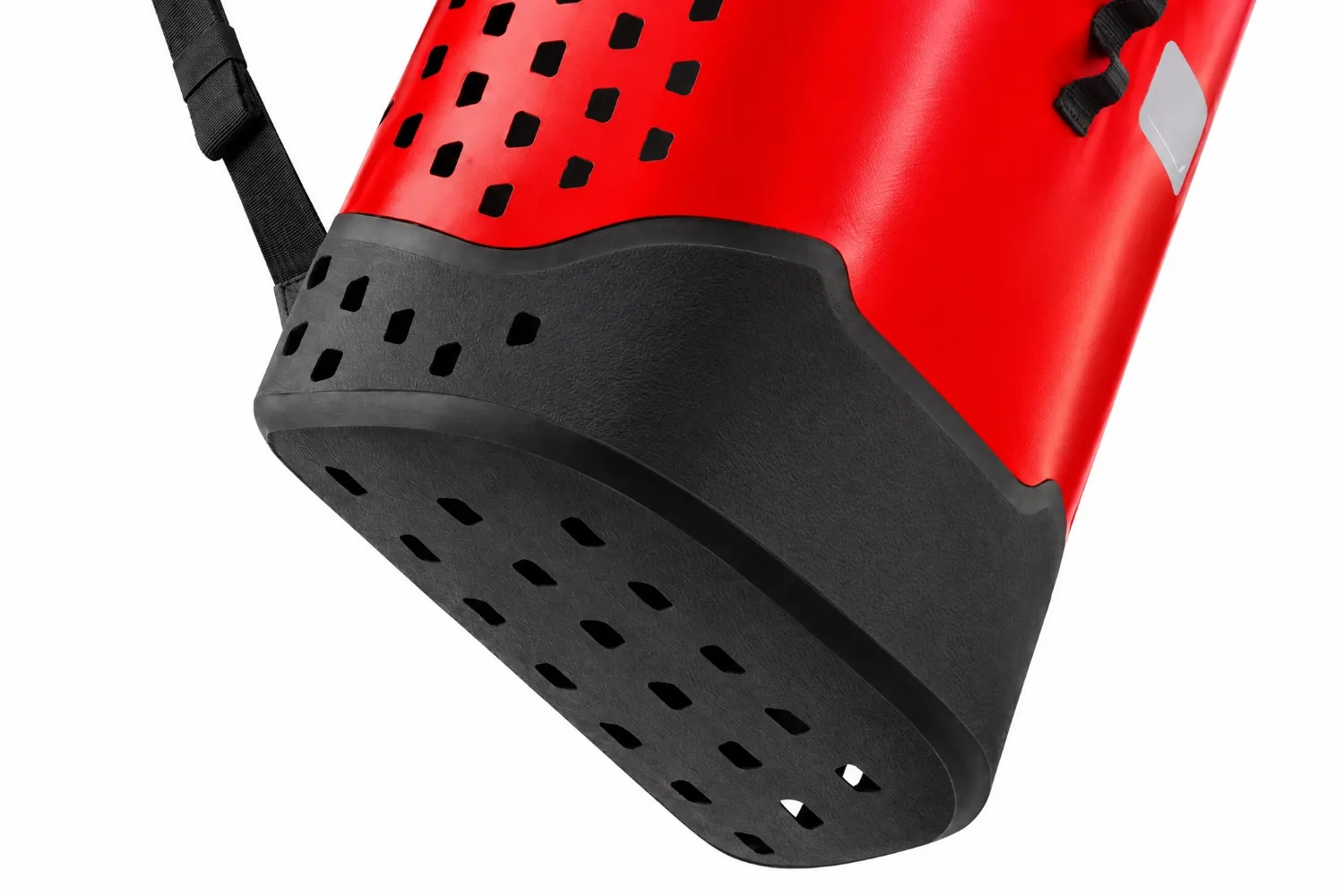
Reinforced Bottom Panel
The bottom of the backpack frequently contacts rocks, wet ground, and rough surfaces.
Additional reinforcement can help improve abrasion resistance and reduce wear in high-contact areas.
Reinforced Drainage Openings
Drainage holes should be designed carefully because they create openings in the material.
Reinforcement around these areas can help reduce stress concentration and prevent tearing during repeated use.
Durable Webbing and Buckles
Shoulder straps, adjustment points, and attachment loops should use durable webbing and reliable hardware.
Buckles should be selected according to their intended load and environmental exposure.
For canyoning applications, corrosion-resistant or non-metallic hardware may be worth considering, depending on the product design.
Attachment Points
Some canyoning backpacks include external attachment loops or webbing for carrying accessories.
Their placement should allow convenient access without creating unnecessary snagging or interference risks.
Any attachment system intended for safety-related loads must be specifically designed and tested for that purpose. Ordinary backpack loops should not be assumed to be load-rated safety anchors.
5. Ventilation and Drying: Managing Moisture After Use
Drainage and drying are related but different considerations.
Drainage helps remove standing water, while drying depends on material, construction, ventilation, and storage conditions.
For canyoning operators who use equipment repeatedly, these factors can affect daily equipment management.
Useful design considerations include:
- Avoiding unnecessary water-trapping pockets.
- Using materials that are easy to rinse and clean.
- Providing sufficient openings for air circulation.
- Avoiding overly complicated internal structures.
- Designing the backpack so it can be opened fully for cleaning and drying.
Mesh panels or separate mesh compartments may be useful in certain designs.
However, they should be positioned according to the intended storage function and durability requirements.
For example, an external mesh pocket can be suitable for carrying items that need ventilation, while the main storage compartment may use more durable material.
6. Custom Canyoning Backpacks: What Should Buyers Confirm?
For outdoor adventure operators and canyoning equipment brands, customization is an opportunity to develop a backpack that matches specific operating requirements.
Before starting an OEM or ODM project, buyers should confirm several key details.
1. Capacity and Dimensions
Determine how much equipment the backpack needs to carry.
The required capacity may differ between individual recreational users, professional guides, and commercial rental operations.
2. Drainage Configuration
Discuss the number, size, and placement of drainage holes.
Ask the supplier how the openings will be reinforced and how drainage performance will be evaluated.
3. Shoulder Strap Structure
Confirm strap width, padding, adjustment range, chest strap configuration, and whether a waist belt is required.
For shared rental equipment, consider whether the adjustment system can accommodate different users.
4. Material and Reinforcement
Specify the material type, thickness, coating, bottom reinforcement, and other high-wear areas.
These details should be evaluated together rather than selected independently.
5. Logo and Color Customization
Custom colors, printed logos, and branded components can help operators maintain consistent equipment identification.
For rental businesses, clear branding can also make equipment easier to recognize and manage.
6. Cleaning and Maintenance Requirements
Ask how the backpack should be rinsed, dried, and stored after repeated use.
A practical design should support regular cleaning without creating unnecessary maintenance difficulties.
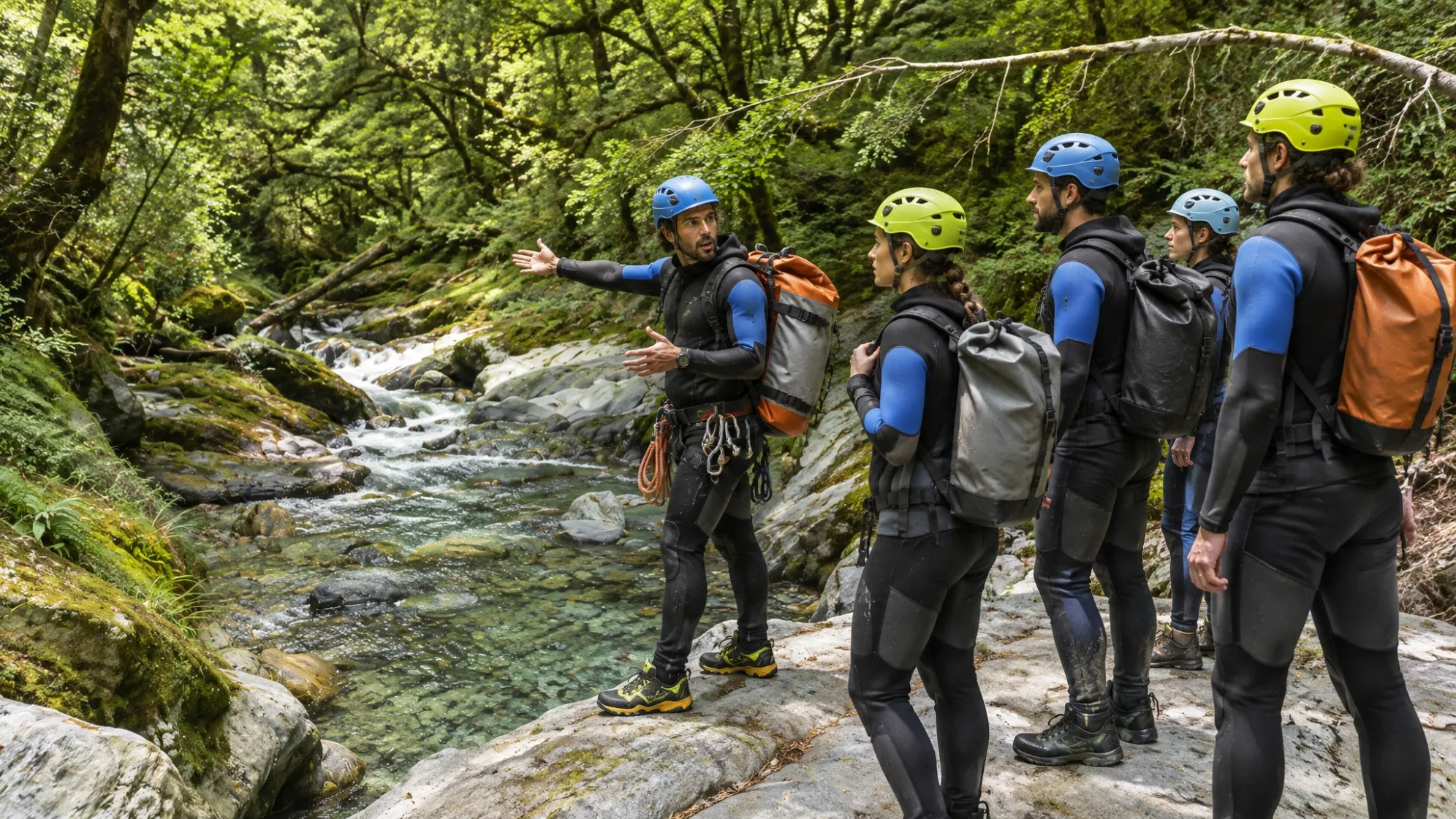
7. What Should Canyoning Operators Look for in a Supplier?
When sourcing canyoning backpacks, operators should look beyond appearance and quoted price.
A suitable supplier should be able to discuss the practical requirements of the product.
Here are some useful questions:
- Can the backpack be customized with reinforced drainage openings?
- What material options are available for frequent water exposure and abrasion?
- How are the shoulder straps and attachment points constructed?
- Can the supplier provide a sample for practical field evaluation?
- What quality inspections are performed on seams, straps, buckles, and drainage areas?
- Can the design be adjusted according to rental or commercial operating requirements?
A sample should ideally be evaluated under realistic conditions, including carrying the intended equipment, walking on uneven surfaces, repeated water exposure, and checking drainage performance.
This helps buyers identify design issues before moving into bulk production.
Final Thoughts
A well-designed canyoning backpack needs to balance drainage, carrying stability, abrasion resistance, and practical maintenance.
Unlike a conventional waterproof dry bag, its purpose is not to keep water out. Instead, it should allow water to escape while keeping equipment organized and securely carried through demanding outdoor activities.
For canyoning operators and outdoor equipment brands, the most important development decisions include drainage placement, shoulder strap configuration, material selection, bottom reinforcement, and ease of cleaning.
At CarryEase Outdoors, we support custom waterproof and outdoor gear bag development with flexible material, size, color, and structural options.
Whether you are developing a heavy-duty canyoning gear bag for rental operations or a customized backpack for an outdoor equipment brand, choosing the right construction details is the foundation of a practical product.