
Water Sports
How to Choose a Waterproof Duffel Bag for Water Sports
Learn what to consider when choosing a waterproof duffel bag for water sports, including capacity, carrying options, closure design, and gear storage.
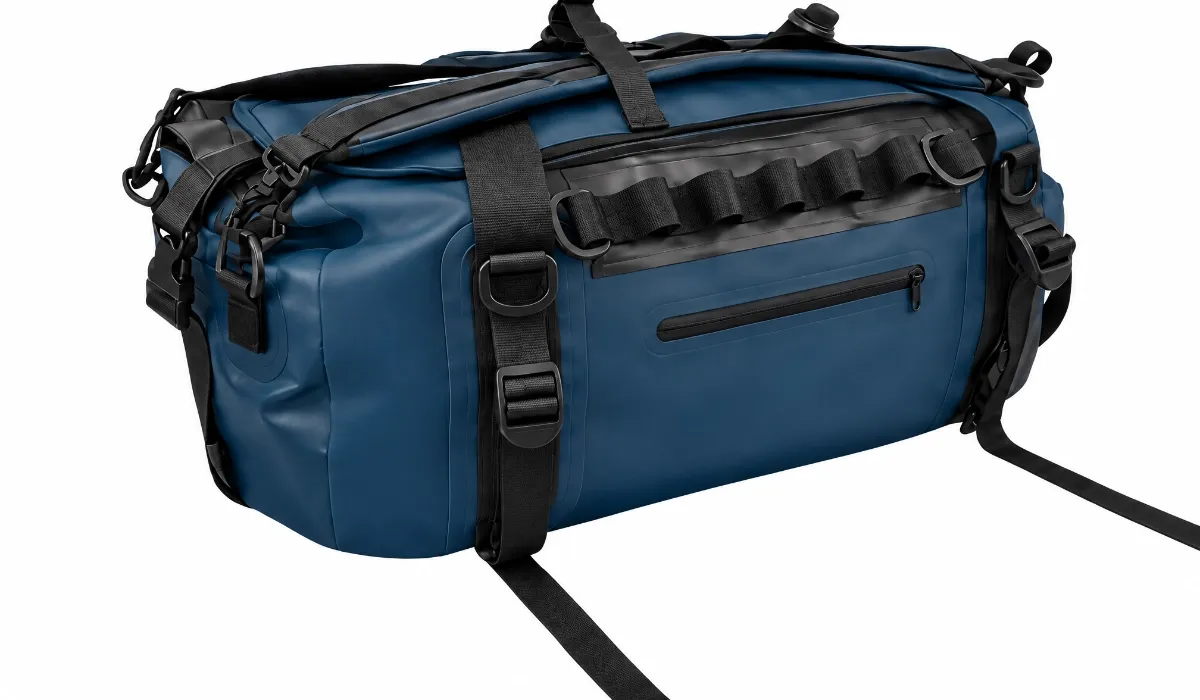
How to Choose a Waterproof Duffel Bag for Water Sports
When preparing for kayaking, diving, sailing, paddleboarding, or other water activities, having enough space to carry equipment is essential. A waterproof duffel bag for water sports can help keep clothing, towels, accessories, and other gear organized while making transportation easier.
However, not all waterproof duffel bags are designed for the same purpose. Some prioritize large storage capacity, while others focus on comfortable carrying, convenient access, or better organization for wet and dry equipment.
Whether you are choosing a bag for personal use or sourcing products for an outdoor brand, here are six important factors to consider.
1. Choose the Right Capacity for Your Equipment
Capacity is one of the first things to consider when selecting a waterproof gear duffel. The ideal size depends on the type of activity, the amount of equipment, and whether the bag will be shared by one person or a group.
Here are some general capacity considerations:
- 20–30L: Suitable for personal essentials, spare clothing, towels, and smaller accessories.
- 40–50L: A practical option for day trips involving more clothing, footwear, and water sports accessories.
- 60–80L: Better suited to larger equipment loads, extended trips, or users who need to carry multiple items.
- 80L and above: May be useful for group equipment, bulky gear, or transporting a larger collection of items.
These are general guidelines rather than fixed rules. A compact wetsuit, for example, may take up less space than a bulky towel or a pair of water sports boots.
When comparing capacities, consider not only the total volume but also the shape of the bag. A long, wide opening can make bulky equipment easier to load, while a deeper compartment may be more suitable for stacking clothing and accessories.
2. Check the Carrying Options
A large waterproof duffel can become heavy when filled with wetsuits, towels, footwear, and other equipment. Comfortable carrying options therefore matter just as much as storage capacity.
Common carrying designs include:
Reinforced Carry Handles
Two sturdy handles allow users to lift and carry the bag by hand. Handles should be securely attached and positioned to distribute the load evenly.
Adjustable Shoulder Strap
A detachable or adjustable shoulder strap makes it easier to carry a loaded bag over one shoulder. Look for comfortable padding and durable attachment points, especially for larger capacities.
Backpack-Style Straps
Some duffel bags include two shoulder straps, allowing users to carry the bag on their back. This can be useful when walking to a beach, boat launch, campsite, or water sports facility.
Multiple Carrying Options
For heavier bags, combining side handles, end handles, and a shoulder strap can provide greater flexibility. Users can choose the most convenient carrying method depending on the distance and load.
For brands developing a custom waterproof gear duffel, handle placement, strap width, reinforcement, and attachment construction should all be considered during product development. Carrying components should also be tested with realistic loads.
3. Consider the Opening and Closure Design
The opening determines how easily users can pack, remove, and organize their equipment. It also plays an important role in the bag's protection against water.
Different closure designs offer different advantages.
Wide U-Shaped or D-Shaped Zipper Opening
A wide top opening makes it easier to access bulky items such as wetsuits, towels, footwear, and life jackets. It is particularly useful when users need to pack or unpack equipment frequently.
However, a standard zipper is not waterproof. If water protection is important, the zipper construction and any protective flap or cover should be considered.
Waterproof Zipper
A waterproof zipper can help reduce water entry through the opening when properly selected and installed. It is useful for designs that require convenient access without a traditional roll-top closure.
However, a waterproof zipper does not automatically make the entire bag fully waterproof. The complete product, including seams and other construction details, needs to be evaluated.
Roll-Top Closure
A roll-top design creates a closure by folding the opening several times and securing it with buckles. It can provide a simple water-resistant or waterproof closure when the material and construction are suitable.
The trade-off is that accessing equipment may take longer than with a wide zipper opening. The usable capacity can also depend on how much space is needed for rolling the top.
The best opening design depends on the intended use. A bag for quick access to sports equipment may benefit from a wide zipper opening, while a bag intended for stronger protection against water exposure may require a more protective closure system.
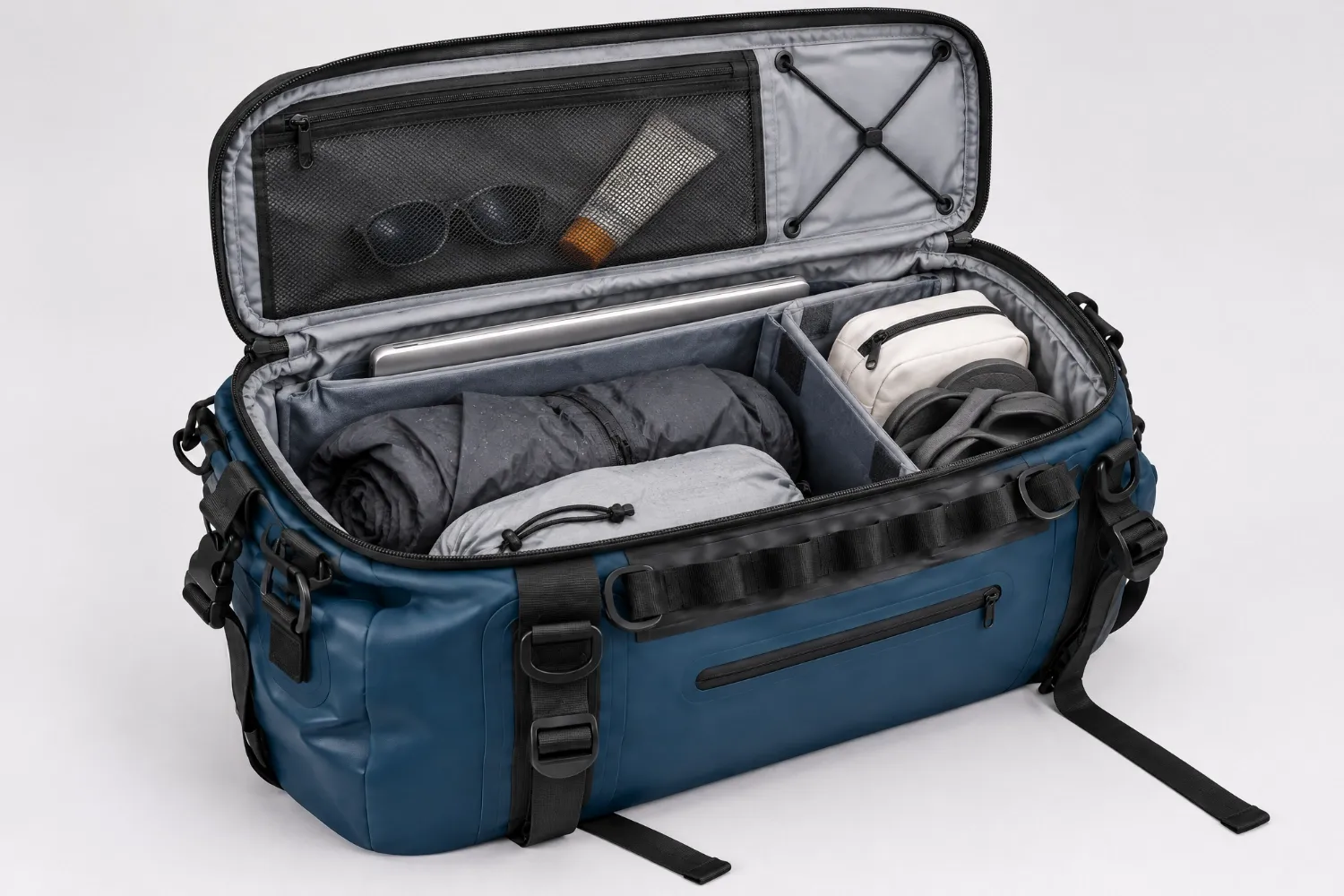
4. Look for Practical Gear Storage and Organization
A large main compartment provides plenty of room, but putting everything into one space can make equipment difficult to find.
A well-designed water sports equipment bag may include additional storage features to separate different types of gear.
Useful options include:
- Internal pockets: Keep small accessories, keys, wallets, and personal items organized.
- External pockets: Provide quick access to frequently used items, provided their construction matches the required level of water protection.
- Separate wet and dry compartments: Help keep wet clothing away from dry items. These compartments should be designed with suitable materials and closures.
- Mesh pockets: Allow smaller accessories to be stored separately and can improve ventilation when used appropriately.
- Dedicated footwear storage: Helps keep shoes or water sports boots away from clean clothing and towels.
The layout should match the actual equipment users carry. For example, divers may need space for wetsuits, gloves, masks, and smaller accessories, while kayaking users may prioritize spare clothing, towels, footwear, and personal belongings.
More pockets do not necessarily mean a better bag. A practical layout should make packing and access easier without adding unnecessary weight or complexity.
5. Evaluate Materials and Water Protection
The material affects a duffel bag's weight, durability, flexibility, and resistance to water.
Common material options include:
PVC Tarpaulin
PVC tarpaulin is often used for heavy-duty waterproof bags. It can offer a durable surface and is suitable for applications where abrasion resistance and water protection are important.
TPU-Based Materials
TPU-based fabrics can offer a balance of flexibility, durability, and water resistance. Depending on the fabric construction, they may be suitable for lighter or more flexible duffel designs.
Coated Nylon or Polyester
Coated fabrics can be useful when lower weight and flexibility are priorities. However, water protection depends on the coating, seams, zippers, and overall construction.
When comparing materials, do not focus on thickness alone. Consider the intended environment, expected load, abrasion exposure, ease of cleaning, and how frequently the bag will be used.
It is also important to understand the difference between water-resistant and waterproof construction. A water-resistant duffel may handle splashes or light rain, while a fully waterproof design requires suitable materials, closure systems, and seam construction.
If the bag is expected to face heavy splashing, temporary immersion, or more demanding water exposure, ask how the complete product has been tested. Do not assume that a waterproof material or zipper alone guarantees a particular waterproof performance level.
6. Think About Cleaning, Drying, and Everyday Use
Water sports equipment often comes into contact with saltwater, sand, mud, and moisture. A good duffel should be practical to maintain after repeated use.
Consider these details:
- Easy-to-clean surfaces: Smooth, durable materials can make it easier to wipe away dirt and rinse off salt or sand.
- Wide access: A generous opening helps users remove equipment and clean the inside of the bag.
- Drainage and ventilation: These features may be useful for designs intended to carry wet equipment, but they should be planned carefully. Drainage openings are not appropriate for a bag that must keep its contents fully protected from water.
- Durable hardware: Buckles, strap adjusters, zipper pulls, and attachment points should be suitable for the expected environment.
- Practical storage: A bag that can be folded or stored conveniently may be useful for travel and seasonal activities, depending on its material and structure.
For bags used around saltwater, it is also worth considering whether hardware and accessories are suitable for marine environments. Regular rinsing and drying can help maintain the product over time.
7. What Should Brands and Buyers Consider When Sourcing a Waterproof Duffel?
For outdoor brands, retailers, diving stores, and water sports operators, choosing a product involves more than selecting a capacity and color.
Before placing an order, consider the following points:
- Target users: Will the bag be used by individual customers, diving schools, kayak operators, or outdoor adventure groups?
- Main application: Is it intended for carrying dry belongings, wet equipment, or a combination of both?
- Capacity and dimensions: Does the size match the equipment users actually need to carry?
- Carrying construction: Are the handles, straps, and attachment points suitable for the expected load?
- Opening design: Does the closure provide the right balance between access convenience and water protection?
- Storage layout: Are additional pockets or separate compartments genuinely useful?
- Branding and customization: Can the material, color, logo, dimensions, and packaging be adapted to the brand's product range?
- Quality checks: Have the complete bag, carrying components, closures, and seams been inspected and tested for the intended application?
It is also advisable to evaluate a sample before confirming a bulk order. Test the bag with realistic equipment loads, check how comfortable it is to carry, and assess whether the opening and storage layout work in actual use.
Final Thoughts
The right waterproof duffel bag for water sports should do more than provide a large storage space. It should make equipment easier to pack, carry, access, and maintain after outdoor activities.
When choosing a waterproof gear duffel, pay particular attention to capacity, carrying options, closure design, storage layout, and material performance. The best combination depends on the activities and equipment the bag is designed to support.
For outdoor brands, retailers, and water sports operators looking to develop their own product range, these details also provide a useful starting point for product customization.
At CarryEase Outdoors, we support the development of custom waterproof bags and outdoor gear bags, with options for materials, sizes, colors, logo application, and product details. Contact us to discuss a waterproof duffel bag concept for your market.