Oct 1, 2026Buying Guides
Kayak Dry Bag Size Guide: What Size Do You Need? (5L to 60L+)
Unsure what size dry bag you need for kayaking? Compare 5L to 60L+ dry bags for day trips, kayak camping, multi-day expeditions and commercial use.
Kayak Dry Bag Size Guide: What Size Do You Need?
Whether you're heading out for a two-hour paddle or preparing for a multi-day kayak expedition, choosing the right dry bag size is important for keeping your gear dry and organized.
But bigger isn't always better.
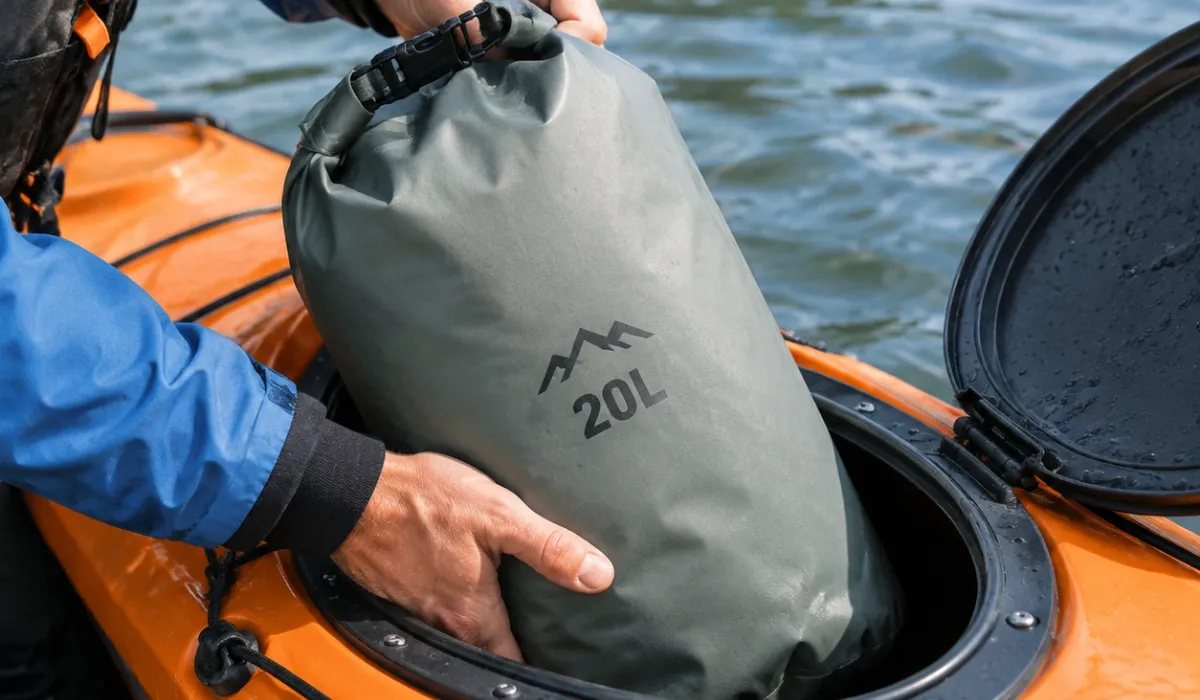
Kayak hatches can have narrow openings, storage compartments may become narrower toward the bow and stern, and one oversized bag can be difficult to load or organize.
So, what size dry bag do you actually need for kayaking?
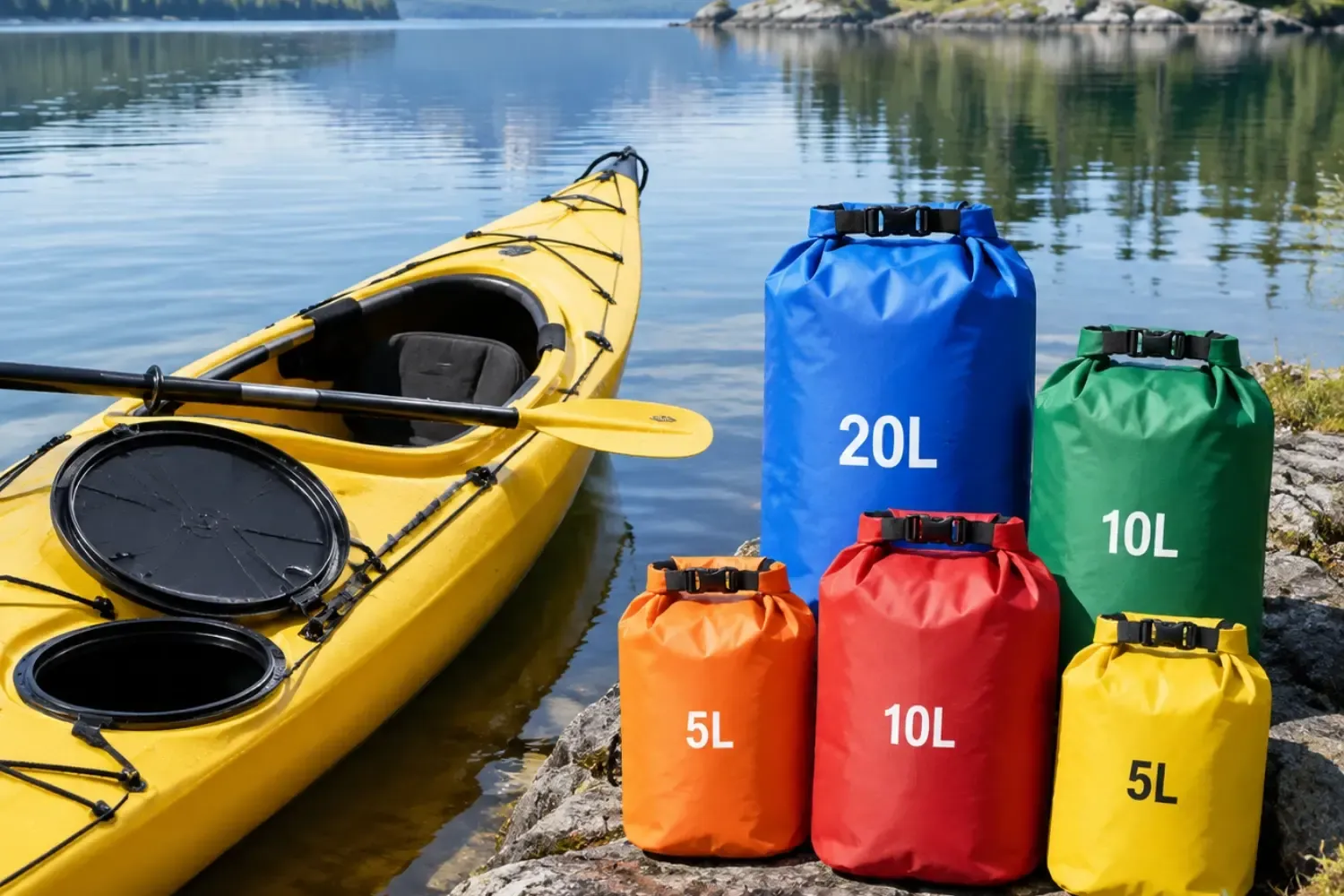
In this guide, we'll compare 5L, 10L, 20L, 30L, 40L and 60L+ dry bags, and explain which sizes may work best for day trips, kayak camping, multi-day expeditions and commercial kayak operations.
Kayak Dry Bag Size Guide: 5L to 60L+
The right capacity depends on what you need to carry, how long your trip is and how much storage space your kayak provides.
Dry Bag Size | Typical Use | Example Contents |
|---|---|---|
5L | Small essentials | Phone, keys, wallet, sunscreen |
10L | Personal essentials | Jacket, snacks, camera, towel |
20L | Daily or overnight gear | Clothing, food, personal equipment |
30L | Larger personal gear | Sleeping gear, clothing, insulation |
40L | Expedition or group gear | Food, cooking and camping equipment |
60L+ | Bulk expedition gear | Group supplies and large equipment |
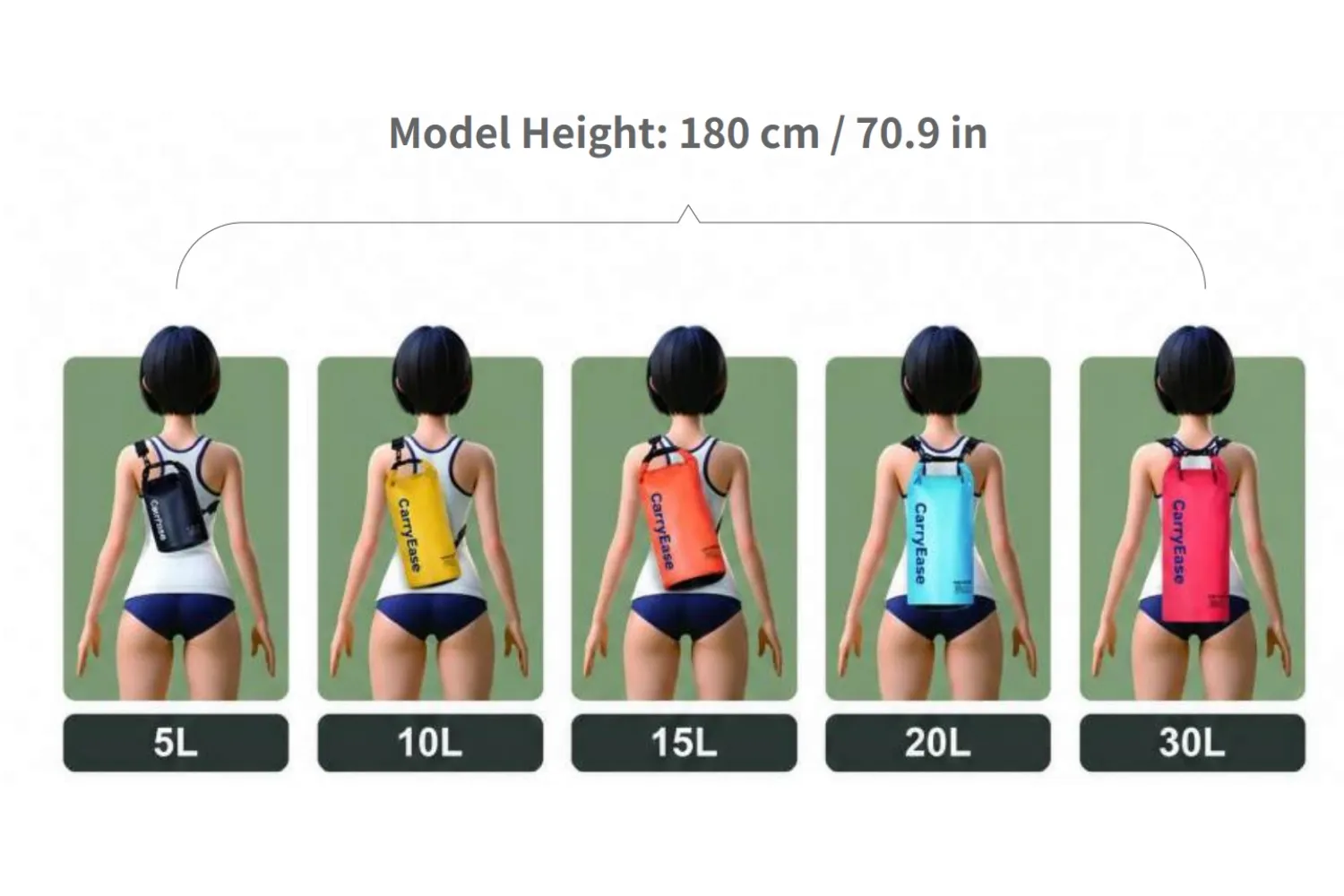
These are general guidelines rather than fixed rules. The ideal dry bag size depends on your trip duration, equipment, kayak design and available storage space.
1. 5L Dry Bag: Small Essentials
A 5L dry bag is suitable when you only need to protect a small number of important items.
Typical contents include:
- Smartphone
- Wallet
- Keys
- Sunglasses
- Sunscreen
- Small first-aid supplies
- Small camera or accessories
Its compact size makes it useful for valuables and items you may want to access frequently.
Best for: short kayaking trips, valuables and small personal items.
For kayak tour operators, 5L bags can also be used as small personal bags for guests.
2. 10L Dry Bag: A Practical Day-Trip Size
A 10L dry bag provides more space while remaining relatively compact.
It can typically hold:
- Lightweight rain jacket
- Extra shirt
- Thermal layer
- Snacks
- Small towel
- Camera equipment
- Personal accessories
For a day trip, 10L can be a practical size for carrying essential personal gear without taking up too much storage space.
Best for: half-day trips, full-day kayaking and individual guest belongings.
For kayak tour operators, 10L can also be considered as a standard size for protecting guests' personal items.
3. 20L Dry Bag: A Versatile Everyday Size
A 20L dry bag is one of the most versatile options for kayaking.
It offers more capacity for personal gear while remaining easier to handle than a very large bag.
Typical contents may include:
- Spare clothing
- Fleece or mid-layers
- Towels
- Food
- Personal camping equipment
- Camera equipment
- Outdoor accessories
A 20L bag can work well for full-day trips and may also be suitable for an overnight trip when the amount of equipment is relatively compact.
Best for: full-day adventures, overnight trips, kayak tours and general personal gear.
For commercial operators, 20L is also a useful size to consider for standardized guest or staff equipment.
4. 30L Dry Bag: Larger Personal and Overnight Gear
When 20L isn't enough, a 30L dry bag provides additional space for bulkier equipment.
It can hold items such as:
- Sleeping bag
- Extra clothing
- Insulation layers
- Camp clothing
- Larger personal equipment
A 30L bag can be useful for multi-day kayaking when each paddler needs to carry more personal equipment.
However, capacity isn't the only consideration.
Check the bag's diameter and packed shape against your kayak's hatch opening. A 30L bag may have enough capacity but still be difficult to insert through a narrow hatch.
Best for: overnight trips, multi-day kayaking and larger personal gear.
5. 40L Dry Bag: Expedition and Group Gear
A 40L dry bag provides more capacity for larger quantities of equipment.
Typical applications include:
- Camping equipment
- Cooking equipment
- Food supplies
- Guide equipment
- Safety equipment
- Group gear
For kayak expedition operators, 40L can be useful for equipment that needs to stay dry throughout a multi-day trip.
It can also be combined with smaller bags rather than used as the only storage solution.
Best for: multi-day expeditions, guide gear, group equipment and larger outdoor equipment.
6. 60L+ Dry Bags: Bulk Expedition Gear
A 60L+ dry bag provides substantial storage capacity for large or shared equipment.
Potential applications include:
- Group camping equipment
- Food supplies
- Large outdoor gear
- Expedition equipment
- Emergency supplies
- Shared equipment
However, a larger capacity is not automatically better for kayaking.
A 60L+ bag may be difficult to fit through a standard kayak hatch, depending on its dimensions and the kayak design.
These larger capacities may be more suitable when there is sufficient storage space, such as on larger touring kayaks, tandem kayaks, canoes or other expedition applications.
Best for: long expeditions, group supplies and bulky equipment.
Day Trips vs. Multi-Day Kayak Expeditions
Trip duration is one of the easiest ways to estimate how much dry-bag capacity you may need.
Day Trips
For a typical day trip, one or two smaller dry bags may be enough.
For example:
5L:
Phone, keys, wallet and other small valuables.
10L–20L:
Jacket, extra clothing, food and personal equipment.
Depending on the weather, trip duration and activities, a total capacity of around 15L–30L may be a useful starting point.
The goal is not to maximize capacity, but to carry what you actually need while keeping the kayak organized.
Multi-Day Trips
Multi-day kayaking requires more equipment and usually benefits from better organization.
Instead of putting everything into one large bag, you can divide equipment between several sizes.
For example:
- 5L–10L: valuables and frequently accessed items
- 20L: clothing and insulation
- 20L–30L: sleeping equipment
- 30L–40L: food or larger camping equipment
The exact combination depends on the kayak, trip duration and equipment requirements.
Using several bags can also make it easier to separate clothing, food, personal equipment and group gear.
Personal Gear vs. Group Gear
The right dry bag size also depends on who or what the bag is carrying.
Personal Gear
For individual paddlers, 10L–30L can cover many personal equipment needs.
Typical contents include:
- Clothing
- Personal electronics
- Toiletries
- Sleeping gear
- Personal food
- Outdoor accessories
Group Gear
Shared equipment usually requires larger capacities, such as 30L–60L+.
This may include:
- Cooking equipment
- Group food
- First-aid supplies
- Repair equipment
- Safety equipment
- Shared camping equipment
For commercial kayak operations, combining smaller personal dry bags with larger group bags can create a more organized equipment system.
Custom Dry Bag for Kayak Operators and Outdoor Brands
An outdoor brand may want several capacities using the same design and color system.
That's where custom dry bags can be useful.
At CarryEase Outdoors, custom options can include:
- Custom capacity and dimensions
- Custom colors
- Custom materials
- Custom logo printing
- Roll-top construction
- Additional pockets
- Handles or straps
- Custom packaging
Different capacities can also be developed for different applications, such as guest gear, guide gear and group equipment.
Dry Bag Size Checklist
Before choosing or developing a dry bag, ask:
1. What is the trip length?
Day trip, overnight or multi-day expedition?
2. What will the bag carry?
Personal belongings, clothing, food, sleeping gear or group equipment?
3. What is the available storage space?
Check the hatch opening and compartment dimensions.
4. How often will the contents be accessed?
Frequently used items may be easier to organize in smaller bags.
5. Do you need a custom size?
If standard sizes don't fit your kayak or equipment, a custom dry bag may be worth considering.
What Size Dry Bag Do You Need for Kayaking?
There is no single dry bag size that works for every kayaking trip.
As a general starting point:
- 5L — small essentials
- 10L — personal belongings and day-trip gear
- 20L — daily or overnight equipment
- 30L — larger personal and sleeping gear
- 40L — expedition and group equipment
- 60L+ — bulky or extended expedition gear
For longer trips, combining several dry bags of different capacities can help you organize equipment and make better use of available storage space.
For kayak tour operators, expedition companies and outdoor brands, however, the best solution may not be a standard size.
Custom capacity, dimensions, materials, colors and logo printing can be developed to match your specific application.
Need Custom Dry Bags for Your Kayak Business?
CarryEase Outdoors specializes in OEM/ODM waterproof dry bags and outdoor gear bags for kayak operators, expedition companies and outdoor brands.
Whether you need 10L guest dry bags, 20L–30L personal gear bags, 40L expedition bags or custom dimensions for a specific kayak hatch, we can discuss the appropriate design, materials, construction and branding options for your project.
Contact CarryEase to discuss your custom dry bag requirements.