
Product Knowledge
Mesh Dive Bags vs. Waterproof Gear Bags: Which Is Better?
Compare mesh dive bags and waterproof gear bags for scuba and snorkeling equipment. Learn how drainage, ventilation, and storage needs influence product selection.
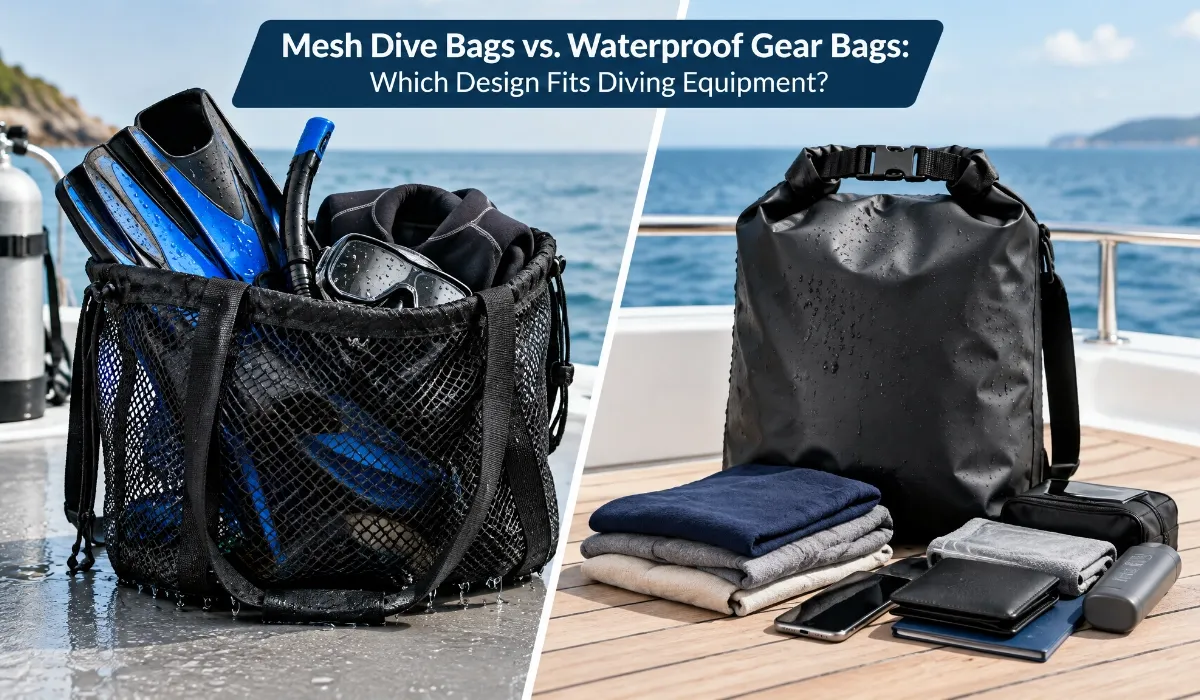
Mesh Dive Bags vs. Waterproof Gear Bags: Which Design Fits Diving Equipment?
Choosing the right bag for diving equipment is not simply about capacity or appearance. Different diving activities create different storage needs. Wet fins, masks, snorkels, and wetsuits need proper drainage and ventilation, while dry clothes, phones, wallets, and other personal belongings need protection from water.
For diving brands, retailers, and equipment suppliers, understanding the main dive gear bag types can help build a more practical product range.
Two common options are mesh dive bags and waterproof gear bags. Although both are used around diving and snorkeling activities, they serve different purposes.
In this guide, we compare their functions, materials, design features, and potential applications to help outdoor and water sports businesses choose the right products for their customers.
1. What Is a Mesh Dive Bag?
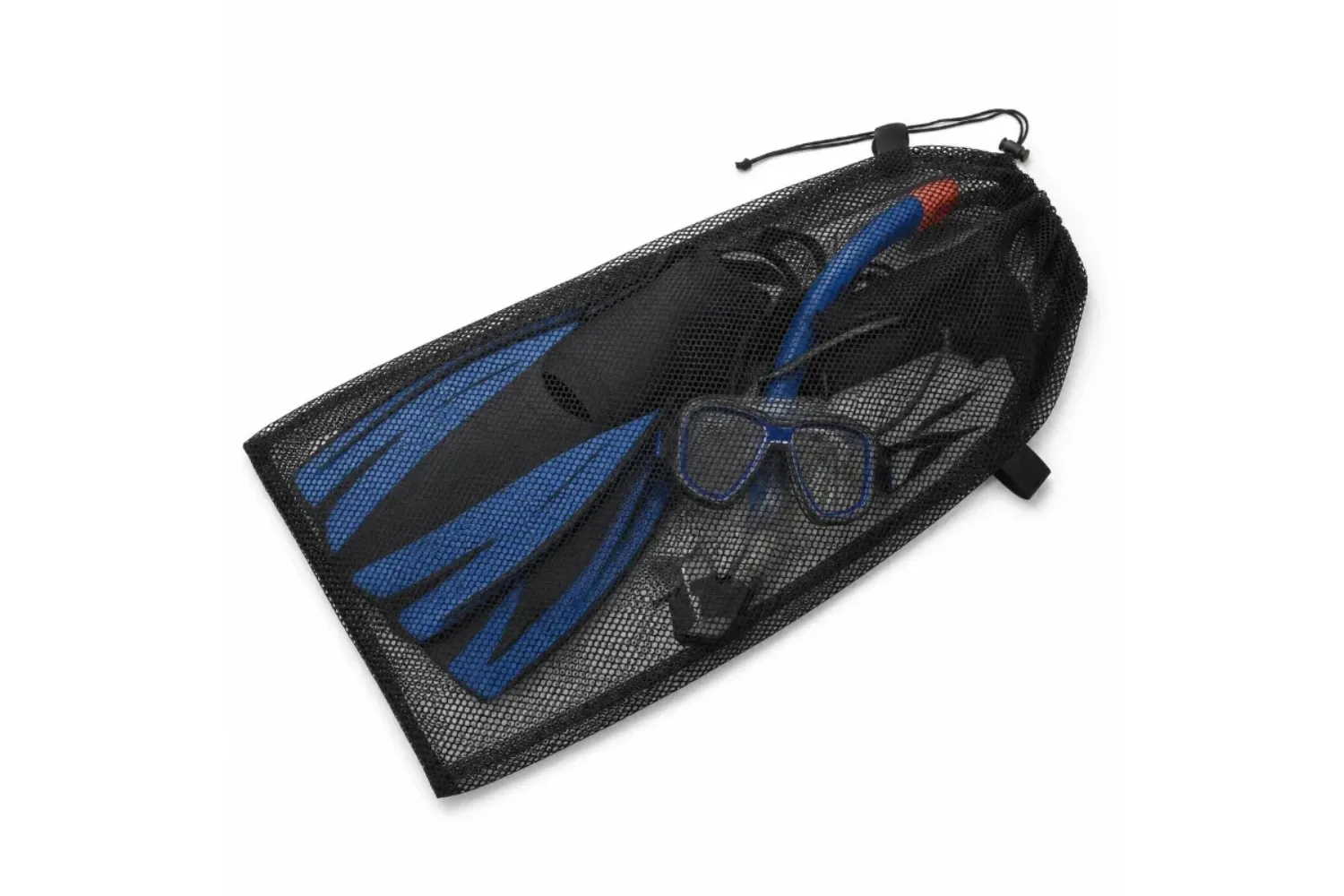
A mesh dive bag is designed to carry wet diving and snorkeling equipment while allowing water to drain and air to circulate.
Its open mesh construction makes it suitable for transporting equipment after a dive, especially when items are still wet from seawater or rinsing.
Common Uses of Mesh Dive Bags
Mesh bags are commonly used to carry:
- Diving fins and snorkels
- Masks and other lightweight accessories
- Wetsuits and rash guards
- Gloves and water shoes
- Other wet scuba or snorkeling equipment
For dive centers, snorkeling operators, and rental businesses, mesh bags can also help keep equipment together when moving between storage areas, boats, and dive sites.
Key Advantages of Mesh Dive Bags
1. Efficient Water Drainage
The open mesh structure allows water to flow out instead of collecting inside the bag. This is particularly useful when carrying equipment directly from the water or rinse tank.
2. Better Air Circulation
Air can pass through the mesh material, helping wet equipment dry more easily during storage and transportation.
3. Lightweight and Easy to Carry
Mesh construction is generally lightweight and flexible. Many designs can be folded or compressed when not in use.
4. Easy Equipment Visibility
The open structure makes it easier to identify the contents without opening the bag, which can be useful for dive schools and rental operations managing multiple sets of equipment.
What Should Buyers Check?
When sourcing mesh dive bags, buyers should pay attention to:
- Mesh strength and resistance to tearing
- Reinforced bottom panels for heavier equipment
- Durable handles and shoulder straps
- Corrosion-resistant zippers and hardware
- Bag dimensions, especially for long diving fins
- Reinforced attachment points for frequently used bags
A mesh bag should be designed around the weight and dimensions of the equipment it needs to carry, rather than capacity alone.
2. What Is a Waterproof Diving Gear Bag?
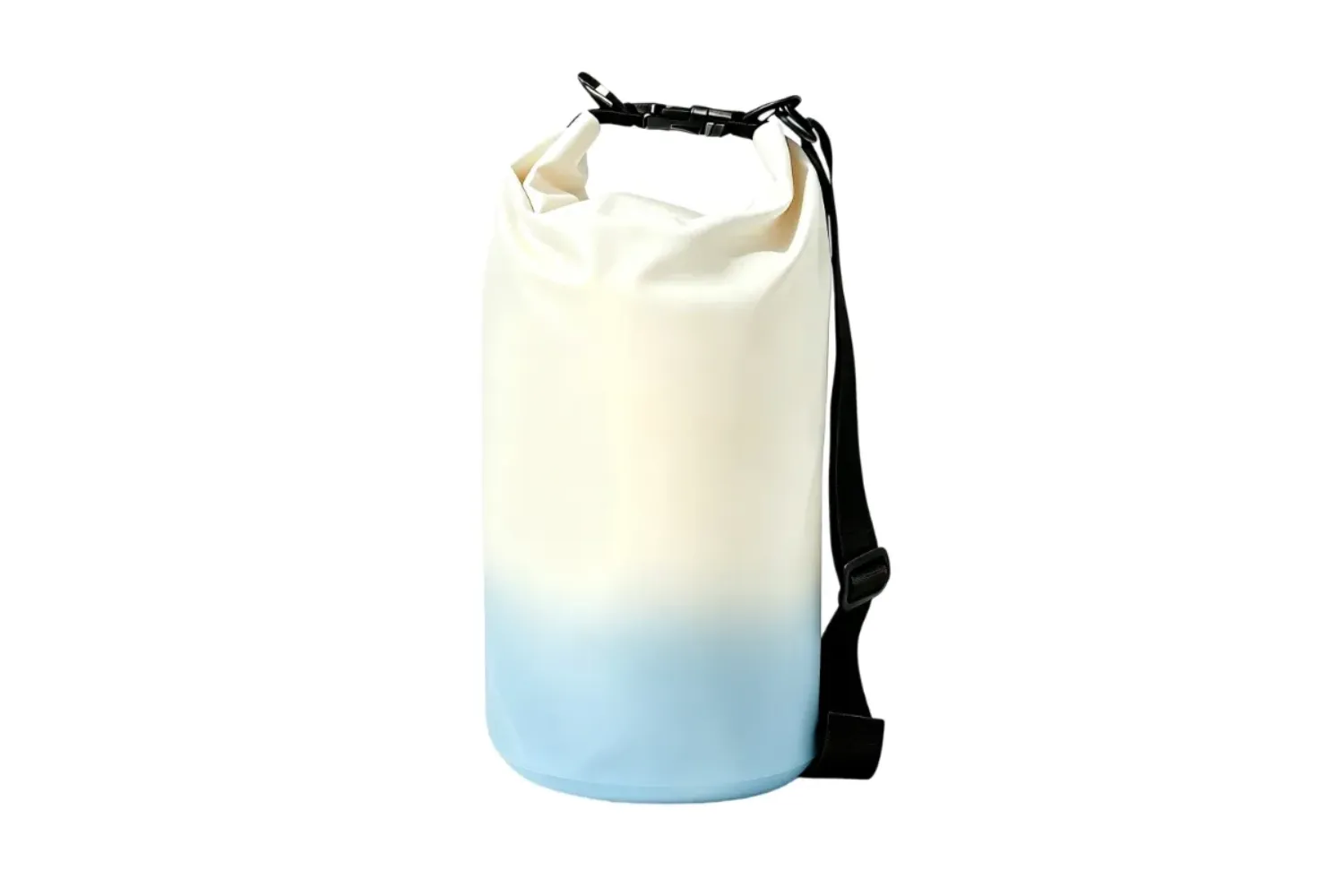
A waterproof diving gear bag is designed to help protect selected belongings or equipment from external water, rain, splashes, and wet environments.
Unlike mesh bags, waterproof bags use solid materials and suitable closure systems to limit water entry.
Depending on the construction and closure design, they may be used to carry dry clothing, towels, electronics, personal belongings, or selected wet equipment that needs to be separated from other items.
Common Uses of Waterproof Gear Bags
Waterproof bags can be useful for carrying:
- Dry clothes and towels
- Phones, wallets, and personal belongings
- Small electronic accessories
- Travel documents and other valuables
- Wet equipment that needs to be separated from dry items
For boat trips, kayaking, snorkeling tours, and other water activities, a waterproof bag can provide an additional storage solution for items that should not get wet.
Key Advantages of Waterproof Gear Bags
1. Protection from External Water
Solid waterproof materials help prevent water from entering the bag when used according to the product's design and closure instructions.
2. Wet and Dry Item Separation
Waterproof bags can help keep dry belongings separate from wet diving equipment. This is particularly useful after a dive or during boat transportation.
3. More Versatile Storage
Depending on the size and design, waterproof bags can be used beyond diving, including kayaking, boating, beach activities, camping, and other outdoor applications.
4. Customizable Product Designs
For brands and retailers, waterproof gear bags offer opportunities to develop different capacities, materials, colors, closure systems, and logo applications.
What Should Buyers Check?
When sourcing waterproof diving gear bags, consider:
- Material options, such as PVC tarpaulin or TPU
- Welded seams and construction quality
- Roll-top or other closure systems
- Buckles, straps, and attachment points
- Capacity and internal organization
- Waterproof performance supported by appropriate testing
- Ease of cleaning and maintenance
Importantly, the word "waterproof" does not automatically mean a bag is suitable for underwater use. Buyers should check the product's tested protection level and intended use before making specific performance claims.
3. Mesh Dive Bags vs. Waterproof Gear Bags: Key Differences
Although both bag types are useful for diving activities, their construction and functions are quite different.
Comparison | Mesh Dive Bag | Waterproof Gear Bag |
|---|---|---|
Main purpose | Carry wet equipment | Protect selected contents from external water |
Construction | Open mesh fabric | Solid coated fabric or waterproof material |
Water drainage | Allows water to drain freely | Designed to limit water entry |
Ventilation | High airflow | Limited airflow when closed |
Typical contents | Fins, masks, snorkels, wetsuits | Dry clothes, towels, phones, valuables |
Visibility | Contents are often visible | Contents are usually concealed |
Best applications | Dive sites, boats, rinse areas | Boat trips, travel, outdoor activities |
Key design priorities | Drainage, strength, ventilation | Material, seams, closure, water protection |
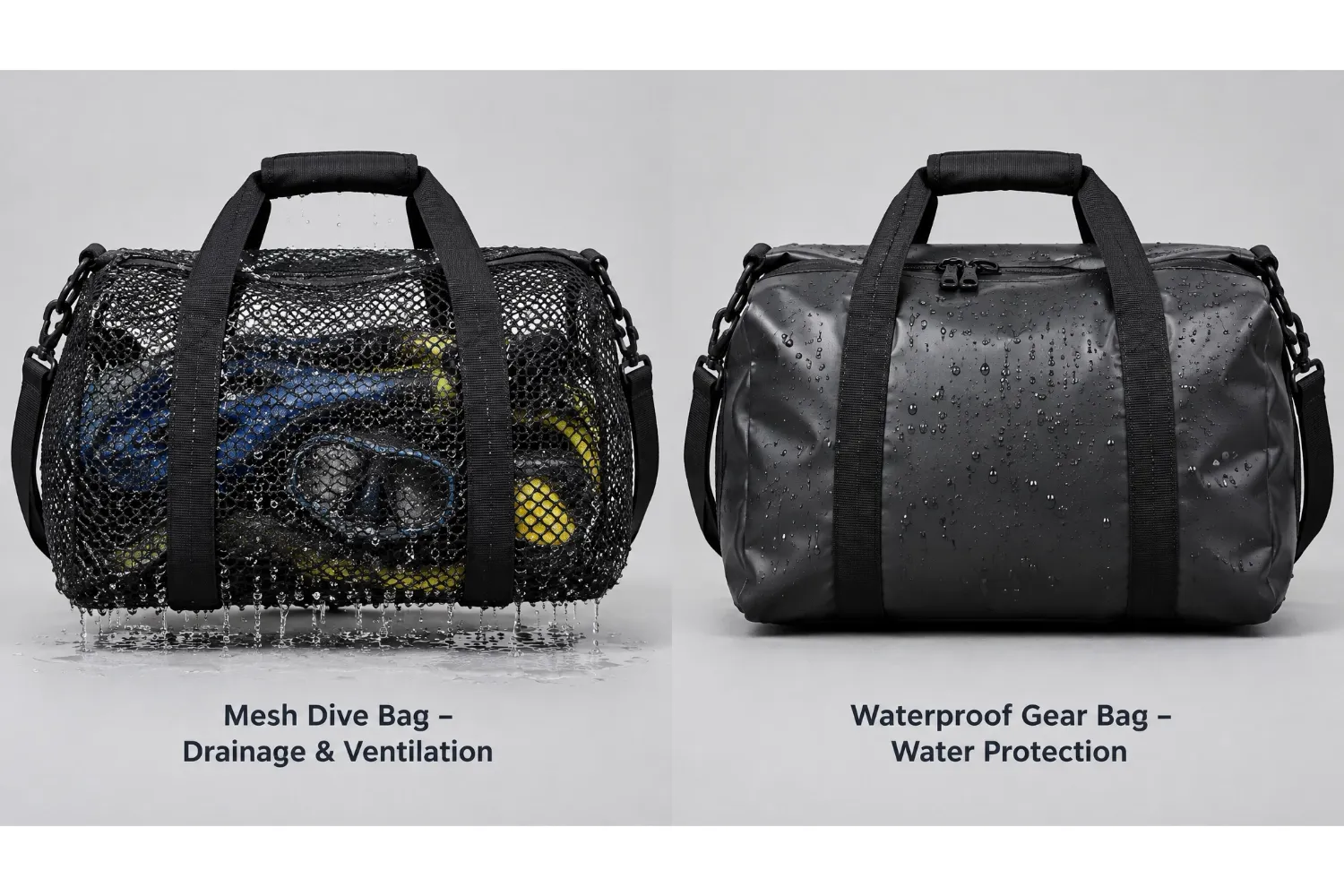
The main difference is simple: mesh bags let water out, while waterproof bags are designed to keep water out.
Neither design is universally better. The right choice depends on what customers need to carry and whether the contents are already wet or need to stay dry.
4. Why Diving Customers May Need Both Bag Types
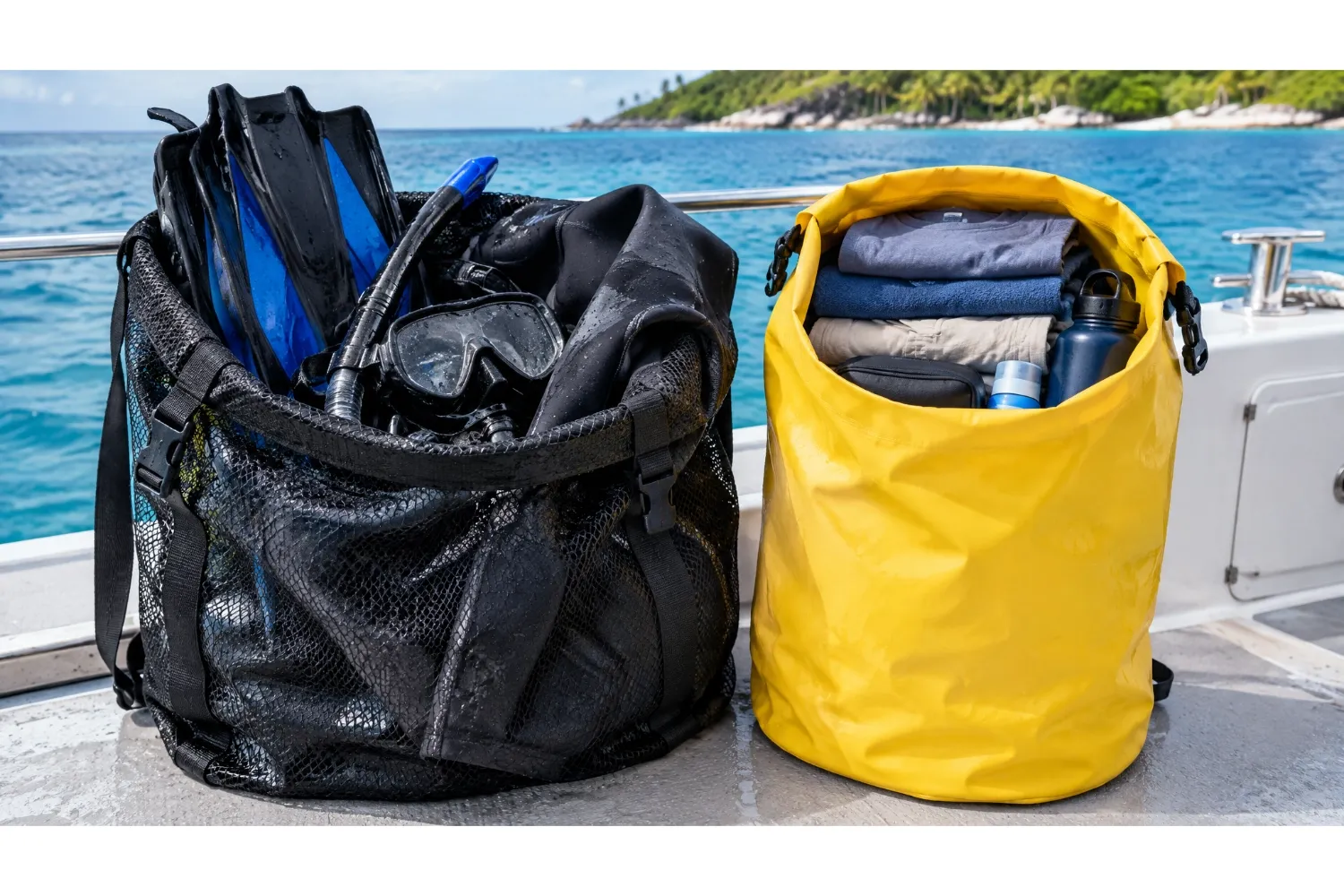
For many divers, one bag cannot handle every storage requirement.
After a dive, equipment such as fins, masks, snorkels, and wetsuits may still be wet. A mesh bag makes it easier to carry and drain these items.
At the same time, customers may need to protect dry clothes, phones, wallets, and other personal belongings from splashes or accidental water exposure.
A practical combination could include:
Mesh Dive Bag + Waterproof Dry Bag
- Use the mesh bag for wet diving equipment.
- Use the waterproof bag for dry clothes and personal belongings.
- Keep the two groups of items separate during transportation.
This combination can be especially useful for dive centers, snorkeling tour operators, boat operators, and water sports retailers.
For brands, offering both products creates opportunities to serve different customer needs and encourage complementary purchases.
5. How to Choose the Right Dive Gear Bag Types for Your Product Range
For diving equipment brands and retailers, product selection should reflect the activities and customers they serve.
For Dive Centers and Rental Businesses
Mesh bags are a practical option for carrying and organizing frequently used wet equipment.
Prioritize durable mesh, reinforced handles, strong bottom panels, and easy-to-clean construction. If bags will be used repeatedly by different customers, durability and simple maintenance are especially important.
For Scuba and Snorkeling Retailers
Consider offering both mesh bags and waterproof bags.
Mesh bags can serve customers looking for equipment carriers, while waterproof bags provide additional storage for dry belongings during water activities.
Different sizes and carrying styles can help retailers cover more customer requirements.
For Outdoor and Water Sports Brands
Waterproof gear bags may also appeal to customers involved in kayaking, boating, beach activities, and camping.
A shared waterproof bag design can potentially serve several outdoor markets through different colors, capacities, branding, and accessories.
For Private Label and OEM Product Development
Brands looking to develop their own dive bag collection should consider:
- Target customer and primary activity
- Required capacity and bag dimensions
- Material weight and durability
- Drainage or water protection requirements
- Carrying comfort and reinforcement
- Logo placement and packaging
- Target retail price and order quantity
Defining the intended use first makes it easier to select the right construction and avoid unnecessary features.
6. Custom Dive and Waterproof Gear Bags for Your Brand
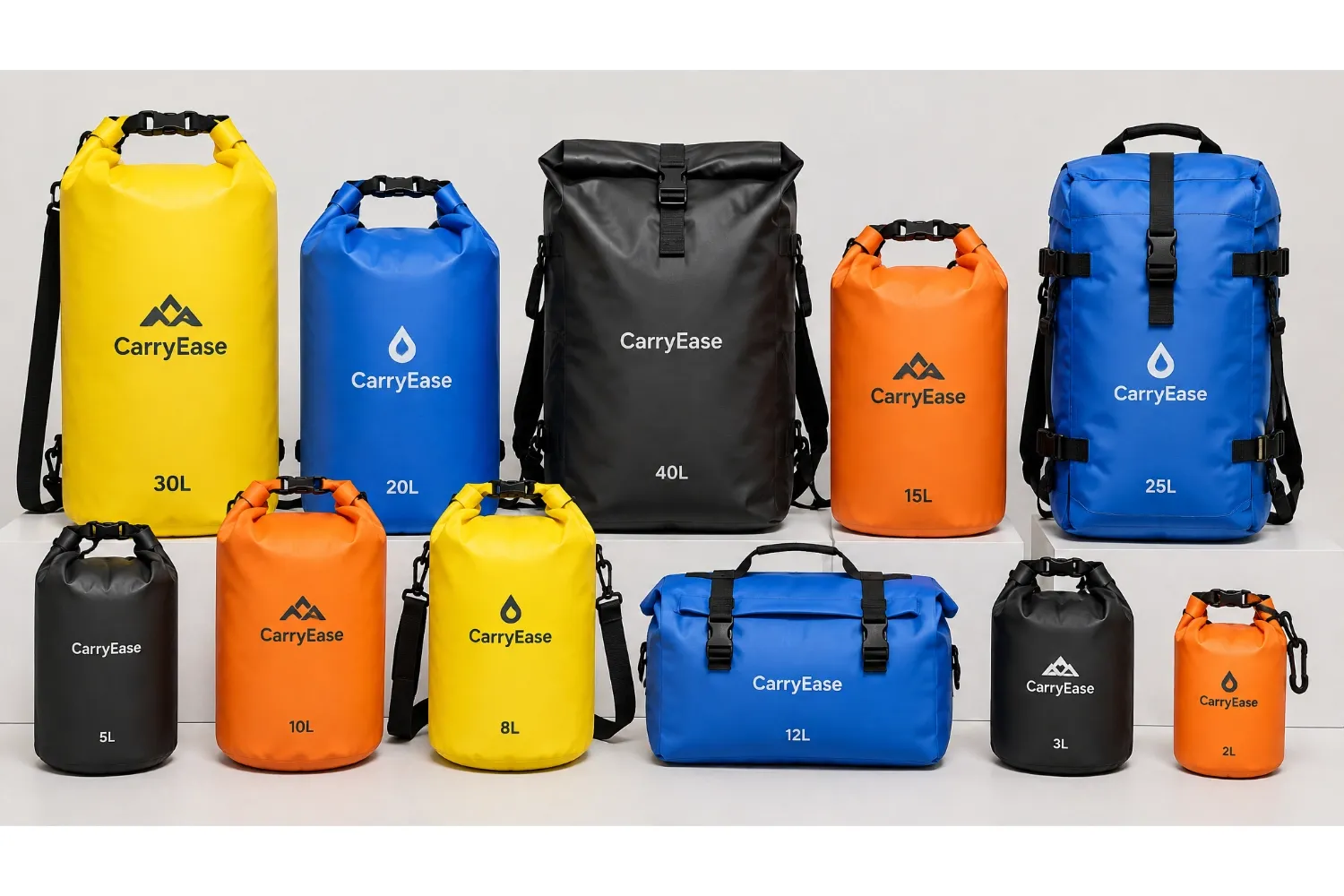
The best product design starts with a clear understanding of how customers will use the bag.
For mesh dive bags, product development can focus on mesh strength, reinforced panels, drainage, and convenient carrying options.
For waterproof gear bags, the key considerations include material selection, welded construction, closure design, capacity, and the level of water protection required.
At CarryEase Outdoors, we focus on customized waterproof bags and outdoor gear bag solutions for brands and businesses.
Depending on your project requirements, product options can be developed with different:
- Capacities and dimensions
- PVC or TPU material options
- Colors and logo applications
- Roll-top closure and carrying systems
- Packaging and private-label details
Production is coordinated with our manufacturing partners in China, with product specifications and quality requirements discussed according to each project.
Looking to develop a custom waterproof gear bag for your diving or water sports collection?
7. Frequently Asked Questions
Are mesh dive bags waterproof?
No. Mesh dive bags are designed to allow water to drain out and air to circulate. They are suitable for carrying wet equipment, but they cannot protect dry belongings from water.
What should I use to carry wet scuba equipment?
A mesh dive bag is a practical choice for wet fins, masks, snorkels, and wetsuits because its open construction allows water to drain and air to circulate.
Can a waterproof gear bag be used for diving?
A waterproof gear bag can be useful for carrying dry belongings around dive sites and on boats. However, its suitability for immersion depends on its construction, closure system, and verified protection rating. It should not automatically be treated as an underwater equipment case.
Should diving brands sell mesh bags and waterproof bags together?
Offering both can help brands and retailers cover different storage needs. Mesh bags are suitable for wet equipment, while waterproof bags help protect personal belongings and separate dry items from wet gear.
What materials are commonly used for waterproof diving gear bags?
PVC tarpaulin and TPU are common material options for waterproof bag development. The best choice depends on the required durability, flexibility, weight, appearance, and target price.
Conclusion
Mesh dive bags and waterproof gear bags serve different but complementary purposes.
A mesh dive bag is designed for wet equipment that needs drainage and ventilation. A waterproof diving gear bag is designed to help protect selected belongings from external water and keep dry items separate from wet equipment.
For diving brands, retailers, and equipment suppliers, offering both types can create a more complete product range for scuba, snorkeling, and other water sports customers.
The right design should always start with the intended use, equipment requirements, and expected level of water protection.