
Product Knowledge
Roll-Top Dry Bag Closure: Design & Buyer Checks
Learn how roll-top dry bag closures work, what affects their performance, and which design details brands should review when sourcing waterproof bags.
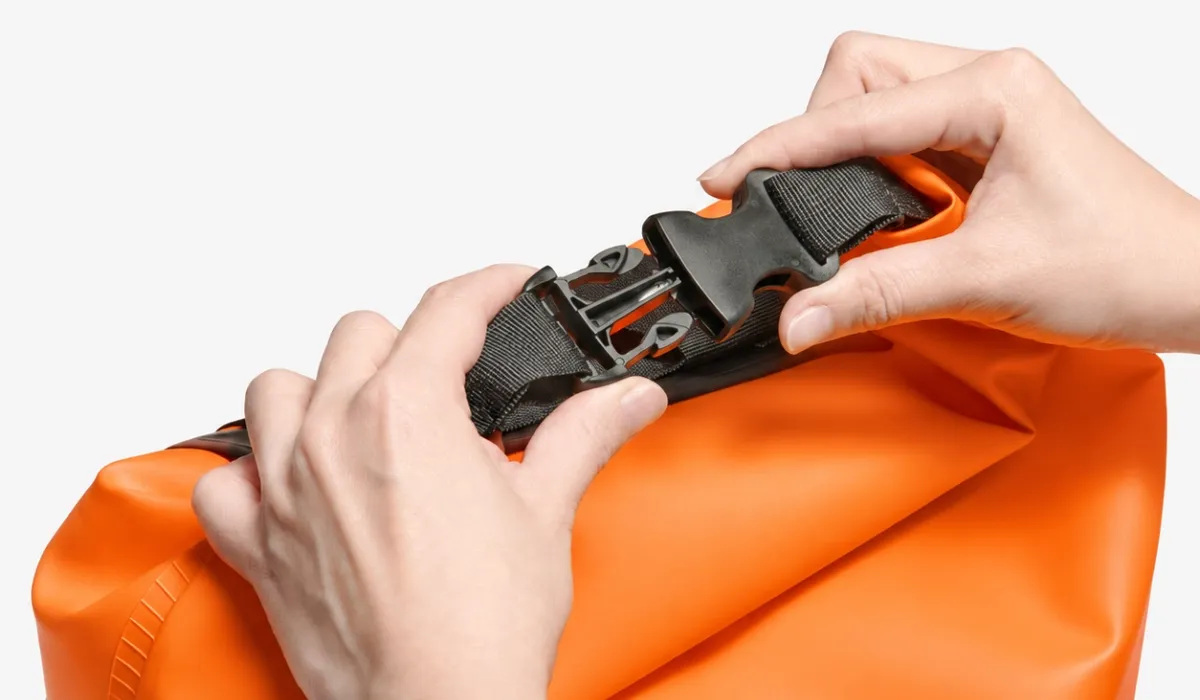
Roll-Top Dry Bags: How the Closure Works and What Buyers Should Check
A roll-top closure is one of the defining features of a dry bag. It provides a simple way to close the opening without relying on a conventional zipper, making it a popular design for kayaking, boating, camping, beach activities, and other outdoor applications.
However, a roll-top dry bag closure is more than a strip of material and a plastic buckle. Its performance depends on the opening construction, folding geometry, fastening components, material flexibility, and how easily users can close it correctly.
For outdoor brands and wholesale buyers, understanding these details helps when developing a new roll top waterproof bag, comparing supplier samples, or specifying a custom dry bag for a private-label collection.
1. How Does a Roll-Top Dry Bag Closure Work?
A roll-top closure uses an extended section of flexible material at the top of the bag. Instead of closing the opening with a zipper, users align the opening, fold or roll it over itself several times, and secure the folded section with a buckle.
The overlapping folds create a longer, indirect path that water must travel to reach the bag's contents. The fastening system helps keep the closure in its intended position during use.
A typical roll-top closure includes four main elements:
- Closure panel: The extended material above the main storage compartment that forms the folds.
- Top-edge reinforcement: A stiffener or reinforced strip, where used, that helps the opening remain straight and makes folding easier.
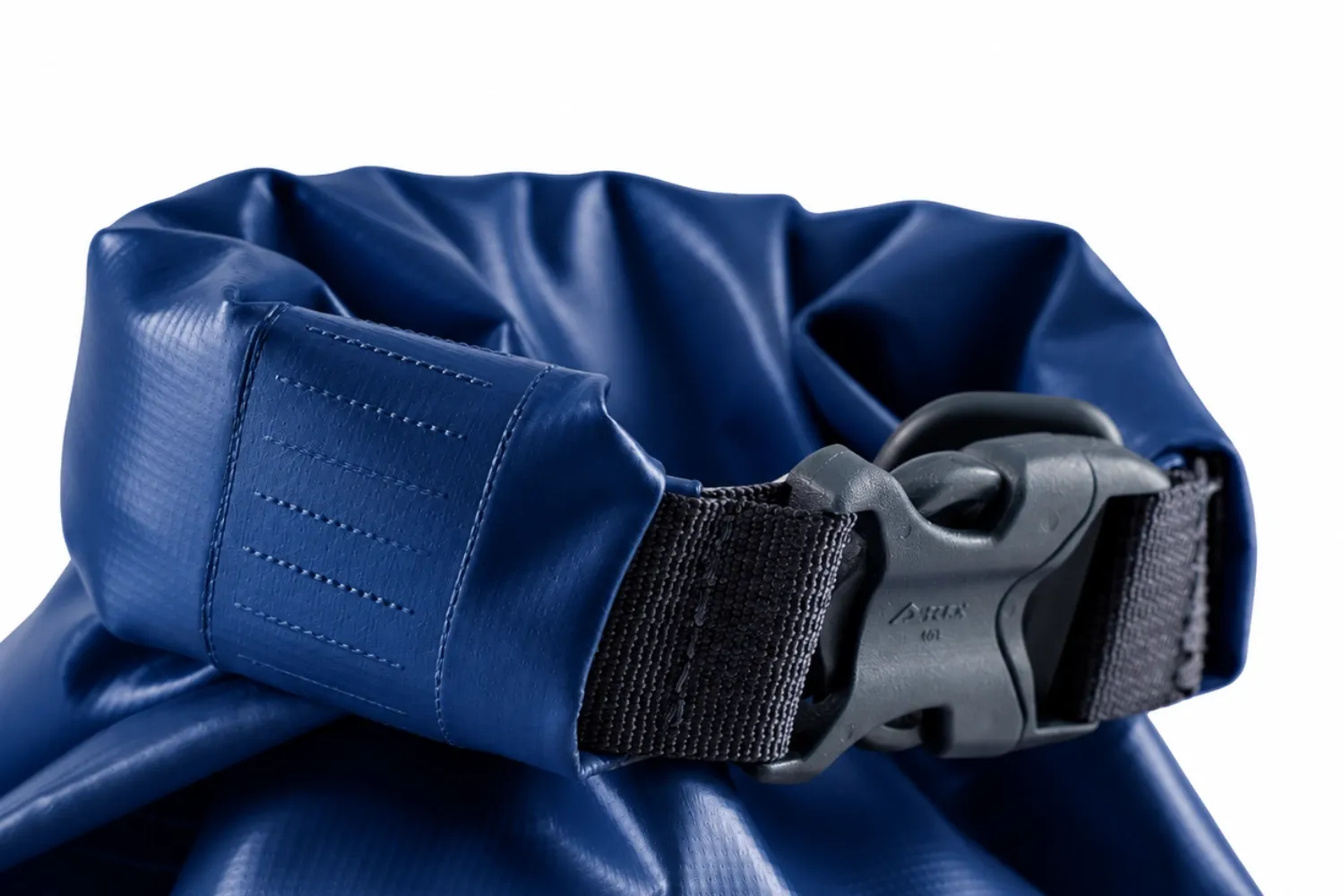
- Buckles and webbing: Components that secure the rolled opening and help maintain the closure.
- Welded bag body: The waterproof material and seams that complete the bag's protective structure.
Not every dry bag uses the same configuration. Some designs have reinforced sealing strips, while others use a simpler flexible opening. The right construction depends on the intended application, material, capacity, and target price.
Importantly, a roll-top closure does not automatically make every bag suitable for submersion. Waterproof performance depends on the complete product design and its tested performance under specified conditions.
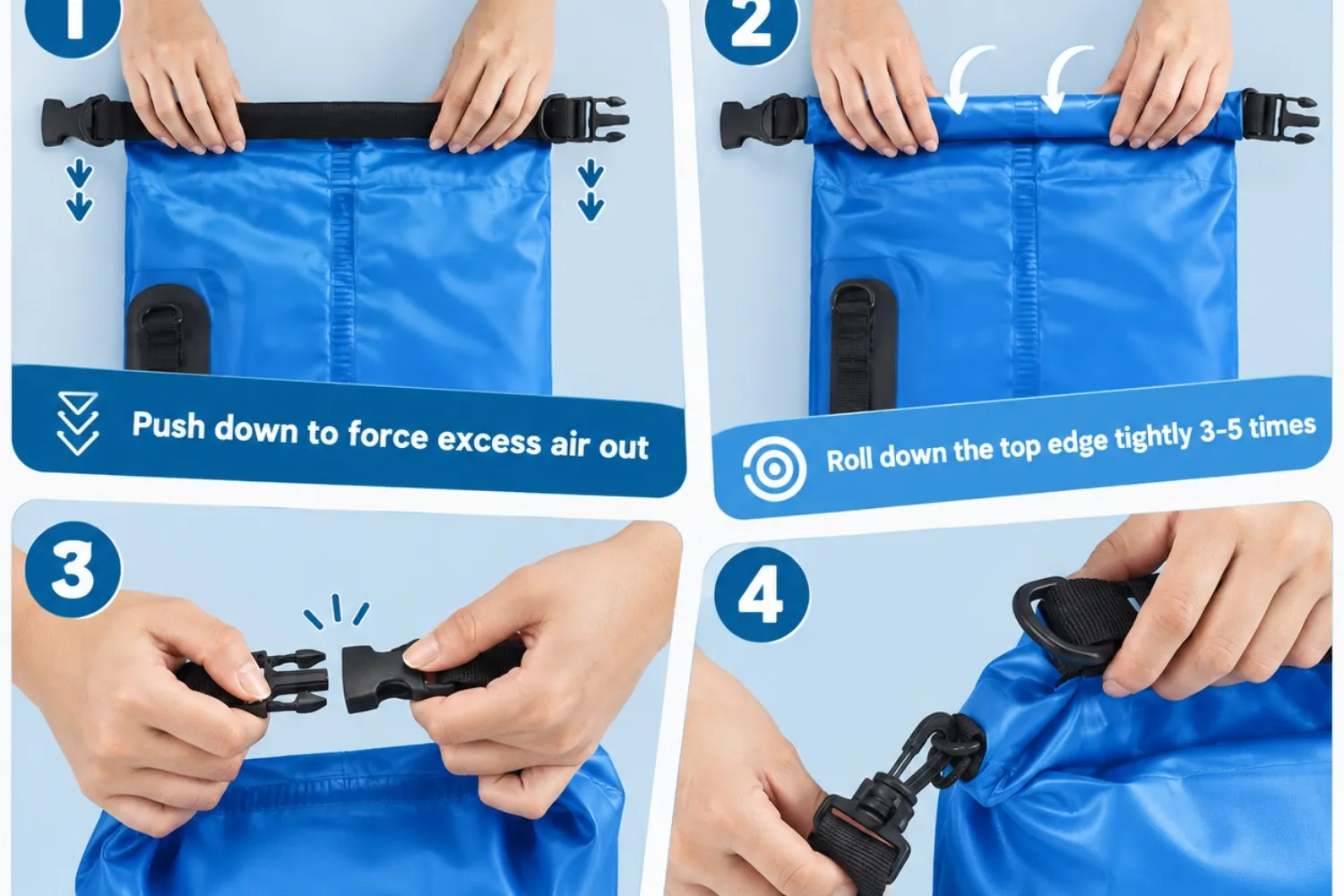
2. The Main Steps in Closing a Roll-Top Dry Bag
A closure should be easy for the end user to operate consistently. For buyers, the following steps provide a useful starting point for evaluating the design.
Step 1: Align the Opening
Bring the two sides of the opening together and straighten the top edge. Remove wrinkles and make sure the sealing area is not obstructed by clothing, straps, sand, or other objects.
An uneven opening can make subsequent folds less consistent.
Step 2: Remove Excess Air When Appropriate
If the product instructions recommend it, gently press out excess air before closing the bag. This can reduce bulk and make packing more compact.
Avoid overfilling the bag or forcing items into the closure area, as this may prevent the top from folding evenly.
Step 3: Roll the Closure Downward
Fold the top over itself in the direction specified by the product design. Many conventional roll-top dry bags require at least three complete folds or rolls, but the correct procedure depends on the specific construction and manufacturer’s instructions.
Each fold should be reasonably even and free from large wrinkles.
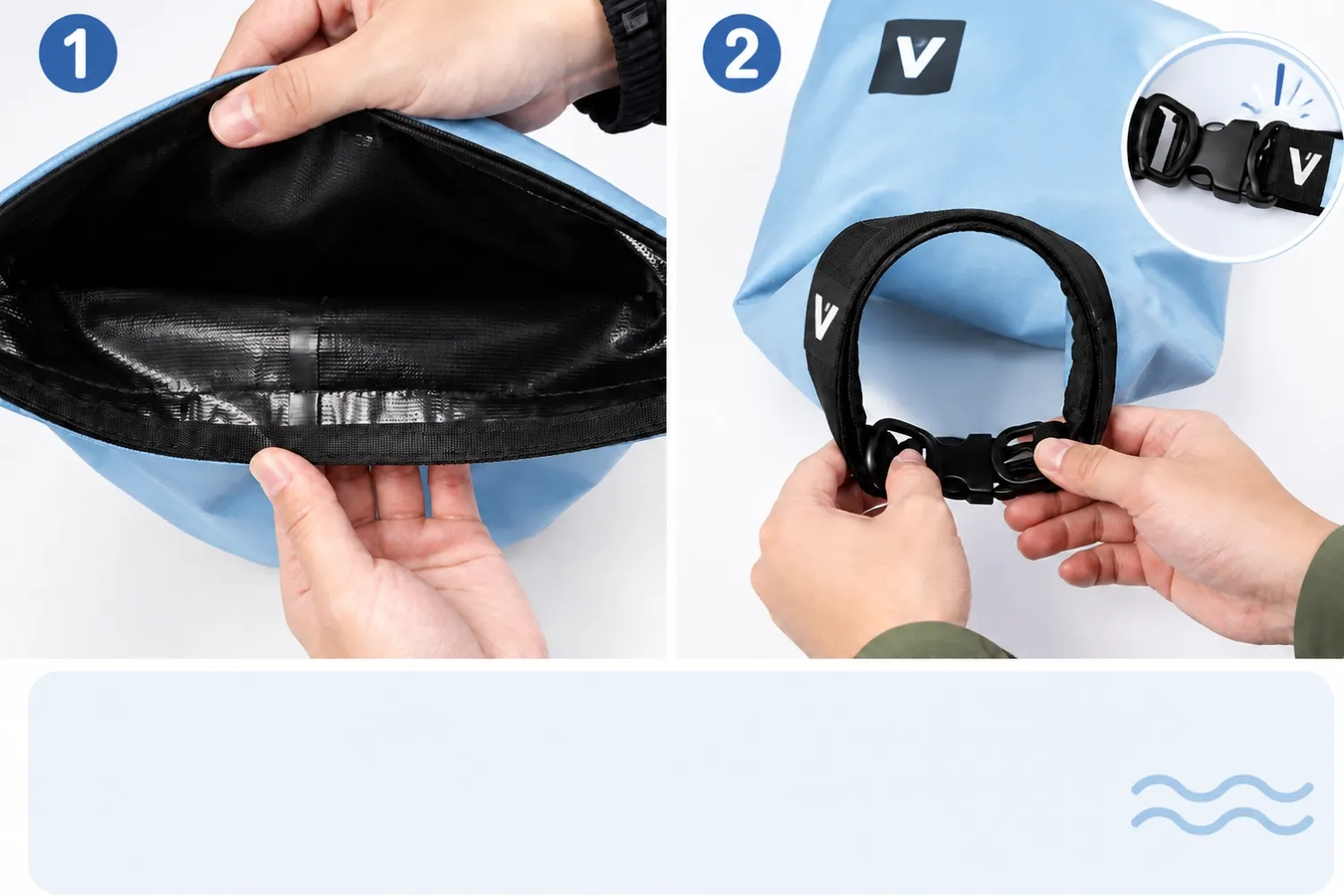
Step 4: Secure the Buckle
Connect the buckle or fastening components to hold the rolled closure in place. Check that the buckle engages fully and that the webbing does not twist or pull the closure unevenly.
Some designs fasten the buckle across the top, while others use side buckles. The closure arrangement should match the intended carrying and attachment method.
Buyer takeaway: The sample should be tested using the actual closure instructions intended for end users. A buckle that clips securely cannot compensate for an incorrectly rolled opening.
3. Key Elements of Dry Bag Closure Design
When developing a custom dry bag, small differences in closure construction can affect usability, appearance, durability, and manufacturing consistency.
Closure Width and Folding Area
The closure panel needs enough material to create the required folds while leaving sufficient space for the fastening components.
If the panel is too short for the intended design, users may struggle to form the specified number of folds. If it is unnecessarily long, the bag may become bulkier when closed, and the rolled section may interfere with carrying or storage.
Buyers should evaluate the opening in both its fully open and correctly closed states.
Reinforced Top Edges
Some roll-top designs incorporate stiffening strips or reinforced sections near the opening. These can help the top edge stay straight and make the initial fold easier to form.
The reinforcement should be appropriate for the selected material. A design that works well with a flexible PVC tarpaulin may behave differently when made with a lighter coated fabric.
During sample review, check whether the opening remains easy to align after repeated use and whether the reinforcement creates any uncomfortable hard edges.
Buckle Type and Position
Buckles secure the rolled opening, so their size, strength, placement, and ease of operation matter.
Buyers should review:
- Whether the buckle engages and releases smoothly.
- Whether both sides align without excessive pulling.
- Whether the fastening remains secure during normal handling.
- Whether the buckle position suits the intended carrying configuration.
- Whether the hardware is appropriate for the expected outdoor environment.
For example, a small day-trip dry bag may use a relatively simple fastening arrangement, while a larger bag intended for frequent handling may require a more robust closure and attachment system.
The buckle should be evaluated as part of the complete design rather than selected on appearance alone.
Webbing and Reinforcement
Webbing connects the buckle to the bag and transfers force through the closure area. Its placement and attachment method should be consistent with the expected use.
For bags that will carry heavier gear, buyers should also consider how carrying straps and attachment points distribute loads. The roll-top fastening should not automatically be treated as the only load-bearing structure.
Material Compatibility
PVC tarpaulin, TPU-laminated fabrics, and other coated materials can differ in stiffness, thickness, surface friction, and flexibility.
These differences influence how easily the closure rolls and how consistently the folds sit together.
When changing material during product development, buyers should reassess the closure rather than assuming that the original dimensions and fastening components will perform identically.
4. What Should Buyers Check When Reviewing a Roll-Top Dry Bag Sample?
A sample review should focus on both functional performance and the end-user experience. The following checklist can help brands and importers assess the closure before approving bulk production.
1. Folding Consistency
Close the bag according to the supplier's instructions and check whether the folds form evenly across the opening.
Look for persistent wrinkles, uneven edges, or areas where the closure becomes difficult to roll.
2. Ease of Operation
Ask someone unfamiliar with the sample to follow the intended closing instructions.
Can they understand the process quickly? Is the opening easy to align? Can the buckle be fastened without excessive force?
This is particularly relevant for retail products used by casual paddlers, beachgoers, and first-time dry bag users.
3. Buckle Engagement
Open and close the buckle repeatedly. Check that it engages securely, releases without unusual difficulty, and remains correctly positioned after the closure is rolled.
Inspect the webbing attachment points for uneven stitching, weak bonding, or other construction defects, as applicable to the design.
4. Closure Retention During Handling
With the bag correctly closed and loaded within its intended capacity, handle and carry it under normal expected conditions.
Check whether the rolled section stays in position and whether the buckle or webbing shifts unexpectedly.
Do not use this basic handling check as a substitute for formal load or durability testing where those tests are required.
5. Waterproof Performance
Waterproof performance must be evaluated on the complete bag, not inferred from the closure's appearance.
Ask the supplier what level of water exposure the product is designed for and what test method is used to verify it.
Where relevant, review the condition of the closure, the body material, and all welded seams. Test the sample in its correctly closed condition according to an agreed protocol, and document the results.
A splash test alone does not establish suitability for prolonged immersion. Likewise, a roll-top design should not be advertised as fully submersible unless the finished product has been validated for the stated conditions.
6. Repeated-Use Inspection
Open and close the sample multiple times to observe whether the material, reinforcement, buckle, and webbing continue to work together properly.
Check for material cracking, deformation, loose hardware, or changes in how easily the closure forms consistent folds.
The number of cycles and acceptance criteria should be agreed according to the product's intended use and quality requirements.
5. Common Roll-Top Closure Problems and What They May Indicate
Identifying problems early can help buyers and suppliers make adjustments before bulk production.
Observed issue | Possible design or production concern |
|---|---|
The top edge is difficult to align | Insufficient edge stability, unsuitable material stiffness, or inconsistent dimensions |
Folds are uneven or difficult to form | Closure panel dimensions, reinforcement, or material flexibility may need adjustment |
The buckle is difficult to fasten | Buckle size, positioning, webbing length, or alignment may be unsuitable |
The rolled section loosens during handling | The fastening arrangement or closure instructions may need review |
Water enters during a controlled test | Incorrect closure, contamination, damaged material, seam defects, or an unsuitable design may be involved |
The opening becomes harder to operate over time | Material deformation, reinforcement issues, or hardware wear may require investigation |
These symptoms do not always have a single cause. A useful supplier review should reproduce the problem, identify the likely source, and verify any proposed correction through another sample or agreed test.
6. Roll-Top Closure Design for Different Applications
The best closure configuration depends on how the bag will be used.
Kayaking and Canoeing
For kayaking and canoeing, users may need to open and close a bag outdoors, sometimes with wet hands. A closure that is easy to align, roll, and secure can improve everyday usability.
Buyers should consider the intended capacity, the number of folds required, buckle operation, attachment options, and the product's specified water-exposure performance.
Beach and Water Sports Bags
For beach trips and water sports, easy access and convenient packing can be important. The closure should remain manageable when the bag contains towels, swimwear, or other soft equipment.
Material flexibility and the amount of space taken up by the rolled section are useful factors to review.
Camping and Outdoor Storage
For camping and general outdoor storage, buyers may prioritize durability, packing efficiency, and compatibility with other equipment.
Larger bags should be assessed for the way the closure interacts with carrying straps, compression straps, and attachment points. The design should suit the expected load rather than relying on the buckle alone to carry it.
Across all these applications, the product's intended level of waterproof protection should be established separately from the closure style.
7. What Brands Should Specify When Developing a Custom Roll-Top Dry Bag
For OEM/ODM product development, a clear specification helps suppliers evaluate the closure and reduce avoidable sample revisions.
Before approving a design, consider documenting:
- Capacity and dimensions: Target volume and the bag dimensions measured in a clearly defined condition, including whether the closure is rolled.
- Material: PVC tarpaulin, TPU-laminated fabric, or another specified construction, including relevant thickness or weight requirements.
- Closure construction: Opening dimensions, reinforcement details, and the required closing procedure.
- Hardware: Buckle type, color, webbing specifications, and attachment configuration.
- Branding: Logo size and placement, ensuring that artwork does not interfere with the folding area, weld lines, or fastening components.
- Waterproof requirements: Intended exposure conditions, test method, and acceptance criteria for the finished bag.
- Quality inspection: Agreed checks for dimensions, buckle operation, seam construction, and repeated-use performance.
The approved sample should reflect the actual material, hardware, closure construction, and branding intended for production. If any of these elements change, the relevant parts of the sample evaluation should be repeated.
Final Thoughts
A roll-top closure may look simple, but its performance depends on how the opening, folds, fastening components, material, and bag construction work together.
For brands sourcing a roll top waterproof bag, the most useful approach is to review the closure as a complete system: check whether it is easy to operate, whether the fastening stays secure during intended use, and whether the finished product meets its specified waterproof requirements.
At CarryEase Outdoors, we support the development of custom waterproof bags for outdoor and water sports applications. From material and color selection to closure details, logo placement, and sample evaluation, a clear product specification helps bring the design closer to your brand's requirements.
Planning a custom dry bag collection? Contact CarryEase Outdoors to discuss your product concept, target application, and customization requirements.