
Product Knowledge
TPU vs. PVC: Which Material Is Best for Custom Waterproof Bags?
Compare TPU and PVC for custom waterproof bags. Learn the differences in durability, weight, flexibility, cost, and applications to choose the right material for your business.
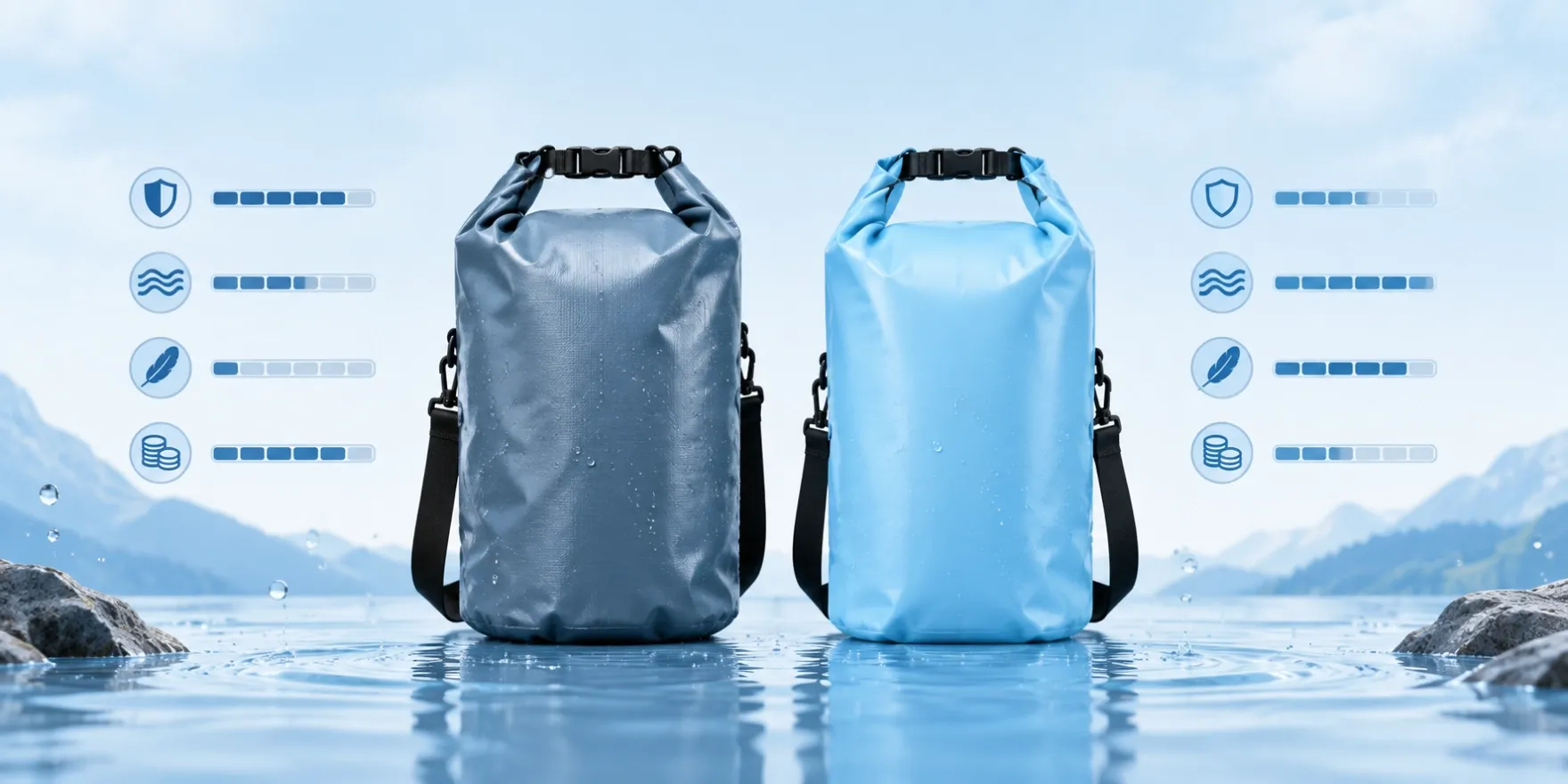
TPU vs. PVC: Which Material Is Best for Custom Waterproof Bags?
When developing custom waterproof bags, choosing the right material is one of the most important decisions for brands, wholesalers, outdoor operators, and water sports businesses.
Two commonly used materials are PVC and TPU. Both can be used to produce durable waterproof bags, but they have different characteristics in terms of weight, flexibility, durability, cost, and applications.
So, when comparing TPU vs PVC, which material is better?
The answer depends on your product requirements, target market, budget, and expected use.
PVC vs. TPU: What's the Difference?
PVC (Polyvinyl Chloride) and TPU (Thermoplastic Polyurethane) are both thermoplastic materials that can be processed into waterproof bag fabrics.
However, they offer different performance characteristics.
If you're not sure which factors to consider when selecting a dry bag, see our [How to Choose the Right Waterproof Dry Bag] guide for a practical overview of capacity, construction, closure and material.
Feature | PVC | TPU |
|---|---|---|
Durability | Excellent | Excellent |
Flexibility | Good | Excellent |
Weight | Generally heavier | Generally lighter |
Abrasion resistance | Excellent | Excellent |
Cold flexibility | Good | Generally better |
Appearance | Practical, durable | Softer and more premium |
Cost | More economical | Generally higher |
Custom applications | Excellent | Excellent |
For many PVC dry bags, PVC-coated tarpaulin is selected because it provides a good balance between durability, waterproof performance, and cost.
TPU is often considered when a lighter, more flexible, or more premium material is preferred.
1. PVC Dry Bags: Durable and Cost-Effective
PVC dry bags are widely used for outdoor and water sports applications because of their durability and relatively competitive cost.
PVC-coated fabrics can provide excellent resistance to water, abrasion, and everyday outdoor use.
For businesses ordering custom waterproof bags, PVC can be particularly attractive when durability and cost efficiency are important.
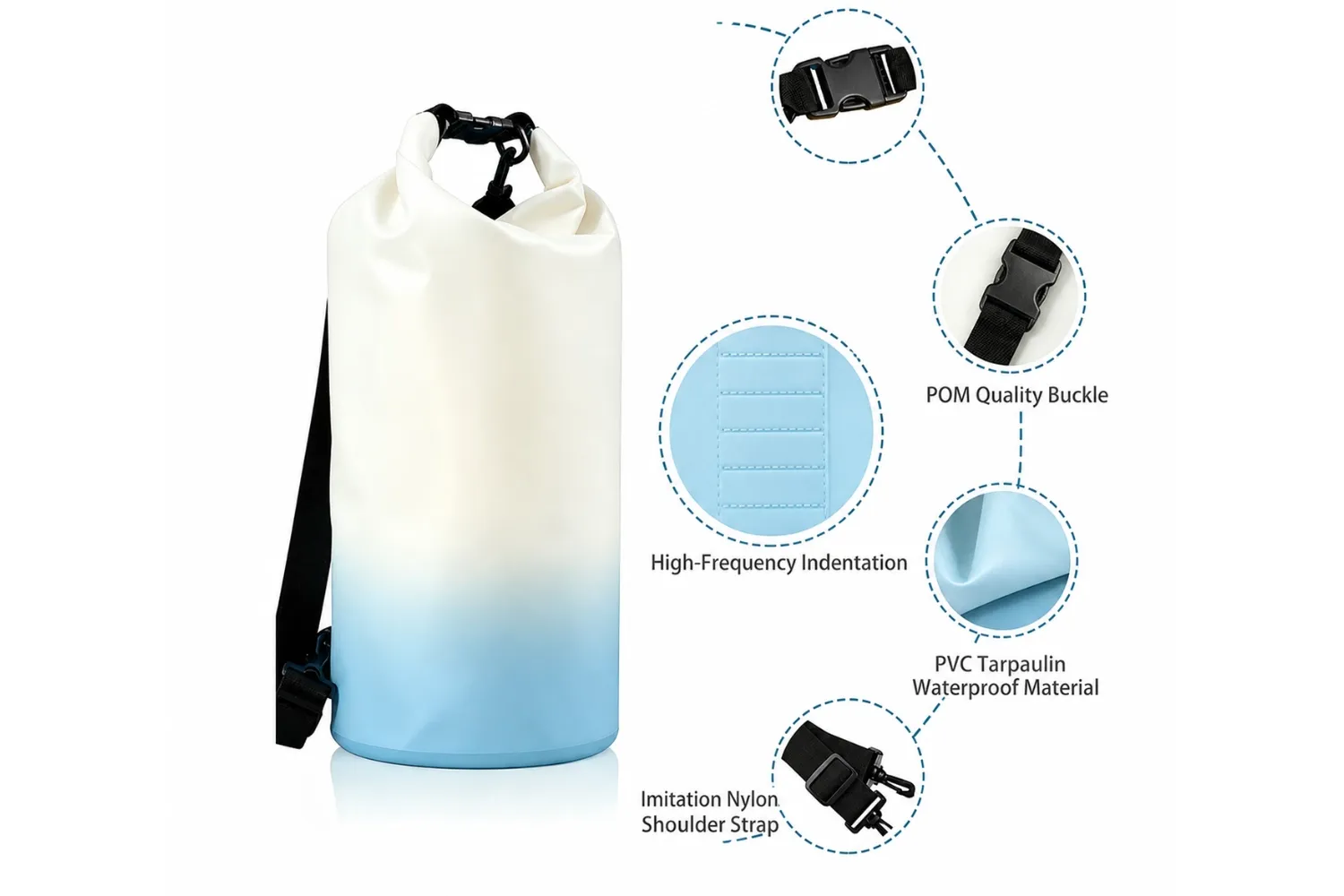
PVC is suitable for:
- Kayaking
- Canoeing
- Rafting
- Fishing
- Camping
- Water sports rentals
- Outdoor tours
- Promotional products
- Wholesale dry bags
For example, a PVC tarpaulin dry bag can be a practical choice for a kayak operator that needs to purchase hundreds or thousands of bags for guests.
When order quantities are high, material selection can have a significant effect on the overall product cost.
2. TPU Dry Bags: Lightweight and Flexible
TPU dry bags are often selected for applications where weight, flexibility, and a more premium material feel are important.
TPU fabrics can offer excellent flexibility while maintaining good durability and waterproof performance.
This makes TPU attractive for outdoor brands that want to position their products toward the lightweight or premium market.
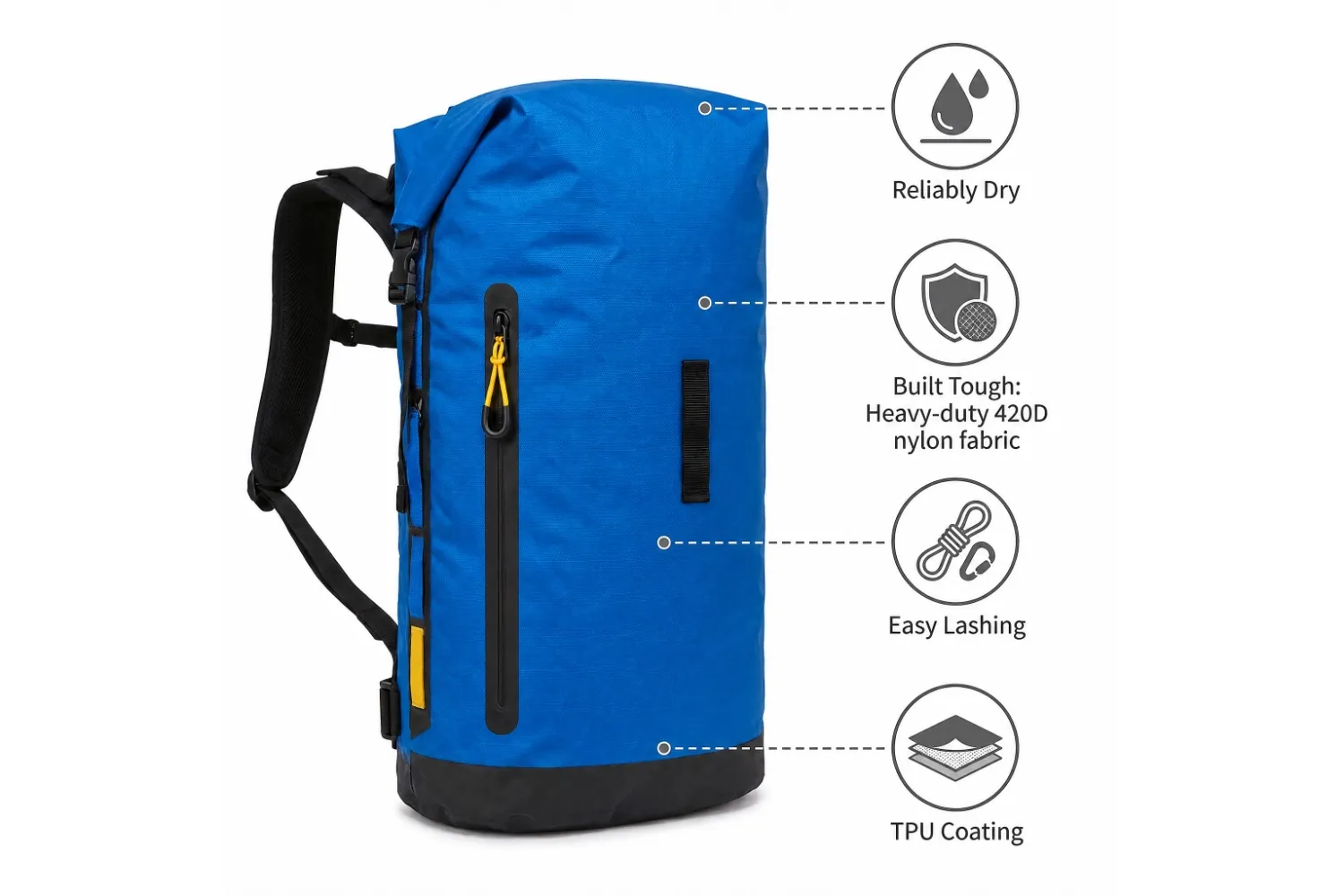
TPU can be suitable for:
- Lightweight outdoor gear
- Premium dry bags
- Hiking and adventure products
- Kayaking
- Paddle sports
- Travel products
- High-end outdoor brands
For brands developing a new product line, TPU dry bags can provide an alternative when the target customer values lighter weight and material feel over the lowest possible production cost.
3. Which Is More Waterproof: PVC or TPU?
This is one of the most common questions when comparing PVC vs TPU dry bags.
In practice, the waterproof performance of a finished bag does not depend only on the material.
The bag construction and manufacturing process are equally important.
For example, waterproof bags can use HF welding to create seamless welded seams instead of traditional stitched seams.
The design of the:
- welded seams
- roll-top closure
- buckles
- zipper
- fabric
- connection points
can all affect the final waterproof performance.
Therefore, simply choosing TPU instead of PVC does not automatically make a bag more waterproof.
Material + construction + welding quality + closure design all matter.
4. PVC vs. TPU: Which Is Better for Custom Production?
For B2B buyers, material selection should be based on the intended application rather than simply choosing the more expensive material.
Choose PVC when:
- Cost efficiency is important
- The product needs strong abrasion resistance
- The bag will receive heavy everyday use
- You need competitive wholesale pricing
- The product is intended for rental or tour operations
- You need a durable promotional or branded bag
Consider TPU when:
- Lower weight is important
- Flexibility is a priority
- You are targeting a premium outdoor market
- The product needs a softer material feel
- Your brand has a higher target retail price
For example:
A kayak tour operator purchasing several hundred dry bags for guests may prioritize durability and cost efficiency, making PVC a practical choice.
Meanwhile:
An outdoor brand developing a lightweight premium dry bag may prefer TPU.
5. What Should Buyers Consider Besides Material?
When developing custom waterproof bags, material is only one part of the product specification. [OEM Waterproof Gear Bags: What Brands Need to Know].
B2B buyers should also consider:
Capacity
Common sizes include:
5L, 10L, 20L, 30L, 40L and 60L+
The appropriate capacity depends on the intended use.
Construction
Consider whether you need:
- Roll-top closure
- Double shoulder straps
- Carry handles
- External pockets
- Waterproof zippers
- Transparent phone windows
- Drainage or ventilation features
Branding
Custom waterproof bags can be customized with:
- Logo
- Print color
- Bag color
- Packaging
- Labels
- Hangtags
Quantity and MOQ
Material, customization, and order quantity can all affect the final cost.
For brands and wholesalers, discussing these requirements with an experienced custom dry bag manufacturer early in the development process can help avoid unnecessary changes later.
6. Which Material Should You Choose?
There is no single material that is best for every waterproof bag.
PVC is often the better choice for:
Durability + cost efficiency + heavy-duty applications
TPU is often the better choice for:
Light weight + flexibility + premium positioning
The best choice depends on your product concept and target customers.
If you are developing bags for kayak tours, fishing charters, water sports operators, outdoor rentals, or wholesale distribution, PVC may provide an attractive balance between performance and cost.
If you are developing a lightweight premium outdoor product, TPU may be worth considering.
Need Help Choosing the Right Material for Your Custom Waterproof Bags?
At CarryEase, we specialize in custom waterproof bags for outdoor, water sports, and commercial applications.
We can help you evaluate different materials and specifications based on your intended use, quantity, capacity, branding, and target market.
Whether you need PVC dry bags, TPU dry bags, custom logo dry bags, or other waterproof gear bags, we can develop the product according to your requirements.
Contact us to discuss your custom waterproof bag project.