
Buying Guides
Waterproof Bag Manufacturer Checklist: 8 Things to Check
Use this practical checklist to evaluate waterproof bag manufacturers, review product specifications, confirm testing requirements, and reduce sourcing risks.
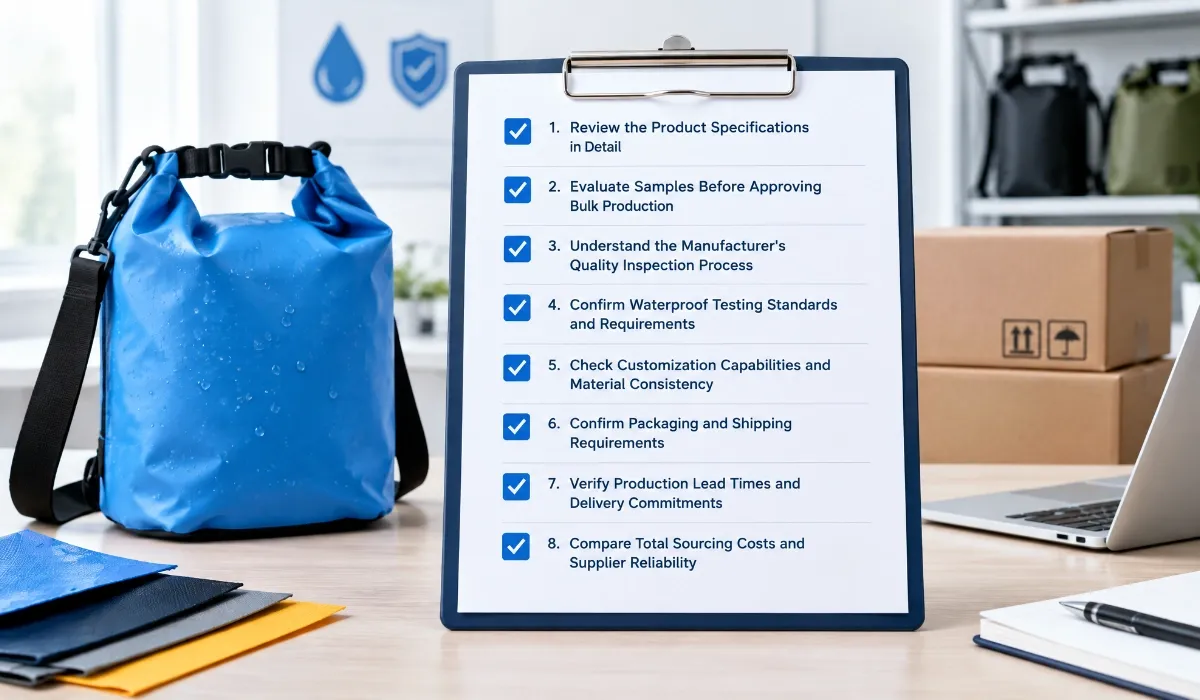
What Should Buyers Check When Sourcing Waterproof Bags from a Manufacturer?
Sourcing waterproof bags can be a great opportunity for outdoor brands, retailers, and water sports businesses. However, choosing the wrong manufacturer may lead to inconsistent quality, failed waterproofing tests, delayed shipments, or unexpected costs.
A reliable waterproof bag manufacturer should do more than offer competitive prices. Buyers also need to evaluate product specifications, sample quality, inspection procedures, testing capabilities, packaging, and delivery schedules.
To help you make a more informed decision, this waterproof bag manufacturer checklist covers eight essential areas to review before placing an order. Whether you are sourcing custom dry bags, waterproof backpacks, or water sports gear bags, these steps can help reduce sourcing risks and build a more reliable supply chain.
1. Review the Product Specifications in Detail
Before requesting a quotation, prepare a clear product specification sheet. Incomplete specifications can result in different interpretations of the product, making it difficult to compare quotations or maintain consistent quality.
Ask your waterproof bag supplier to confirm the following details:
- Materials: PVC tarpaulin, TPU-coated fabric, nylon, or other specified materials.
- Material thickness and weight: Confirm the required thickness, fabric weight, and durability.
- Construction method: Check whether the bag uses high-frequency (HF) welding, heat sealing, or conventional stitching.
- Dimensions and capacity: Specify finished dimensions, capacity, and acceptable tolerances.
- Design details: Confirm colors, straps, buckles, closures, pockets, and other functional components.
- Branding and packaging: Define logo placement, printing method, hangtags, labels, and retail packaging.
For example, an HF-welded waterproof dry bag and a stitched outdoor backpack may require different construction methods and quality-control procedures.
If your product requires seamless welded seams, state this requirement clearly rather than simply asking for a waterproof bag.
Buyer tip: Keep a written specification sheet and make sure the manufacturer uses the same version when preparing samples, calculating prices, and starting bulk production.
2. Evaluate Samples Before Approving Bulk Production
A product photo or quotation cannot fully demonstrate workmanship and performance. Request a sample before committing to a large order.
During sample evaluation, check these areas:
- Appearance: Are the dimensions, shape, colors, and logo placement consistent with your design?
- Workmanship: Are the seams, welded edges, straps, buckles, and closures properly finished?
- Functionality: Does the roll-top closure operate smoothly? Are the handles and attachment points practical?
- Material quality: Does the fabric have the expected flexibility, thickness, and surface finish?
- Waterproof performance: Does the sample meet the agreed waterproofing requirements under the specified test conditions?
For custom products, distinguish between a stock sample and a pre-production sample. A stock sample helps you assess the manufacturer's existing workmanship, while a pre-production sample should reflect the agreed materials, construction, branding, and specifications for your order.
For example, if you are developing a custom waterproof backpack, approving a sample made with one material does not automatically mean a later production run using a different material will perform the same way.
Buyer tip: Keep an approved reference sample and written records of any changes. This provides a clearer basis for subsequent OEM bag quality inspection.
3. Understand the Manufacturer's Quality Inspection Process
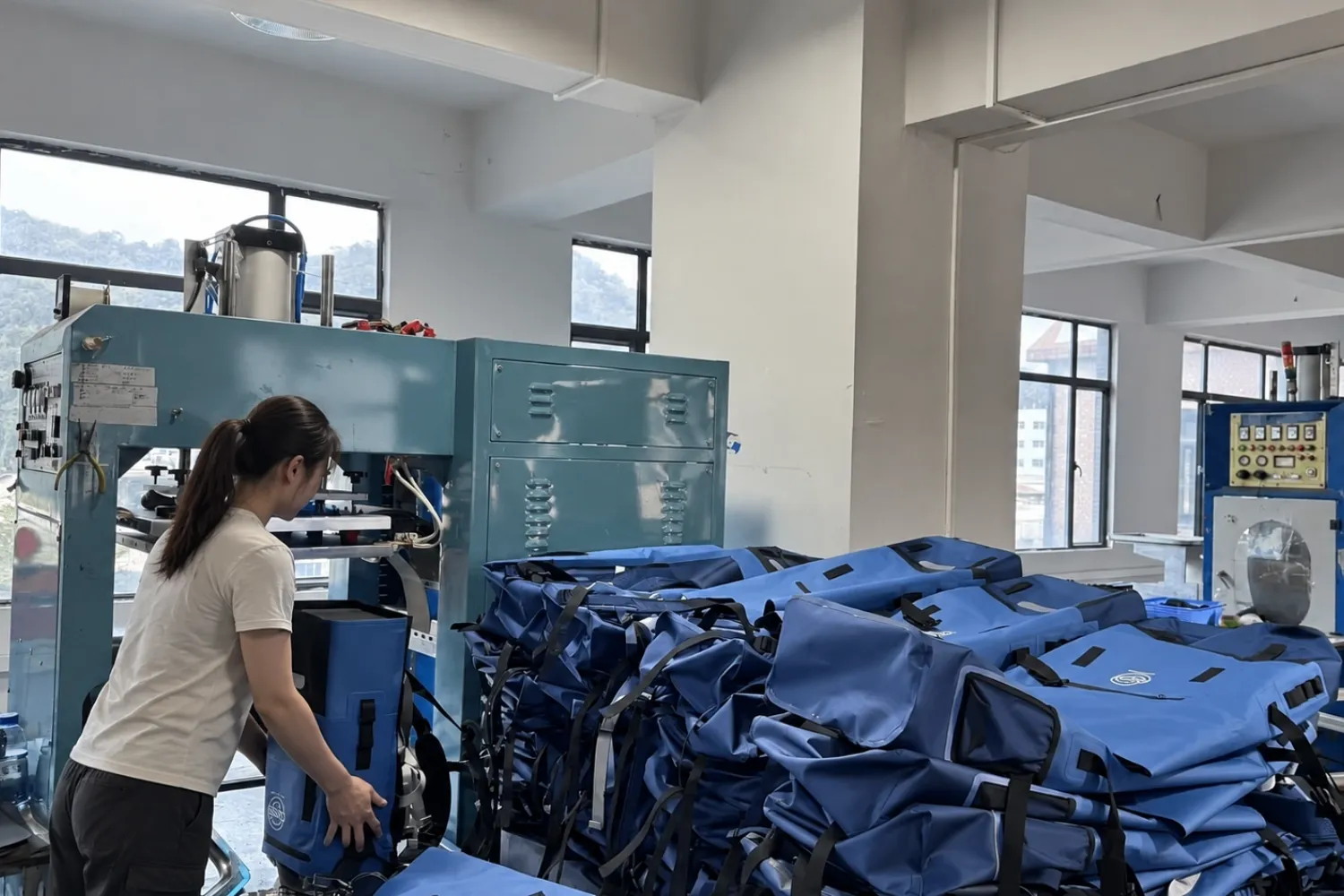
Quality inspection should not begin only when the finished goods are ready to ship. A dependable manufacturing partner should have a process for checking materials, production workmanship, and finished products.
Ask your waterproof bag supplier how quality is controlled at each stage.
Incoming material inspection
Confirm how the supplier checks fabric specifications, color consistency, hardware, buckles, zippers, and other incoming components.
In-process inspection
For welded waterproof bags, relevant checks may include seam appearance, welding consistency, bonding strength where specified, and correct assembly of closures and accessories.
Final product inspection
Finished bags should be checked against the approved specifications, including dimensions, workmanship, logo quality, functionality, and packaging.
You should also agree on how defects are classified and handled.
For larger orders, discuss whether an AQL-based sampling inspection is appropriate. AQL is an acceptance-sampling approach, not a guarantee that every unit is defect-free. Agree on the inspection plan, defect classifications, and acceptance criteria before production.
Buyer tip: Ask for an inspection checklist or sample inspection report to understand what the supplier actually checks, rather than relying on a general statement that every product undergoes quality control.
4. Confirm Waterproof Testing Standards and Requirements
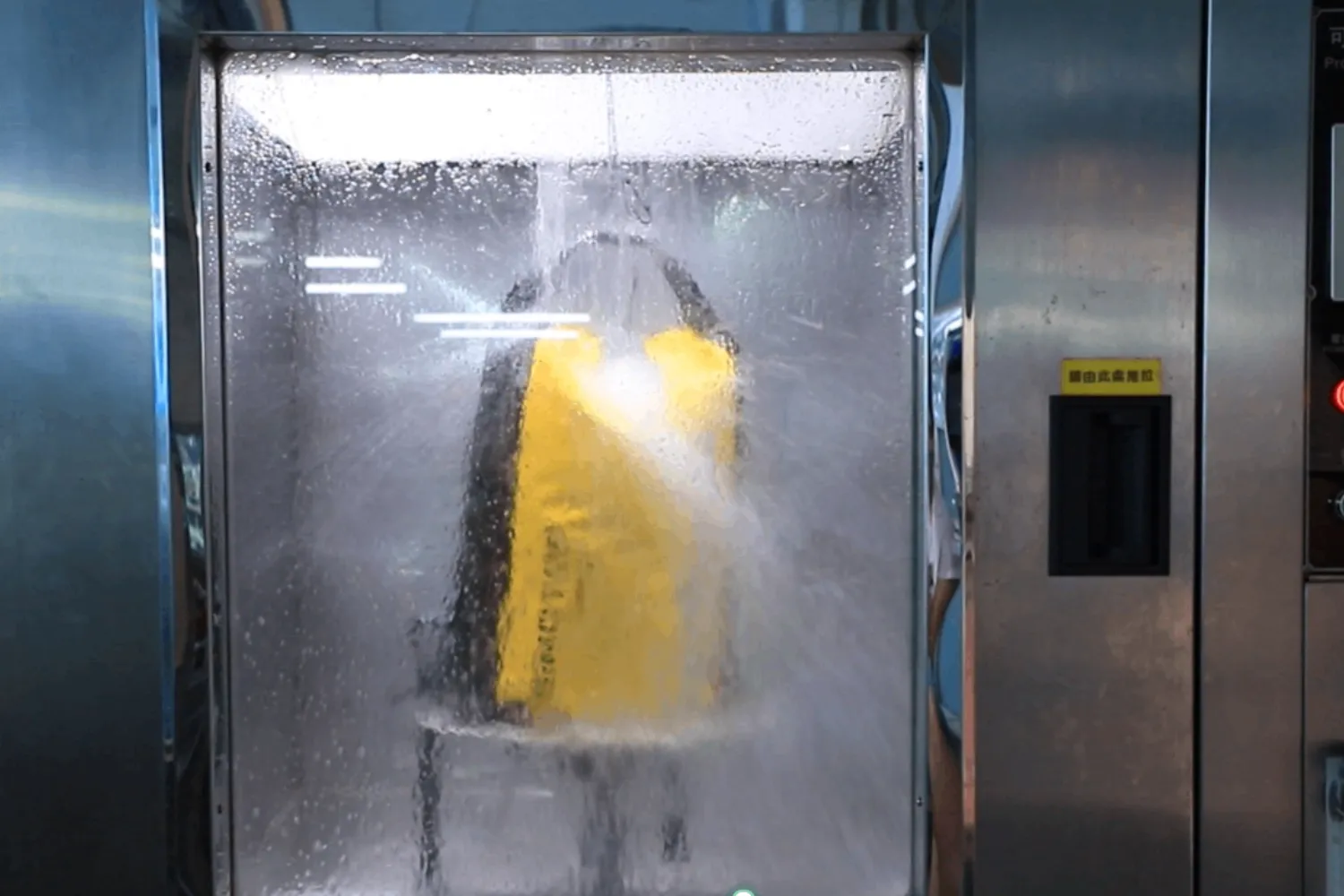
One of the most important checks when sourcing waterproof bags is understanding what “waterproof” means for the specific product.
A bag designed to protect belongings from splashes may not provide the same protection as a fully welded dry bag intended for temporary immersion.
Before placing an order, clarify the expected conditions of use and the test methods required.
Consider the following questions:
- What level of water protection does the product need to provide?
- Will the bag be exposed to rain, splashes, water jets, or immersion?
- How will the seams and closure system be tested?
- Are there specific performance criteria or test reports required?
- Does the product need additional testing for durability, abrasion, or repeated use?
For example, an IPX7 rating relates to defined temporary-immersion test conditions, while IPX8 relates to immersion under conditions agreed between the manufacturer and the relevant testing party. Neither rating should be assumed simply because a bag uses waterproof fabric.
For HF-welded products, seam integrity and closure performance are particularly important. A waterproof material alone cannot guarantee that the complete bag will prevent water ingress.
Depending on the product and application, buyers may request documented leak tests, water-immersion tests, or other agreed performance checks.
If third-party reports or certifications are required, confirm their scope, validity, and relevance to the actual product.
Buyer tip: Put the required test method, acceptance criteria, and documentation into the purchase agreement. Avoid relying on vague promises such as “100% waterproof” without a defined test procedure.
5. Check Customization Capabilities and Material Consistency
If you are developing private-label products, confirm that the manufacturer can reproduce your design reliably at the required quantity.
Customization may include:
- Custom colors and material combinations.
- Screen-printed, heat-transfer, or other suitable logo applications.
- Different sizes, capacities, and bag structures.
- Custom straps, closures, pockets, and accessories.
- Individual packaging, hangtags, and branded labels.
However, not every customization option is practical at every order quantity.
Custom-dyed materials, special hardware, printed panels, and complex construction may involve additional minimum order quantities, setup charges, or longer lead times.
Ask your waterproof bag supplier to identify these requirements before approving the design.
Material substitutions also deserve attention. PVC tarpaulin, TPU-coated fabrics, and nylon-based materials have different properties. Changing the material can affect flexibility, weight, appearance, construction, and waterproof performance.
Buyer tip: Document all approved materials and components. Require written approval before any material substitution, especially when it could affect the product's waterproofing or durability.
6. Confirm Packaging and Shipping Requirements
Packaging affects product presentation, storage, transportation, and the condition of goods upon arrival.
Before confirming your order, review the packaging specifications with your supplier.
Check the following:
- Individual packaging, such as polybags or custom retail packaging.
- Carton dimensions, gross weight, and net weight.
- Units per carton and carton labeling.
- Barcode, SKU, country-of-origin, or other required labels.
- Protection against abrasion, moisture, and transit damage.
- Palletization or other requirements for your shipping method.
For international shipments, packaging should be suitable for the expected transport conditions and meet the buyer's applicable labeling and import requirements.
Also request carton measurements and estimated shipment weight early enough to obtain accurate freight quotations.
For example, two suppliers may offer similar unit prices, but differences in carton packing can affect freight costs and warehouse handling.
Buyer tip: Approve a packaging specification before mass production, particularly when the products will be sold through retail stores, distributors, or e-commerce channels.
7. Verify Production Lead Times and Delivery Commitments
A competitive quotation is less useful if the supplier cannot deliver within your sales schedule.
Ask the manufacturer to break down the timeline into clear stages:
- Material sourcing and preparation.
- Sample development and approval.
- Logo and packaging preparation.
- Bulk production.
- Quality inspection and corrective work, if required.
- Packing and shipment readiness.
Confirm whether the quoted lead time starts after deposit payment, material approval, sample approval, or another milestone.
You should also clarify how the supplier handles material shortages, production delays, and inspection failures.
For seasonal products such as dry bags and water sports gear bags, planning backwards from your required arrival date can help you account for production, international shipping, customs clearance, and distribution.
Do not confuse production lead time with total delivery time. The latter also depends on shipping arrangements and destination.
Buyer tip: Request a written production schedule with milestones. For repeat orders, discuss whether materials can be prepared in advance and how future order quantities may affect lead times.
8. Compare Total Sourcing Costs and Supplier Reliability
The lowest unit price does not necessarily represent the best sourcing decision.
When comparing quotations, consider the complete cost of purchasing and receiving the goods.
Your comparison should include:
- Unit price at the same order quantity and specification.
- Sample charges and sample shipping costs.
- Logo setup, tooling, and customization fees.
- Packaging and labeling costs.
- Inspection or testing charges.
- Payment terms and deposit requirements.
- Shipping terms, freight, and other applicable charges.
Make sure all suppliers are quoting against the same specifications, order quantity, and Incoterms. Otherwise, an apparently cheaper quotation may exclude important costs or offer a different product.
You should also assess the supplier's communication, technical understanding, production coordination, and willingness to document requirements.
Ask relevant questions about production capabilities, quality procedures, and applicable certifications. Where necessary, request supporting documentation and verify that it relates to the facility, process, or product being offered.
For buyers working with OEM or ODM partners, transparency about who performs production and who is responsible for quality control is especially important.
Buyer tip: Use a supplier comparison sheet that evaluates price, quality, testing, communication, delivery, and overall risk rather than selecting a manufacturer on price alone.
Final Checklist Before Placing an Order
Before issuing a purchase order, make sure you can answer “yes” to the following questions:
- Have all product specifications and tolerances been documented?
- Has the sample been evaluated and approved?
- Are quality inspection procedures and defect criteria agreed?
- Are waterproof testing methods and acceptance requirements clear?
- Have materials, branding, and customization details been confirmed?
- Are packaging and labeling requirements documented?
- Is the production schedule aligned with the required delivery date?
- Have total sourcing costs, payment terms, and shipping responsibilities been reviewed?
If any of these items remain unclear, resolve them before authorizing bulk production.
Conclusion: Choose a Supplier That Can Meet Your Requirements Consistently
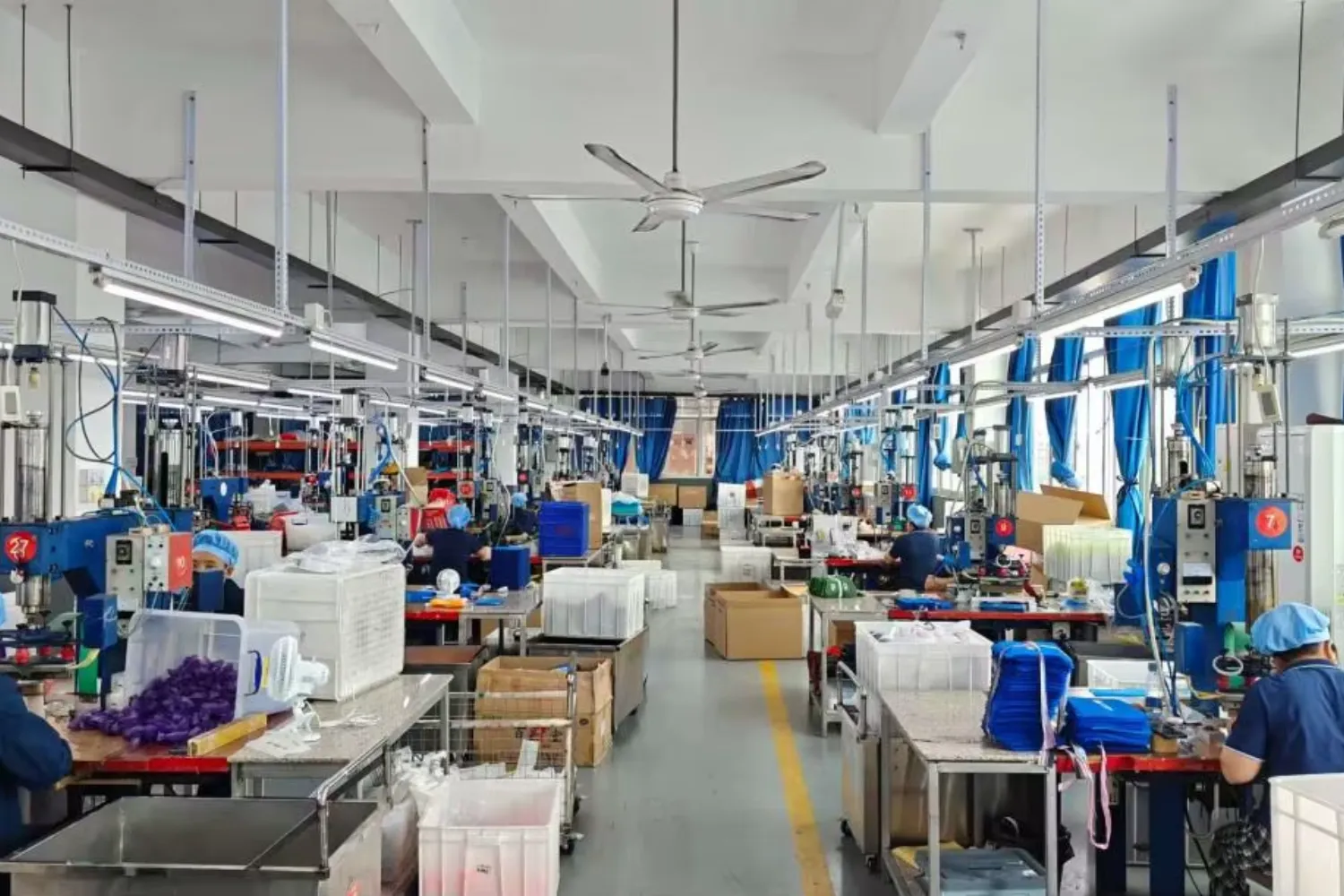
Finding the right waterproof bag manufacturer involves more than comparing prices and browsing product catalogs. A structured evaluation helps buyers identify potential problems before they become expensive production or delivery issues.
By reviewing specifications, approving samples, checking quality-control procedures, confirming waterproof testing, and documenting packaging and delivery requirements, you can make more informed sourcing decisions.
At CarryEase Outdoors, we focus on custom waterproof bags and water sports gear bags, including HF-welded dry bags and other products developed for outdoor applications. If you are planning a private-label waterproof bag project, contact our team to discuss your product specifications, customization options, and manufacturing requirements.
A clear brief is the first step toward developing a product that meets your brand's quality and functional expectations.