
Buying Guides
Waterproof Phone Pouch vs. Dry Bag
Compare waterproof phone pouches and dry bags for kayaking, boating, and beach activities. Learn how outdoor retailers can choose the right product for different customer needs.
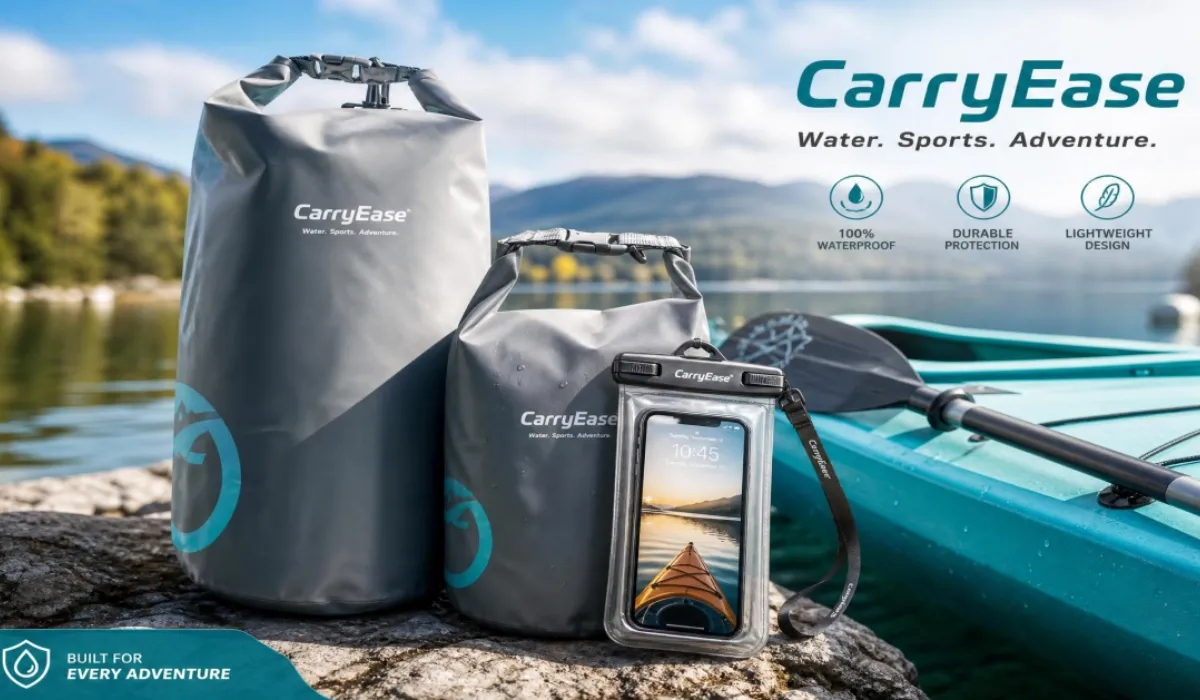
Waterproof Phone Pouches vs. Dry Bags: Which Should Your Customers Choose?
When preparing for kayaking, paddleboarding, boating, or a day at the beach, outdoor enthusiasts need reliable ways to protect their belongings from water. But should they choose a waterproof phone pouch or a traditional dry bag?
Although both products are designed for water-related activities, they serve different purposes. A phone pouch helps keep a smartphone accessible while protecting it from water exposure, while a dry bag provides storage for clothing, towels, and other outdoor essentials.
For outdoor retailers, water sports rental operators, and equipment wholesalers, understanding these differences can help build a more useful product range.
In this guide, we compare a waterproof phone pouch vs. dry bag across storage capacity, touchscreen usability, carrying styles, and typical applications.
1. Storage Capacity and Organization
The most important difference between a waterproof phone pouch and a dry bag is what each product is designed to carry.
Waterproof phone pouches: Protection for phones and small essentials
A waterproof phone pouch is designed primarily for a smartphone. Depending on its dimensions, it may also accommodate small items such as payment cards, identification, cash, or a key.
Its compact design makes it convenient for customers who want to keep their phones close at hand without carrying a larger bag.
For retailers, phone pouches can be positioned as practical accessories for customers purchasing kayaking, boating, beach, or travel gear.
Dry bags: Storage for outdoor essentials
Dry bags are designed to hold a wider range of belongings, including spare clothing, towels, snacks, and outdoor equipment. They are available in different designs and capacities to suit different activities.
Unlike a phone pouch, a dry bag is generally intended for storing items together rather than providing convenient access to a smartphone throughout an activity.
Retailer takeaway: A phone pouch is a compact personal accessory, while a dry bag provides more versatile storage. For many customers, the two products work best together.
2. Touchscreen Usability and Phone Access
For many water sports enthusiasts, a smartphone is more than a communication device. It may be used for taking photos, checking maps, viewing route information, or contacting others.
This makes phone accessibility an important consideration when choosing waterproof storage.
Waterproof phone pouches
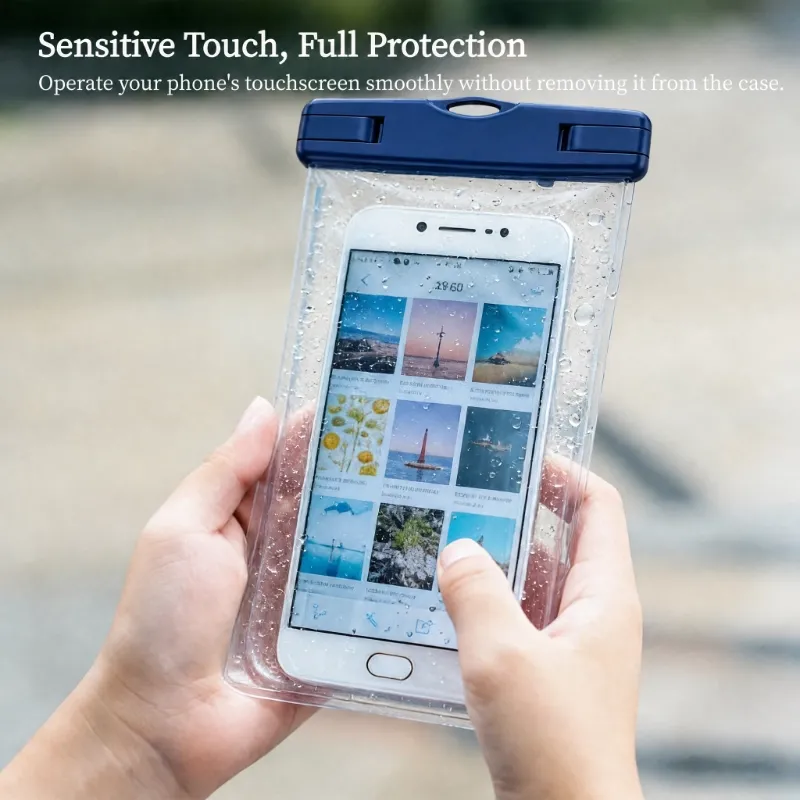
Many transparent phone pouches are designed to let users view their phone screens through a protective window. Some models also support touchscreen operation, allowing users to interact with compatible devices without removing them from the pouch.
However, touchscreen responsiveness can vary depending on the pouch construction, phone model, screen protector, and water conditions. Buyers should verify compatibility and test the product before use.
For customers looking for a waterproof phone case for kayaking, a dedicated phone pouch can be a convenient option when frequent phone access is important.
Dry bags
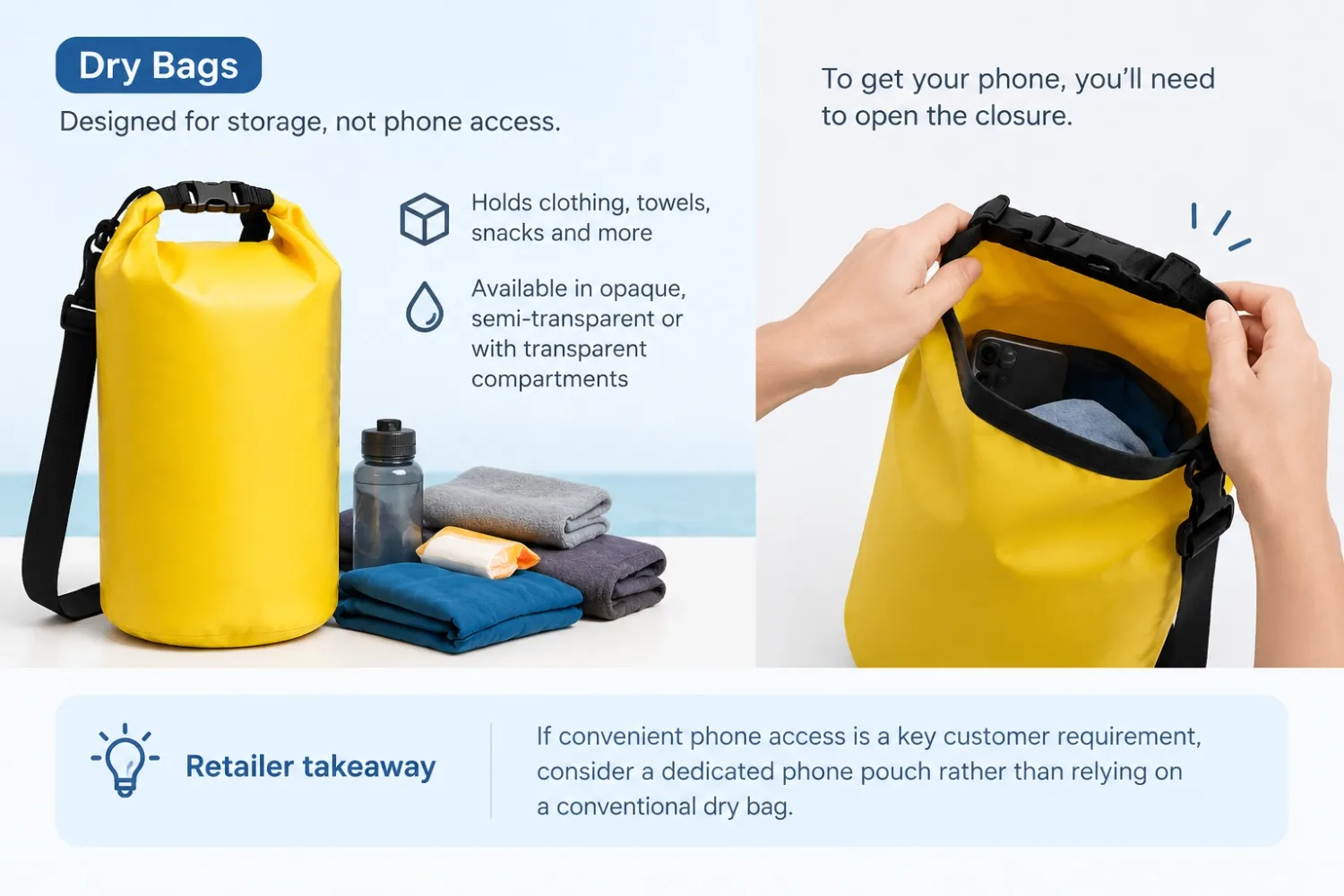
Traditional dry bags prioritize storage rather than smartphone interaction. Depending on the material and design, they may be opaque, semi-transparent, or equipped with a transparent compartment.
If a phone is stored inside a conventional dry bag, customers will generally need to open the closure to retrieve it. This can be inconvenient when they want to take a quick photo or check navigation.
Retailer takeaway: If convenient phone access is a key customer requirement, consider a dedicated phone pouch rather than relying on a conventional dry bag.
3. Carrying Styles and Hands-Free Convenience
How customers carry their belongings can influence which product is more suitable for their activity.
Feature | Waterproof Phone Pouch | Traditional Dry Bag |
|---|---|---|
Typical carrying style | Neck lanyard, wrist strap, or compatible attachment | Carry handle, shoulder strap, or backpack straps, depending on the design |
Access to contents | Convenient access to a smartphone | Usually requires opening the closure |
Storage purpose | Smartphone and small essentials | Clothing, towels, accessories, and other gear |
Best suited to | Customers who want their phones close at hand | Customers who need to carry multiple belongings |
Phone pouches are useful when customers want to keep their smartphones accessible while moving around. Dry bags are better suited to carrying belongings that do not need to be accessed frequently.
Some phone pouches are specifically designed with floating features, but this should never be assumed of every model. Retailers should verify the actual product specifications before promoting floating performance.
For activities involving strong currents, waves, or immersion, customers should also follow the product's intended-use instructions. A lanyard or strap should not automatically be treated as a safety device.
4. Which Product Fits Different Water Sports Activities?
The best product depends on what customers need to carry and how they plan to use it.
Kayaking and paddleboarding
Customers who want to take photos, check maps, or access their phones conveniently may prefer a waterproof phone pouch.
Those carrying spare clothing, towels, snacks, or other personal belongings will generally benefit from a dry bag.
For longer paddling trips, offering both products can provide a practical combination: a phone pouch for the smartphone and a dry bag for additional gear.
Beach visits and swimming areas
A phone pouch can be convenient for visitors who want to keep their phones accessible while walking along the beach or participating in water-related activities.
A dry bag can hold towels, spare clothes, and other personal items. Retailers serving beach destinations may therefore find opportunities to offer both products.
Customers should check the phone pouch's intended water-exposure rating rather than assuming that every model is suitable for swimming or underwater use.
Boat tours and water sports rentals
Rental operators may consider waterproof phone pouches as optional accessories for customers who want to protect their phones during an activity.
Dry bags can serve customers who need to store extra belongings during a trip.
For operators offering branded merchandise, both product categories may provide opportunities for logo customization, subject to the manufacturer's available options and minimum order quantities.
Camping and multi-day outdoor trips
Dry bags are generally more suitable for customers carrying clothing, towels, and other supplies during extended outdoor activities.
A phone pouch can complement this storage by keeping a smartphone separately accessible.
The two products serve different roles, making them complementary options for outdoor retailers rather than direct substitutes.
5. What Should Retailers Consider When Sourcing Waterproof Phone Pouches?
For outdoor brands and wholesalers, selecting a phone pouch requires more than choosing a transparent design. The following factors can help buyers assess whether a product fits their target market.
Phone compatibility
Check the supported phone dimensions and whether the pouch can accommodate devices with protective cases. A pouch that fits a phone without a case may not fit the same device with a bulky case attached.
Screen visibility and touchscreen operation
If convenient phone access is a selling point, evaluate the clarity of the transparent window and test touchscreen responsiveness with representative devices.
Avoid promising universal touchscreen compatibility unless it has been verified.
Closure design and waterproof performance
Review the closure structure, instructions for proper sealing, and the product's intended water-exposure conditions.
Ask the supplier what performance information or test documentation is available. Product descriptions should accurately reflect the specifications of the model being sold.
Carrying accessories
Lanyards, wrist straps, and attachment options can influence convenience and the overall customer experience.
Choose a configuration that suits the intended application, and check the durability and suitability of the accessories.
Branding and wholesale options
For brands planning to develop their own product range, useful purchasing considerations include:
- Custom logo options
- Available materials and colors
- Packaging requirements
- Minimum order quantity (MOQ)
- Sample availability
- Production lead time
- Quality-control procedures
When comparing waterproof phone pouch wholesale suppliers, consider product suitability, verified performance, customization capabilities, and total landed cost—not just the quoted unit price.
6. Should Your Business Offer Both Products?
For many outdoor retailers, offering both waterproof phone pouches and dry bags is a practical way to serve different customer needs.
A phone pouch appeals to customers looking for compact smartphone protection and convenient access. A dry bag serves customers who need to carry clothing, towels, and other outdoor essentials.
These products can also complement each other in retail bundles or activity-specific gear recommendations.
For example, a kayaking customer may use a dry bag for spare clothing and snacks while keeping a smartphone in a separate phone pouch. A beach visitor may need only a phone pouch for a short outing but prefer a dry bag when carrying towels and a change of clothes.
For rental operators, tour companies, and outdoor brands, the right combination depends on the activities offered, customer expectations, and storage needs.
Rather than choosing one product for every situation, consider which products best match your customers' actual use cases.
7. Source Waterproof Phone Pouches for Your Brand
CarryEase Outdoors supports OEM/ODM development for waterproof bags and outdoor gear accessories. For outdoor brands, wholesalers, and water sports businesses looking to expand their product range, waterproof phone pouches can complement dry bags and other waterproof storage solutions.
When developing a phone pouch for your brand, consider the intended application, compatible phone sizes, closure design, carrying accessories, logo requirements, and verified waterproof performance.
Looking for waterproof phone pouches for your product range?
Explore our [Waterproof Phone Pouch product page] to review the available product and discuss potential customization options for your brand.
Contact CarryEase Outdoors to discuss your product requirements, branding needs, and wholesale order plans.
Frequently Asked Questions
What is the main difference between a waterproof phone pouch and a dry bag?
A waterproof phone pouch is designed primarily to protect a smartphone while keeping it accessible. A dry bag is designed to store a wider range of personal belongings and outdoor equipment.
Is a waterproof phone pouch useful for kayaking?
Yes. A suitable phone pouch can help protect a smartphone during kayaking while allowing convenient access on compatible models. Customers should check the product's intended water-exposure rating and follow the manufacturer's instructions.
Can customers use their phones through a waterproof phone pouch?
Some models support touchscreen operation, but performance varies by product and device. Buyers should verify compatibility and test the pouch before use.
Do all waterproof phone pouches float?
No. Floating performance depends on the specific design and construction. Retailers should only advertise a floating feature when it is supported by the product's specifications and testing.
What should wholesalers look for when sourcing waterproof phone pouches?
Wholesalers should evaluate phone compatibility, screen visibility, touchscreen usability, closure design, verified waterproof performance, carrying accessories, customization options, MOQ, and production lead time.
Can waterproof phone pouches be customized with a company logo?
Customization depends on the product's materials and construction. Contact the manufacturer to confirm suitable branding methods, artwork requirements, available colors, packaging options, and minimum order quantities.