
Buying Guides
How to Design a Waterproof Backpack for Kayaking
Learn the key design considerations for a kayaking waterproof backpack, including carrying comfort, closure design, material selection, and storage features.
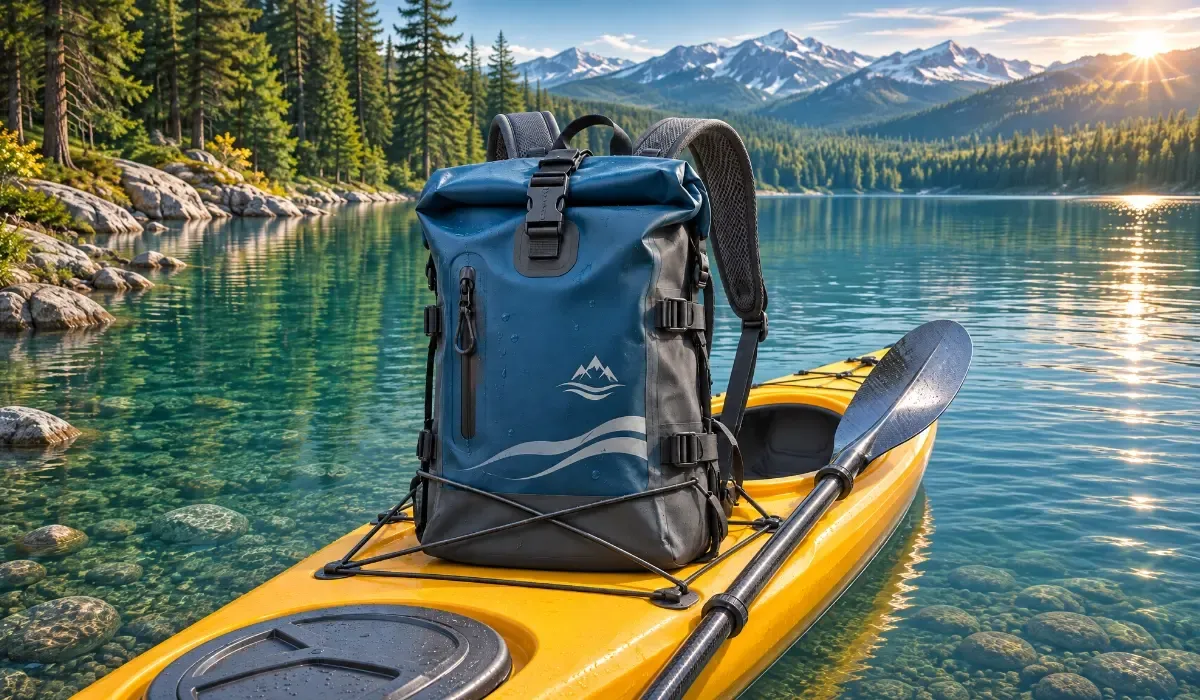
How to Design a Waterproof Backpack for Kayaking
A waterproof backpack for kayaking needs to do more than keep belongings dry. It must also be comfortable to carry, easy to access, and practical for use in a wet and constantly changing environment.
Unlike ordinary outdoor backpacks, kayaking backpacks are exposed to splashes, rain, water contact, and frequent handling. Their design must balance waterproof protection with carrying comfort, storage efficiency, and ease of use.
For outdoor brands and gear retailers developing a new kayaking product, understanding these functional requirements is essential.
So, what should you consider when designing a waterproof backpack for kayaking?
Let's explore the key design elements.
1. Shoulder Straps: Comfort and Stability on the Water
Carrying comfort is one of the most important considerations in waterproof backpack design.
Kayakers may carry their backpacks from parking areas to launch points, along riverbanks, or between different activity locations. Even if the backpack is not worn continuously while paddling, uncomfortable straps can affect the overall user experience.
Several features deserve attention:
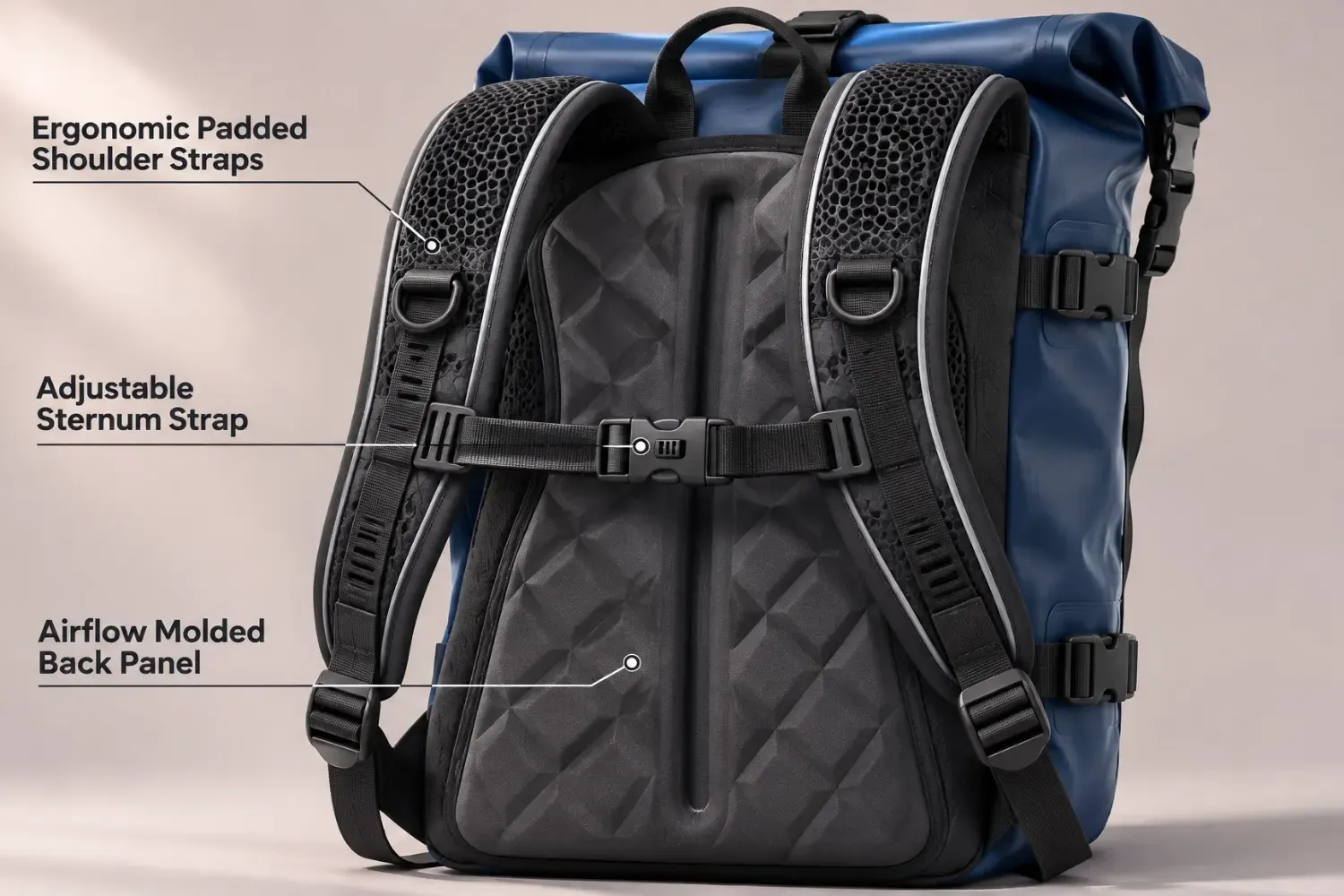
Padded Shoulder Straps
Lightweight padding helps distribute the load across the shoulders and reduces pressure when carrying heavier equipment.
The padding should provide sufficient support without making the backpack unnecessarily bulky.
Adjustable Straps
Adjustable shoulder straps allow users to adapt the fit to different body sizes and clothing layers.
This is particularly useful for kayaking, where users may wear wetsuits, paddling jackets, or other water sports clothing.
Chest Straps
An adjustable chest strap helps keep shoulder straps in position and improves stability during walking or movement on uneven terrain.
For larger-capacity kayaking backpacks, a chest strap can be a useful addition.
Back Panel Design
A simple padded or reinforced back panel can improve carrying comfort and help the backpack maintain its shape.
However, excessive padding may increase weight and make the bag slower to dry. The design should reflect the intended carrying load and usage conditions.
2. Closure Design: Balancing Waterproof Protection and Easy Access
The closure system is a critical part of a waterproof backpack.
For kayaking applications, the opening must help prevent water from entering while remaining easy for users to operate.
Roll-Top Closure
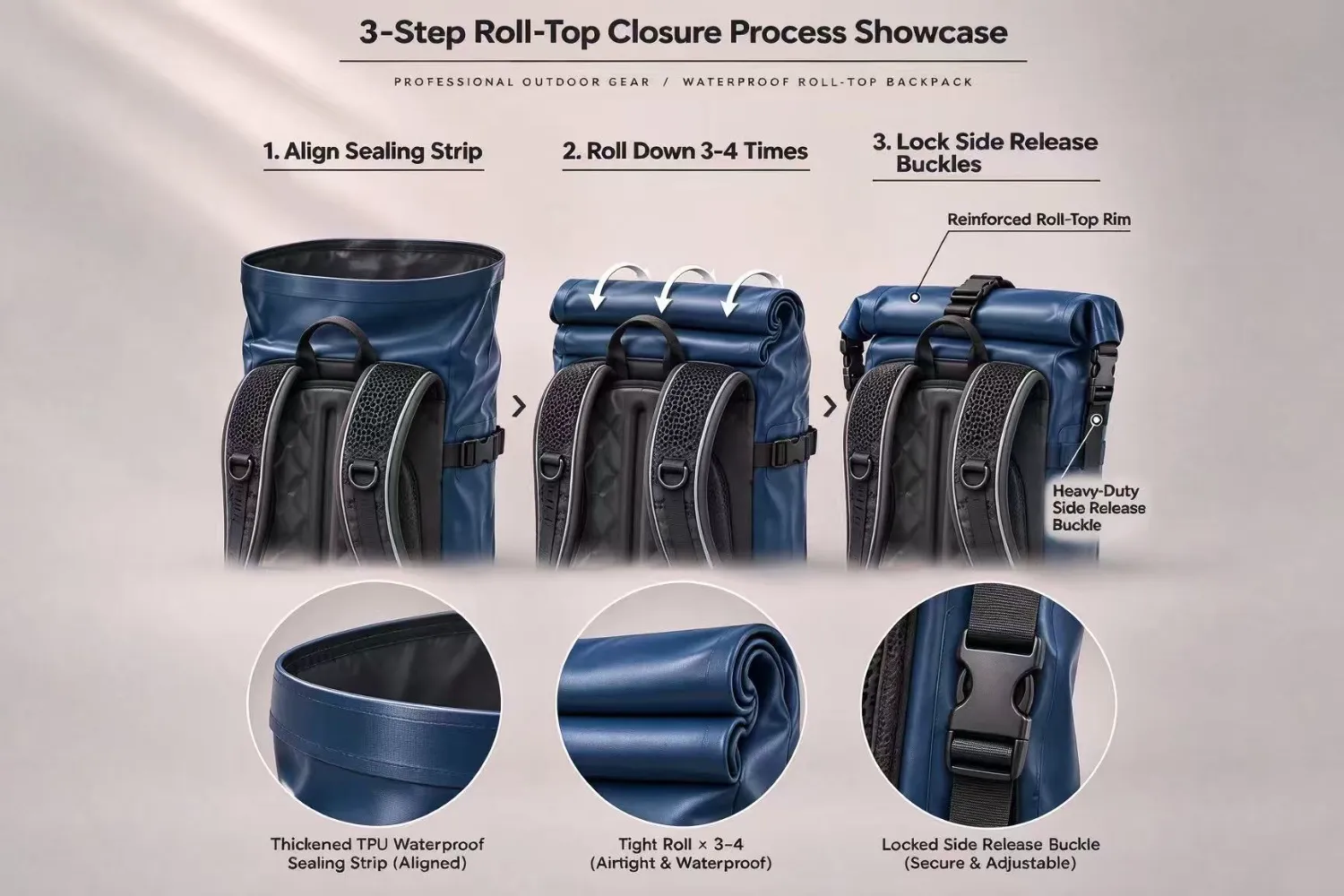
A roll-top closure is a practical choice for many kayaking dry backpacks.
Users roll the top opening several times and secure it with side-release buckles. This creates a compact closure that helps protect the contents from splashes and temporary water exposure when properly designed and used.
The number of rolls, opening width, and buckle position should all be considered during product development.
A wider opening makes packing and retrieving equipment easier, while a properly proportioned roll-top section helps maintain a secure closure.
Waterproof Zippers
Waterproof zippers can provide convenient access to smaller compartments without requiring users to open the entire backpack.
They are particularly useful for organizing frequently accessed items.
However, waterproof zippers require careful material selection, assembly, and quality inspection. They may also increase manufacturing costs.
For most general-purpose kayaking backpacks, a roll-top main compartment combined with a smaller zippered pocket can offer a practical balance.
3. Material Selection: Waterproofing, Weight, and Durability
Material selection directly affects the performance, appearance, weight, and cost of a kayaking backpack.
The right material depends on the intended application and target customer.
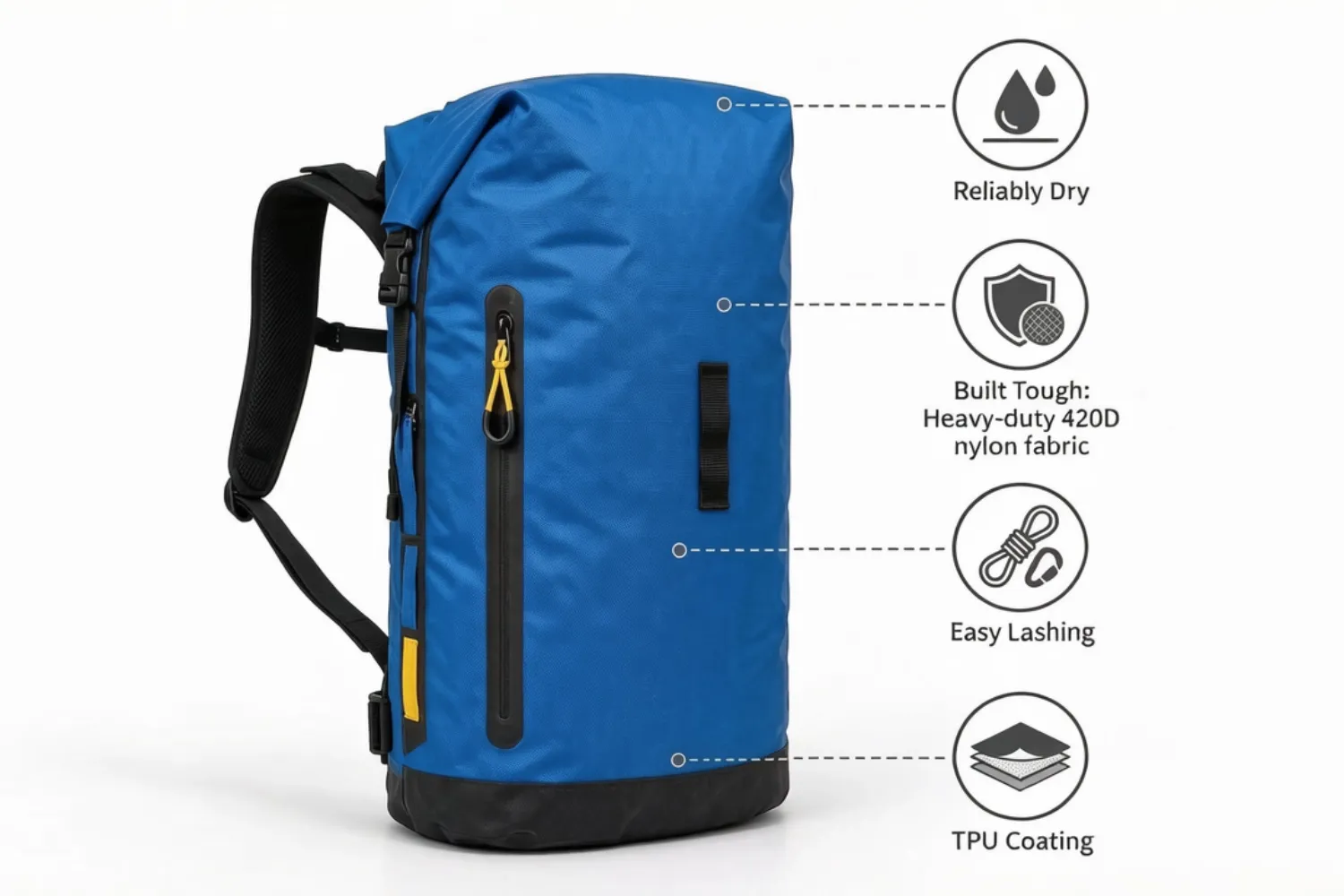
PVC Tarpaulin
PVC tarpaulin is commonly used for heavy-duty waterproof bags.
Its advantages include:
- Good resistance to water and abrasion.
- A relatively firm structure that helps the backpack maintain its shape.
- Compatibility with high-frequency welding for suitable material constructions.
- A practical option for rugged outdoor applications.
However, thicker PVC materials can make a backpack heavier and less flexible.
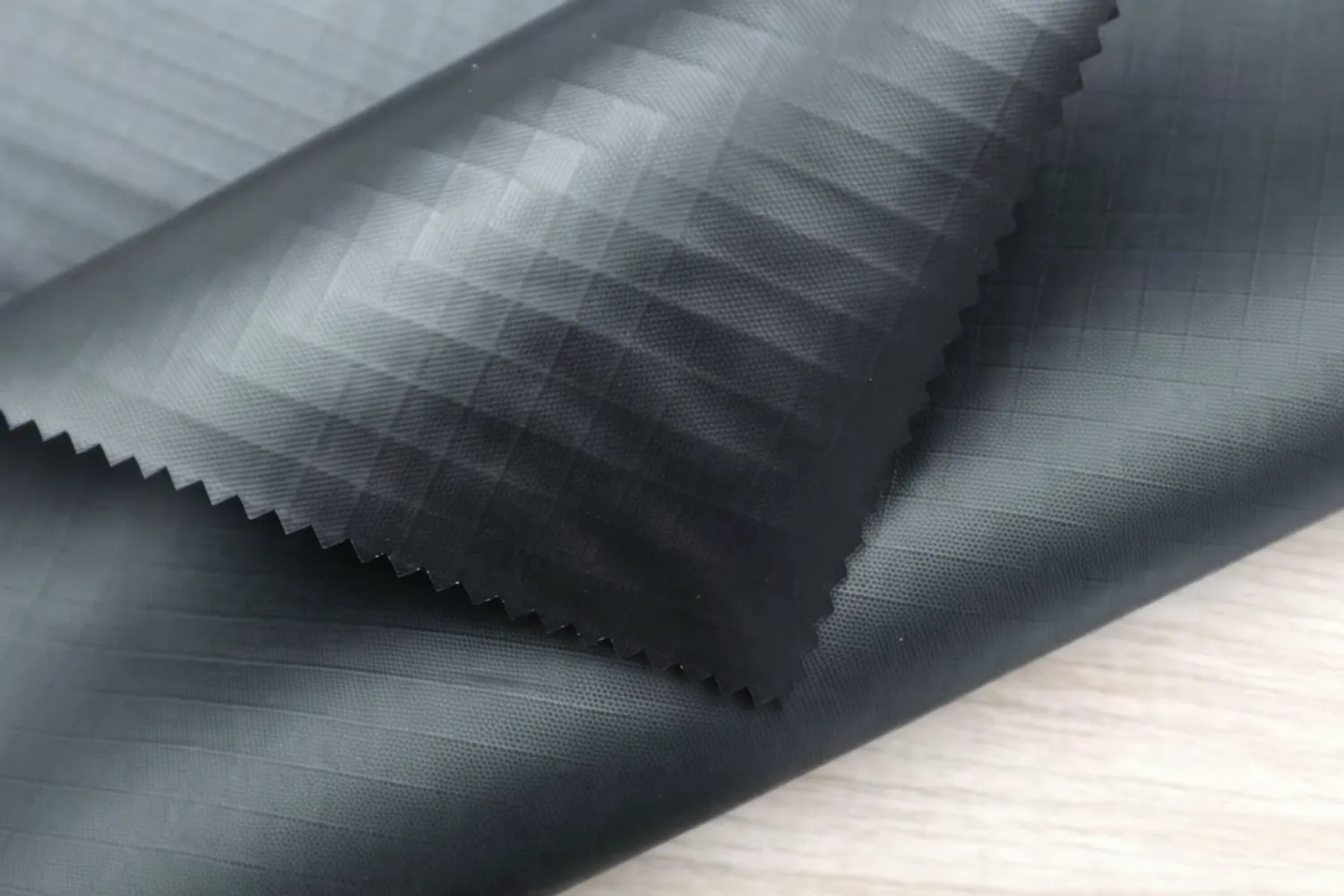
TPU-Coated Fabrics
TPU-coated fabrics offer another option for waterproof backpack development.
Depending on the base fabric and coating construction, they can provide:
- A lighter and more flexible feel.
- Good waterproof performance when properly constructed.
- A cleaner appearance suitable for modern outdoor products.
- Greater flexibility for lightweight backpack designs.
Nylon with Waterproof Coating or Lamination
Nylon-based fabrics can be suitable for lightweight kayaking backpacks.
They offer flexibility and a relatively low weight, making them attractive for products designed around portability.
However, the waterproof performance depends on the fabric construction, coating or lamination, seams, and closure system.
When choosing materials, brands should evaluate the complete backpack rather than focusing only on the fabric's waterproof rating.
4. Storage Compartments: Organizing Essential Kayaking Gear
A good kayaking backpack should make it easy to organize essential belongings without adding unnecessary complexity.
The storage layout should reflect what users actually carry during kayaking trips.
Main Storage Compartment
The main compartment should provide enough space for clothing, towels, food, and other personal belongings.
A wide opening can make packing larger items easier.
Capacity should match the intended use. A compact backpack may be sufficient for short recreational trips, while longer excursions may require additional storage space.
External Pocket
An external pocket can provide quick access to frequently used items.
However, any external pocket exposed to water should be designed with appropriate protection.
A waterproof zipper or a separately protected pocket may be considered depending on the intended level of protection.
Internal Organization
Simple internal features can improve usability, including:
- Small zippered pockets for valuables.
- Key clips for securing keys.
- Internal dividers for separating smaller items.
- Removable compartments for flexible storage.
Not every backpack needs all these features. A simpler structure can reduce weight, manufacturing complexity, and overall cost.
5. Structural Design: Stability, Reinforcement, and Practical Details
Beyond materials and compartments, the overall structure determines how well a waterproof backpack performs in real kayaking environments.
Several construction details are worth considering.
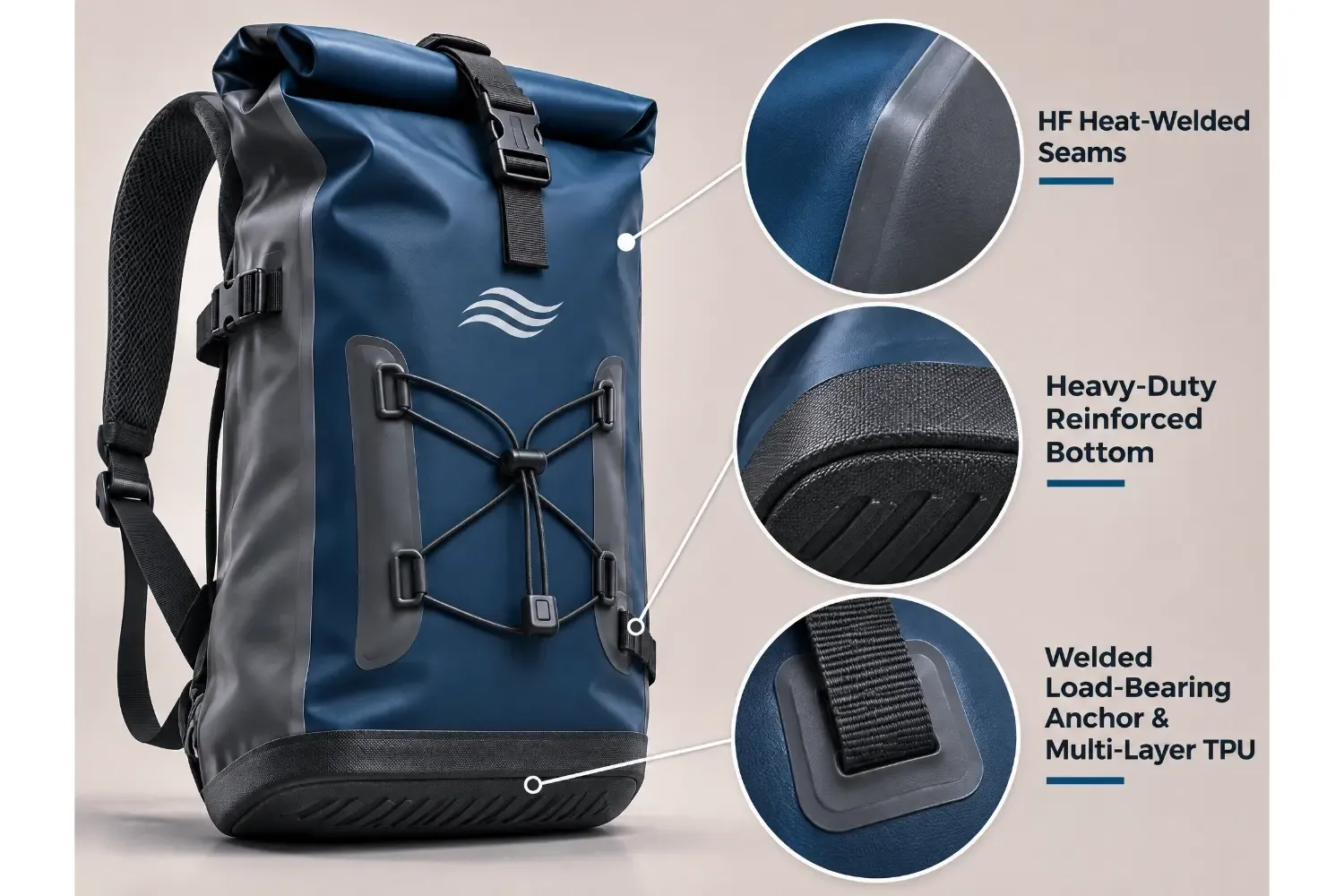
Reinforced Bottom Panel
The bottom of a kayaking backpack frequently comes into contact with wet ground, rocks, boat surfaces, and other rough environments.
Additional reinforcement can improve resistance to abrasion and extend product life.
Welded Seams
For waterproof backpack construction, high-frequency welding or other suitable heat-welding processes can help create waterproof joints without relying on traditional stitched seams.
The welding method must be compatible with the selected material.
Seam design, welding strength, and corner reinforcement should all be checked during production.
Drainage and Water Management
A waterproof main compartment should prevent water from entering rather than allowing it to drain.
However, certain external components, such as open accessory pockets or separate mesh compartments, may benefit from drainage features.
These should be designed independently from the waterproof storage area.
Attachment Points
D-rings, webbing loops, and external buckles can provide additional carrying and attachment options.
Users may attach small accessories, secure the backpack during transportation, or connect it to other equipment.
Their placement should be practical without interfering with the main closure or carrying system.
6. Waterproof Performance Testing: Check the Complete Backpack
A waterproof backpack should be evaluated as a complete product, not simply by testing its fabric.
Even waterproof materials cannot guarantee a waterproof finished bag if the seams, closures, or attachment points are poorly constructed.
During product development, brands should pay attention to:
- Material waterproof performance.
- Welded seam integrity.
- Roll-top closure performance.
- Buckle and attachment durability.
- Overall construction consistency.
Testing methods should match the intended product specifications and usage conditions.
For example, a backpack designed to handle splashes and rain does not necessarily provide the same protection as a product intended for temporary immersion.
If a specific IPX rating or immersion requirement is needed, the complete product should be tested under the corresponding standard and conditions.
Clear performance expectations help manufacturers select appropriate materials, construction methods, and testing procedures.
7. Customization Considerations for Kayaking Backpack Brands
For outdoor brands and retailers, developing a waterproof backpack is also an opportunity to create a product that stands out in the market.
Capacity and Dimensions
Common development options include compact day-use backpacks and larger-capacity designs for extended outdoor activities.
The ideal dimensions depend on the target customer and intended gear load.
Colors and Branding
Custom fabric colors, logo printing, and branded buckles can help create a consistent product identity.
Material and Construction
Brands can choose different material thicknesses, fabric constructions, reinforcement areas, and closure systems according to their target price and performance requirements.
Functional Accessories
Optional features may include chest straps, external attachment points, internal pockets, and waterproof front compartments.
The key is to prioritize features that provide real value rather than adding unnecessary components.
Final Thoughts
Designing a waterproof backpack for kayaking requires a balance of waterproof protection, carrying comfort, practical storage, and durable construction.
From shoulder strap configuration and roll-top closures to material selection and reinforced bottom panels, every design decision affects the final product's usability and manufacturing cost.
For outdoor brands planning to develop a new kayaking dry backpack, starting with the target application and essential functional requirements can make the product development process more efficient.
At CarryEase Outdoors, we support custom waterproof bag development with flexible material, size, color, and branding options. Whether you are developing a lightweight kayaking backpack or a more rugged waterproof gear bag, the right design starts with understanding how the product will be used.