
Outdoor & Camping
Dry Bags for Camping: A Guide for Outdoor Brands
Explore how dry bags support camping and outdoor storage, including clothing protection, equipment organization, material choices, and product options for outdoor brands.
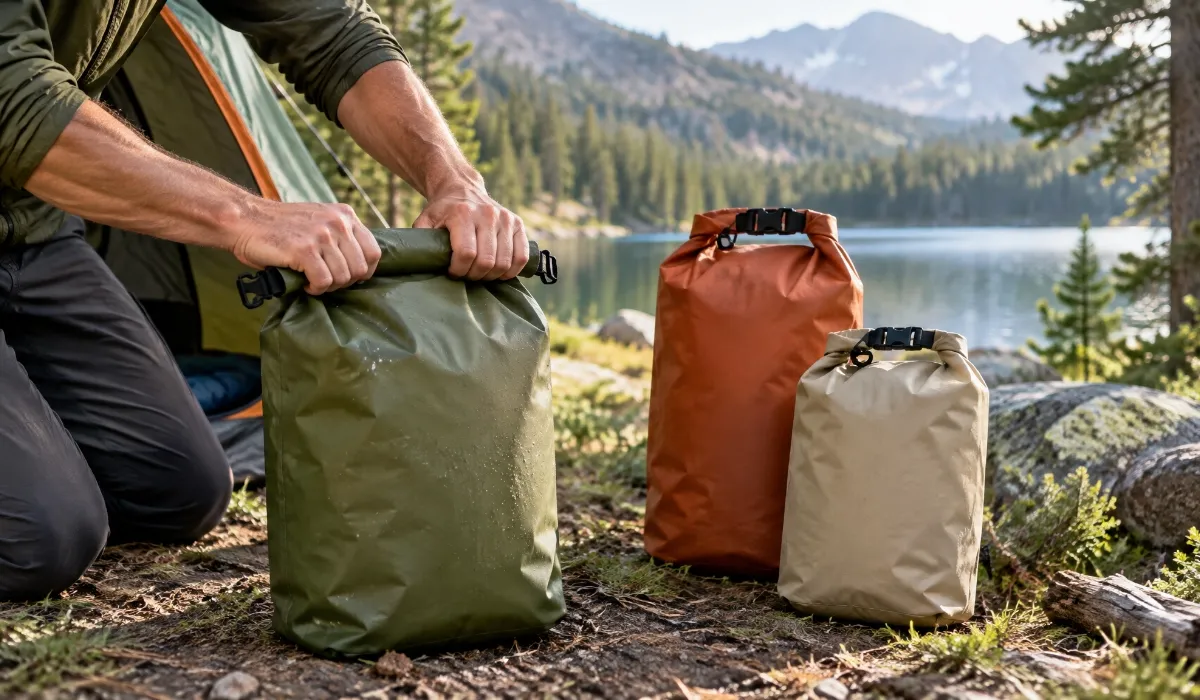
Dry Bags for Camping: What Outdoor Brands Should Consider
Camping often involves changing weather, wet ground, limited storage space, and outdoor equipment that needs to stay organized. Whether people are camping beside a lake, hiking to a remote campsite, or spending a weekend in the mountains, keeping essential belongings dry and accessible can make a big difference.
This is where dry bags for camping become useful. They help campers separate wet and dry belongings, protect clothing from rain and splashes, and organize smaller equipment inside backpacks or tents.
For outdoor brands and retailers, dry bags also offer opportunities to develop practical accessories for different camping activities. Instead of offering only one standard size, brands can build a product range around specific storage needs.
In this guide, we explore how camping dry bags are used, which product features matter, and what outdoor brands should consider when sourcing custom camping waterproof storage bags.
1. Why Are Dry Bags Useful for Camping?
Camping equipment is frequently exposed to changing outdoor conditions. Rain, condensation, wet ground, river crossings, and damp clothing can all create storage challenges.
Traditional backpacks and storage sacks may help organize belongings, but they do not necessarily provide reliable waterproof protection.
Dry bags offer a practical solution by creating a barrier against water when used correctly. Depending on their construction and closure system, they can help protect belongings from rain, splashes, and other wet conditions.
Common camping applications include:
- Keeping spare clothing dry during rainy weather.
- Protecting phones, cameras, and electronic accessories.
- Separating sleeping bags and other bulky camping equipment.
- Organizing small outdoor essentials inside backpacks.
- Storing wet clothing after outdoor activities.
For outdoor brands, these applications provide an opportunity to develop a collection of camping waterproof storage bags designed around real user needs rather than simply offering different bag capacities.
2. Four Essential Camping Storage Applications
Different camping activities require different storage solutions. When developing a dry bag collection, outdoor brands should consider the types of belongings campers need to protect and organize.
A. Clothing Storage: Keep Spare Clothes Dry
Clothing is one of the most common items campers need to protect.
A sudden rain shower, wet tent floor, or damp backpack can leave spare clothes uncomfortable to wear. A dedicated dry bag helps separate clean, dry clothing from wet outdoor gear.
Recommended product options:
- 5L–10L dry bags for underwear, socks, and lightweight clothing.
- 15L–20L dry bags for shirts, trousers, and additional clothing.
- Roll-top dry bags for flexible storage and easy packing.
- Lightweight compression-compatible designs where appropriate.
For outdoor brands, offering several capacities allows customers to select a bag based on trip length and packing requirements.
A useful product concept is a lightweight roll-top dry bag that can fit inside a hiking backpack without taking up unnecessary space.
B. Electronics Storage: Protect Small Valuable Devices
Phones, cameras, power banks, GPS devices, and charging accessories are important camping essentials.
These items may be exposed to rain, splashes, or accidental contact with wet equipment. Dedicated waterproof storage can help reduce the risk of water damage.
Recommended product options:
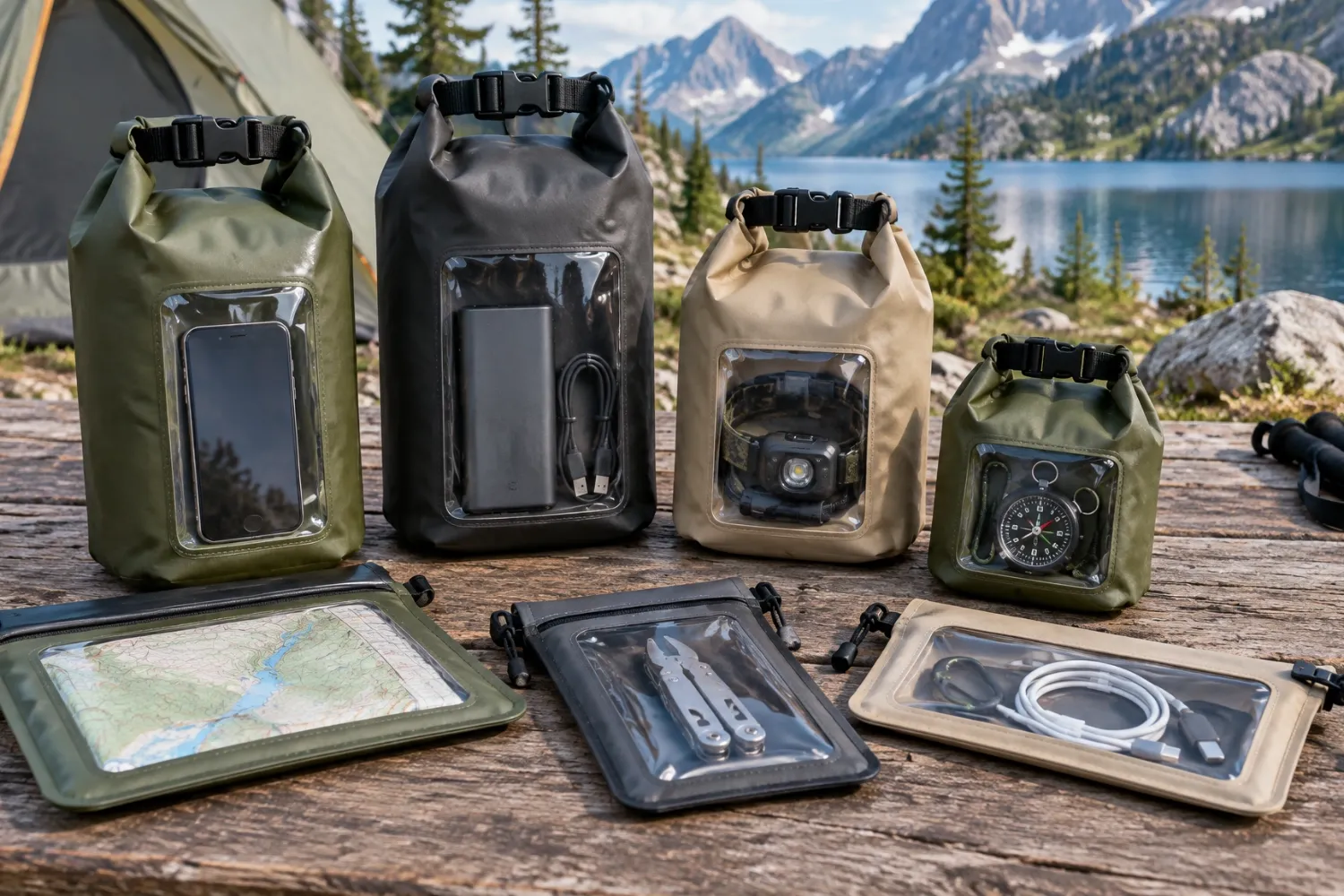
- Small 1L–3L waterproof pouches for phones and accessories.
- 3L–5L dry bags for compact electronics and charging equipment.
- Waterproof phone pouches with transparent windows for convenient screen access.
- Compact roll-top pouches with attachment points for easy carrying.
For brands targeting hiking, fishing, kayaking, or lakeside camping customers, waterproof phone pouches can also be developed as complementary accessories.
One important consideration is that not every waterproof storage pouch is designed for underwater use. Product claims should reflect the actual construction and verified testing performance.
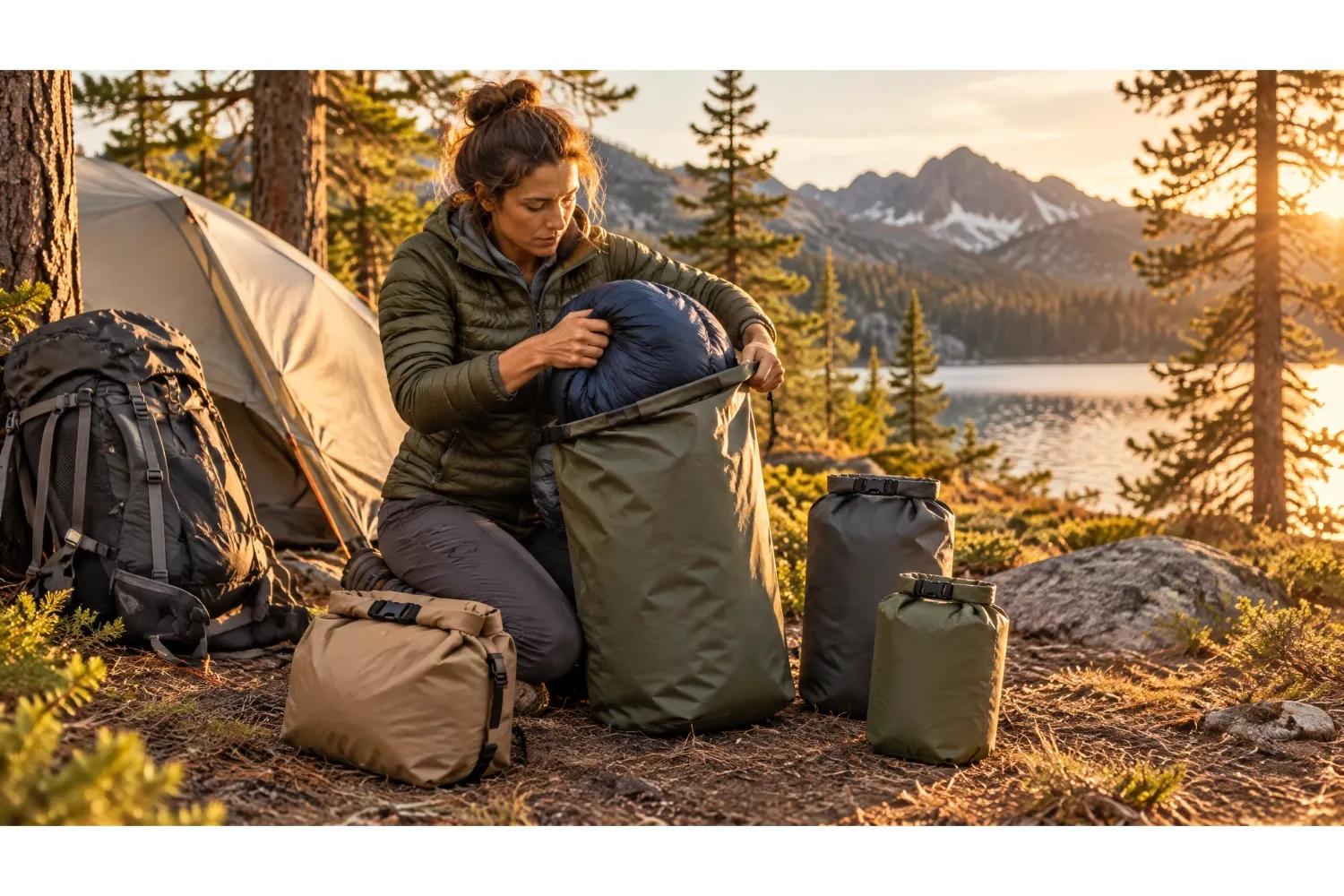
C. Sleeping Bag Storage: Protect Bulky Camping Essentials
Sleeping bags are among the most important pieces of camping equipment. Once a sleeping bag becomes wet, it may lose some of its insulating performance and take considerable time to dry.
A larger waterproof storage bag can help protect sleeping equipment during transportation and outdoor activities.
Recommended product options:
- 20L–30L large-capacity dry bags for compact sleeping equipment.
- 30L–40L storage bags for larger camping gear.
- Lightweight waterproof sacks with wide openings for easier packing.
- Roll-top closures that allow users to adjust the packed volume.
For this application, brands should consider the dimensions of the sleeping bag after compression rather than selecting capacity based on the sleeping bag's advertised dimensions alone.
A practical product development approach is to offer different sizes for lightweight backpacking and car camping.
It is also important to distinguish between waterproof storage and compression performance. A standard dry bag does not automatically provide the same air-expulsion or compression function as a dedicated compression sack.
D. Small Equipment Organization: Keep Camping Accessories Accessible
Small camping accessories are easy to lose inside large backpacks or storage boxes.
Items such as headlamps, first-aid supplies, repair kits, toiletries, utensils, and small tools benefit from separate storage.
Recommended product options:
- 1L–3L compact dry bags for small accessories.
- 5L organizer bags for first-aid kits and personal essentials.
- Transparent-window pouches for quick identification.
- Multiple color options to distinguish different equipment categories.
For example, a camping brand could offer different colors for electronics, personal items, and emergency equipment.
This makes the products more functional while creating opportunities for coordinated product collections.
3. Choosing the Right Dry Bag Capacity for Camping
Capacity is an important factor when developing dry bags for camping. A bag that is too small may be difficult to pack, while an oversized design can take up unnecessary storage space.
The following table provides a general product-planning reference for outdoor brands.
Capacity | Typical camping application |
|---|---|
1L–3L | Phones, small electronics, toiletries |
5L–10L | Personal belongings, socks, underwear |
15L–20L | Spare clothing and daily essentials |
20L–30L | Sleeping gear and larger equipment |
30L–40L | Bulky camping gear and multi-day storage |
These are indicative categories rather than fixed standards. Actual capacity requirements depend on bag dimensions, shape, closure design, and the volume of the items being packed.
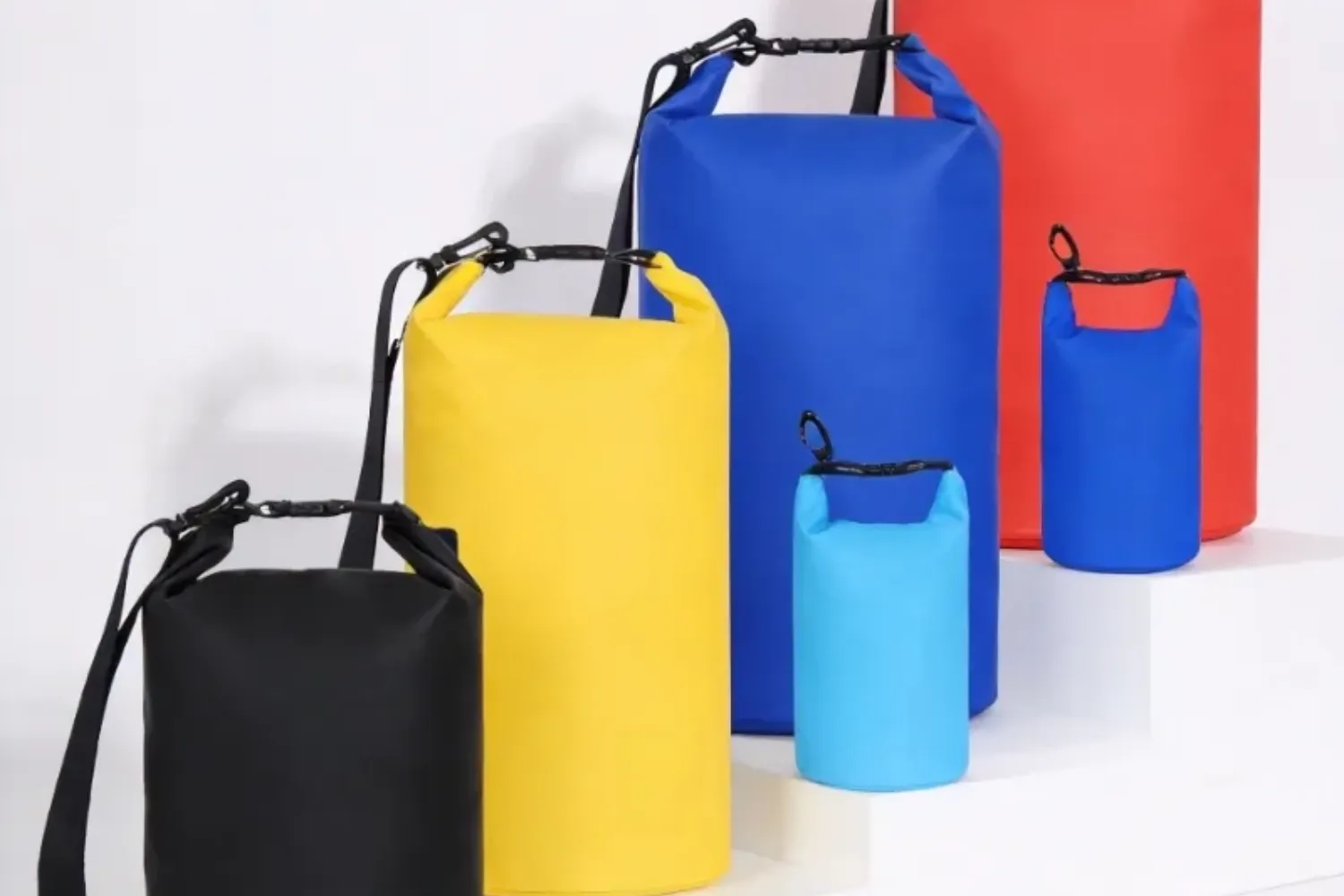
For outdoor brands, a coordinated range of 5L, 10L, 20L, and 30L dry bags can provide a useful starting point.
Offering a consistent design across several capacities also helps create a recognizable product family.
4. What Features Should Outdoor Brands Consider?
When developing camping dry bags, product functionality should match the intended application.
Here are several important design considerations.
Roll-Top Closure
Roll-top closures are widely used in dry bags because they provide an adjustable opening and help create a water-resistant or waterproof seal when properly closed.
The closure should be easy to operate, secure, and suitable for the intended use.
HF-Welded Construction
For waterproof PVC and TPU dry bags, high-frequency welding can join compatible material panels without relying on conventional stitched seams.
Brands developing waterproof storage products should pay attention to seam consistency, construction quality, and the performance of the complete closure system.
Lightweight and Packable Design
Campers often need to minimize the weight and volume of their equipment.
Depending on the target market, brands may consider lightweight fabrics and flexible constructions that can be folded or packed when not in use.
Practical Carrying Options
Different camping applications may require different carrying systems:
- Simple top handles for compact dry bags.
- Adjustable shoulder straps for larger bags.
- Side handles for easier handling.
- Attachment loops for securing bags to backpacks or outdoor equipment.
Not every dry bag needs a complicated carrying system. The design should reflect how customers will actually use the product.
Visibility and Organization
Different colors, transparent windows, and clear product labeling can help users identify their belongings quickly.
For brands selling coordinated camping accessories, visual consistency across the collection is also important.
5. Opportunities for Outdoor Brands to Develop Custom Camping Dry Bags
Camping dry bags are not limited to individual product sales. They can also become part of a wider outdoor equipment collection.
For retailers, outdoor brands, and distributors, several product development opportunities are worth considering.
Develop a Multi-Size Product Collection
Instead of offering only one standard dry bag, consider creating a coordinated collection:
- Small waterproof pouches for electronics.
- Medium dry bags for clothing.
- Large dry bags for sleeping equipment.
- Compact organizer bags for small accessories.
This approach allows customers to purchase individual products or build a complete camping storage set.
Offer Custom Branding
Private-label branding can help outdoor brands create a consistent product identity.
Customization options may include:
- Screen-printed or heat-transfer logos.
- Custom bag colors.
- Branded buckles and accessories where feasible.
- Custom packaging and hangtags.
- Different sizes and product configurations.
The available options will depend on materials, order quantities, and production requirements.
Create Bundled Camping Storage Sets
A bundled product set can be an attractive option for camping retailers and outdoor equipment brands.
For example, a three-piece set could include:
- One 5L dry bag for personal essentials.
- One 10L dry bag for spare clothing.
- One 20L dry bag for larger equipment.
Brands can also explore different combinations for hiking, fishing, kayaking, and family camping.
These bundles offer a practical way to increase product variety without developing an entirely different product structure for every application.
6. What Should Buyers Look for in a Camping Dry Bag Supplier?
When sourcing camping dry bags in bulk, buyers should evaluate more than the quoted unit price.
A suitable camping dry bag supplier should understand the intended application and be able to translate product requirements into clear specifications.
Before placing an OEM or private-label order, consider the following:
1. Product development capabilities
Can the supplier develop different sizes, shapes, closures, and carrying systems based on your requirements?
2. Material and construction options
Can the supplier offer suitable PVC, TPU, or other specified materials and explain which construction methods are appropriate?
3. Waterproof quality control
Does the supplier have a defined inspection process for welded seams, closures, and finished products? Can the agreed waterproof testing requirements be documented?
4. Customization and branding
Can the supplier support your logo, colors, packaging, and other private-label requirements?
5. Minimum order quantities
Are the minimum quantities suitable for your product launch? Can different sizes or colors be combined within an order?
6. Sample approval and production lead time
Can you evaluate a sample before bulk production? Are production schedules and delivery responsibilities clearly communicated?
A clear product specification, approved sample, and agreed inspection requirements can help reduce misunderstandings during bulk production.
7. Why Camping Dry Bags Offer Opportunities for OEM and Private-Label Development
As outdoor brands expand their product collections, practical storage accessories can complement larger equipment categories such as backpacks, tents, sleeping bags, and water sports gear.
Dry bags are particularly suitable for product-line expansion because they can be developed in multiple sizes, colors, and configurations while maintaining a consistent design identity.
For brands looking to build a private-label range, working with an experienced waterproof bag manufacturing partner can support:
- Custom sizes and product configurations.
- HF-welded waterproof bag construction.
- Logo printing and branded packaging.
- Coordinated multi-size product collections.
- Sample development and bulk production.
The key is to develop products around specific customer needs rather than simply adding another generic dry bag to an existing catalog.
Conclusion: Develop Camping Dry Bags Around Real Outdoor Needs
The best dry bags for camping are designed around the belongings people need to protect, the conditions they encounter, and the way they organize their equipment.
Small waterproof pouches can protect electronics, medium dry bags can keep clothing organized, and larger storage bags can help protect sleeping equipment and other camping essentials.
For outdoor brands, these different applications create opportunities to develop coordinated product collections, offer custom branding, and expand into practical outdoor storage accessories.
At CarryEase Outdoors, we specialize in custom waterproof bags and HF-welded dry bag solutions for outdoor and water sports applications.
Whether you are developing a small waterproof pouch, a multi-size camping dry bag collection, or private-label outdoor storage products, we welcome the opportunity to discuss your project.
Contact CarryEase Outdoors to explore custom camping dry bags for your brand.