
Buying Guides
How to Test Waterproof Bags: A Practical Guide for Buyers
Learn how buyers can assess waterproof bags, inspect closures and seams, and discuss appropriate water-resistance tests with manufacturers before bulk orders.
How to Test Waterproof Bags: A Practical Guide for Buyers
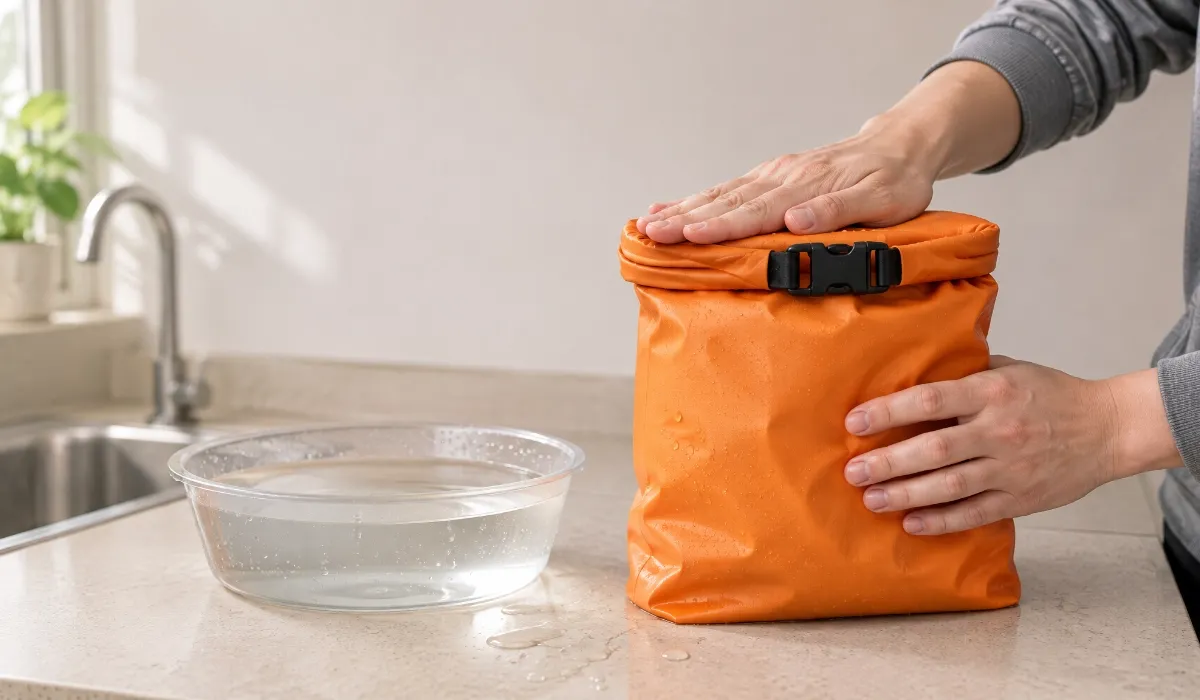
A waterproof bag may look durable and well-made, but how can buyers know whether it will actually protect the contents from water?
Understanding how to test waterproof bags is important for outdoor brands, retailers, distributors, and water sports operators, especially before placing a bulk order. A bag may use waterproof materials, welded seams, or a protective closure, but its actual performance depends on the complete construction.
This guide explains how to inspect a waterproof bag, check its closure and seams, carry out simple preliminary checks, and discuss suitable testing methods with manufacturers.
It is important to remember that simple checks at home or in an office are only preliminary assessments. They cannot replace standardized laboratory testing, third-party inspection, or certification.
1. Start with a Visual Inspection
Before performing any water test, examine the bag carefully. A visual inspection can help identify obvious manufacturing defects that may affect its durability or water resistance.
Pay attention to the following areas:
Material Surface
Check the material for visible holes, cuts, scratches, cracks, uneven coating, or damaged areas. For coated fabrics, look for peeling, bubbling, or inconsistent surface finishes.
Corners and Bottom Panels
The bottom and corners of a bag may experience more friction and stress during use. Check for weak-looking areas, uneven bonding, damaged material, or insufficient reinforcement.
Hardware and Accessories
Inspect buckles, clips, zipper pulls, strap adjusters, and attachment points. Make sure they are correctly installed and operate smoothly.
Handle and Strap Attachments
For waterproof backpacks and duffel bags, examine the areas where handles and shoulder straps connect to the main body. These areas should be properly reinforced for the intended load.
Overall Construction
Check whether the bag is symmetrical and whether the panels, edges, and closures are assembled consistently. Poor workmanship in these areas may indicate potential quality problems.
A visual inspection cannot confirm waterproof performance, but it is a useful first step in any waterproof bag quality inspection.
2. Check the Closure System
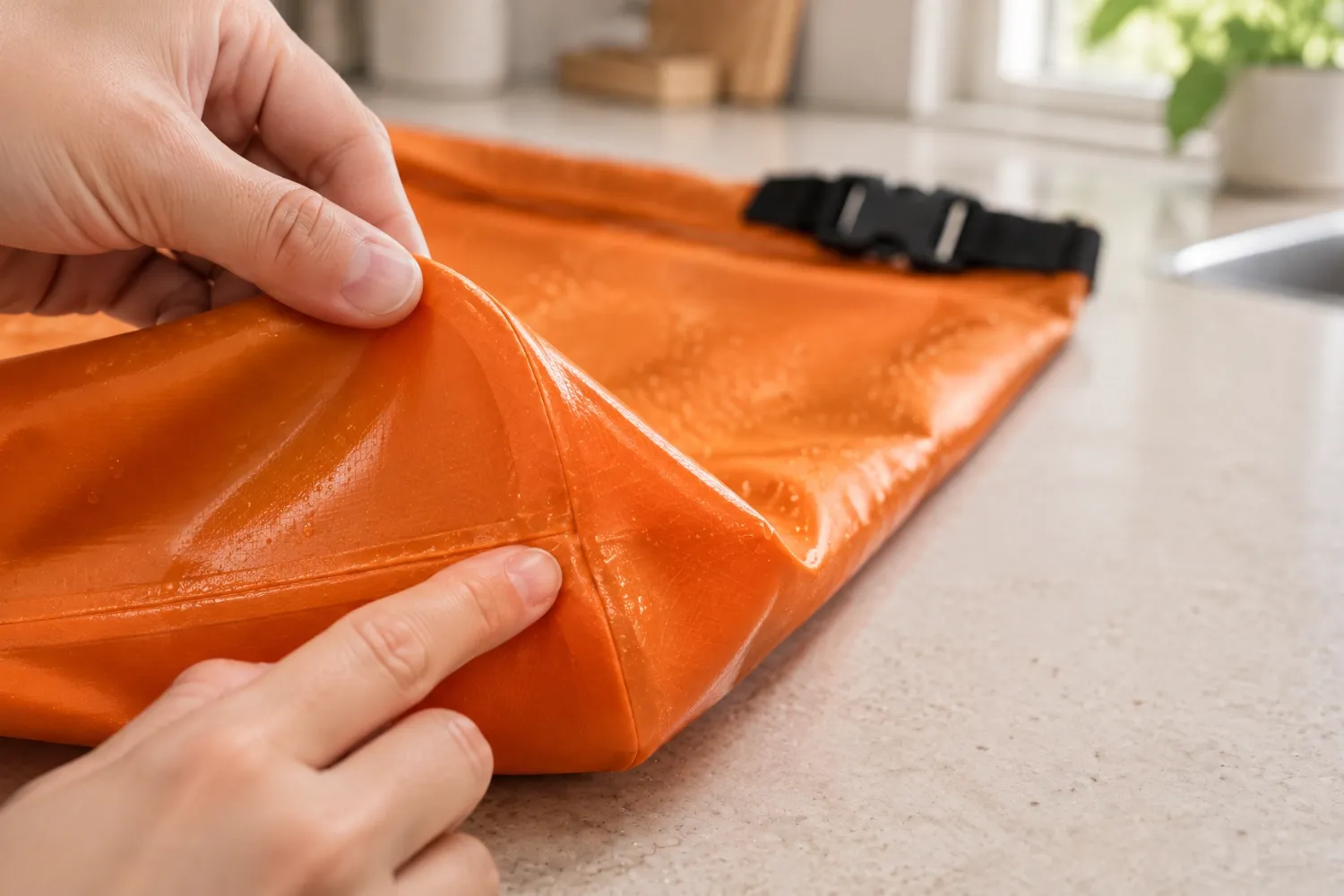
The closure is one of the most important parts of a waterproof bag. Even when the main material is waterproof, water may enter through an improperly designed or damaged opening.
Different bag designs require different inspection methods.
Roll-Top Closure
Check the following:
- The top edges should be properly finished without visible damage.
- The closure should roll down smoothly without excessive resistance.
- Buckles should connect securely and release correctly.
- The closure should be wide enough to allow several complete rolls as specified by the product design.
- The two sides should align properly when closed.
For a preliminary check, close the bag according to the manufacturer's instructions and examine whether the rolled section is even and securely fastened.
The required number of rolls depends on the product design. Do not assume that every roll-top bag uses the same closure instructions.
Waterproof Zippers
Waterproof zippers are often used on bags that require quicker access to their contents.
Inspect the zipper carefully:
- Check the zipper tape for visible damage or uneven bonding.
- Open and close it several times to check for smooth operation.
- Look for gaps, damaged teeth, or poorly finished end areas.
- Check whether the zipper is fully closed according to the manufacturer's instructions.
- Examine the zipper ends and surrounding construction.
A waterproof zipper does not automatically make the entire bag waterproof. The zipper installation, surrounding material, seams, and overall design also affect water protection.
Other Closure Designs
Some bags use flap closures, protective covers, or combinations of zippers and roll-top sections.
Buyers should check whether these components fit correctly and whether the design provides the level of protection required for the intended application.
3. Inspect the Seams and Welded Areas
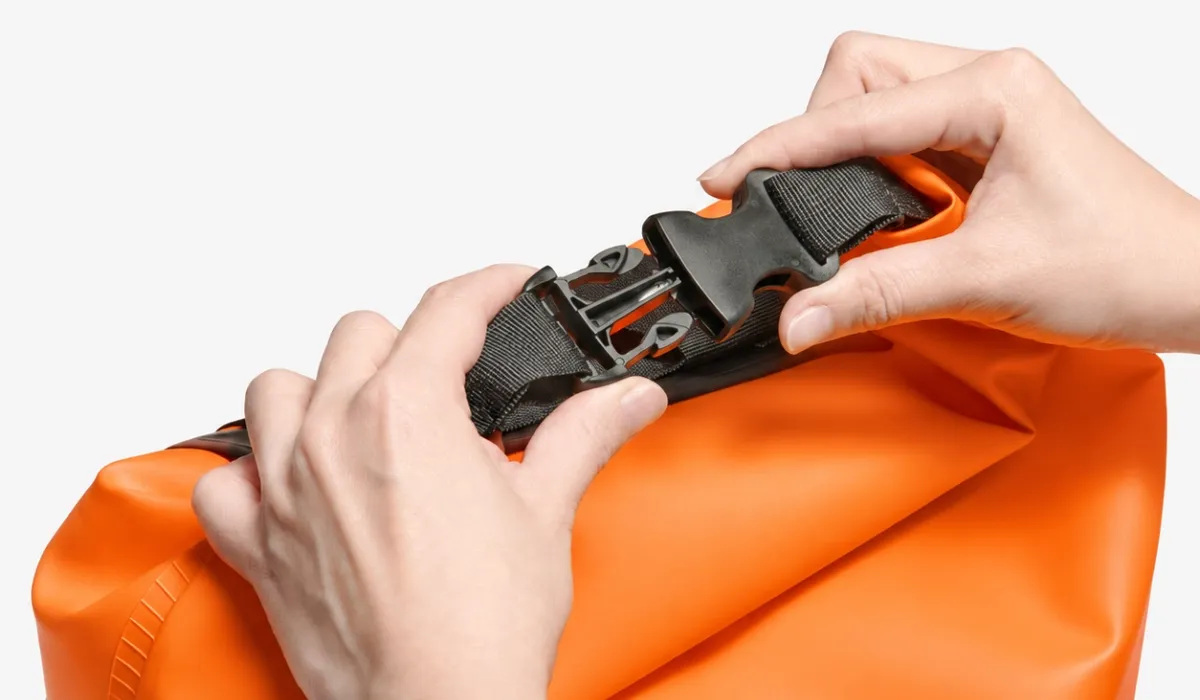
Seam construction is another critical factor in waterproof bag testing.
Different materials and bag designs may use different joining methods, including high-frequency (HF) welding, heat welding, or sewing with additional seam-sealing treatments.
HF-Welded Seams
HF welding is commonly used for compatible thermoplastic materials, such as PVC and certain TPU-based materials.
During inspection, check for:
- Continuous bonding along the welded area.
- No visible gaps or incomplete bonding.
- No obvious wrinkles, burns, or material damage.
- Consistent weld width and appearance.
- Properly finished corners and seam intersections.
Pay particular attention to corners, edges, and areas where multiple panels meet. These locations can be more challenging to manufacture consistently.
Sewn Seams
Some waterproof bags use coated nylon, polyester, or other textile materials with sewn construction.
Inspect the stitching for:
- Consistent stitch spacing.
- No skipped or loose stitches.
- No broken threads.
- Proper reinforcement at stress points.
- Appropriate seam-sealing treatment where required by the product design.
Stitching creates needle holes, so a sewn bag intended for water protection may require additional construction measures, such as seam-sealing tape, coatings, or an internal liner.
Not every sewn bag is unsuitable for wet environments. Its performance depends on the complete construction and intended level of water protection.
For more details about these construction methods, buyers can also compare HF welding and sewing when evaluating waterproof bag suppliers.
4. Try Simple Preliminary Water Checks
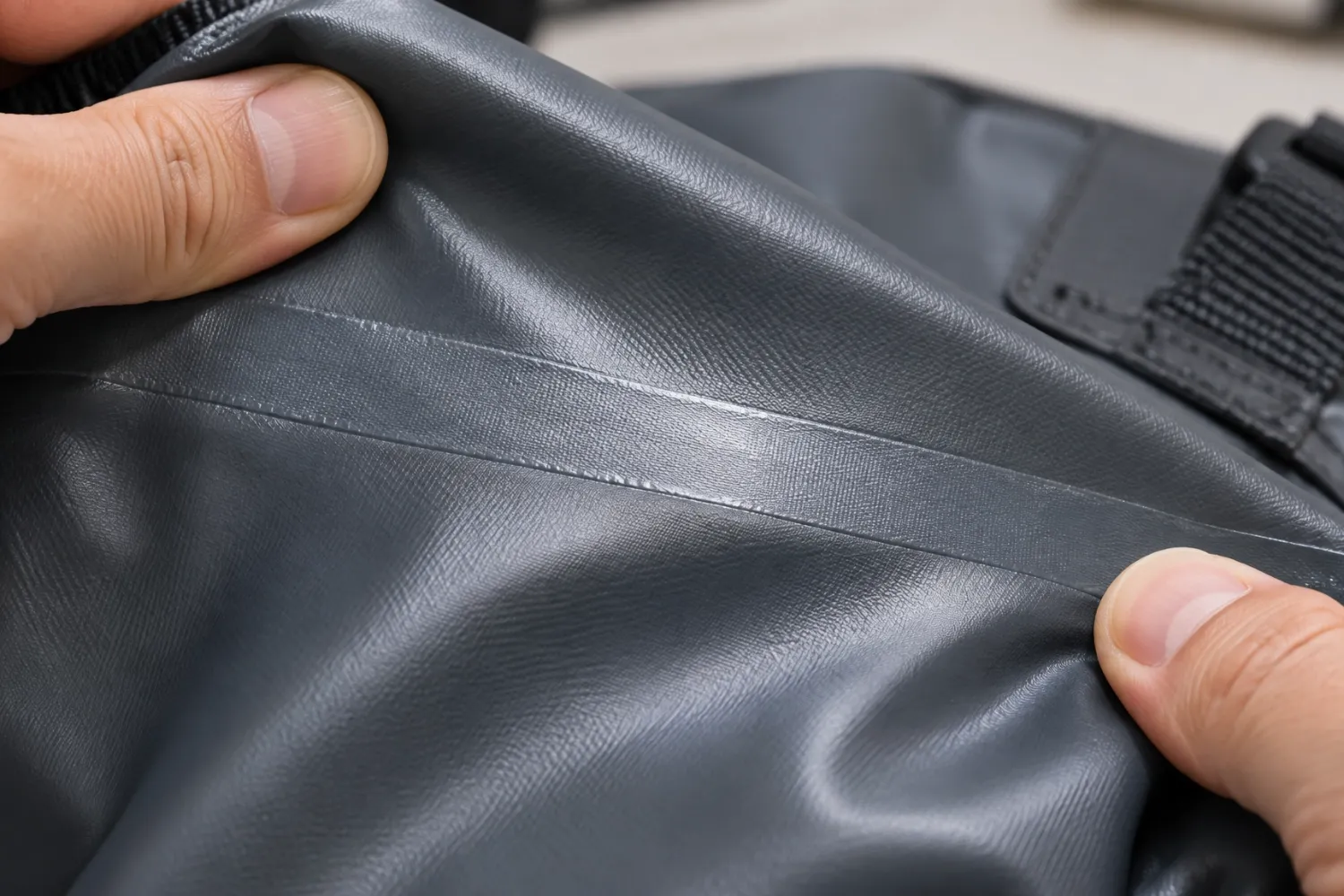
After the visual and construction inspections, buyers may carry out simple checks to identify obvious leaks.
These methods can be useful when evaluating samples, but they are not standardized tests unless performed under a defined procedure with controlled conditions.
Method 1: Water Drop Check
Purpose: Preliminary assessment of the outer material surface.
- Place a few drops of water on the material surface.
- Observe whether the water beads, spreads, or is absorbed.
- Check whether the surface coating appears uneven.
- Compare different areas of the same material.
This check can help identify obvious surface inconsistencies, but water beading alone does not prove that the complete bag is waterproof.
A water-repellent surface treatment and a waterproof material construction are not the same thing.
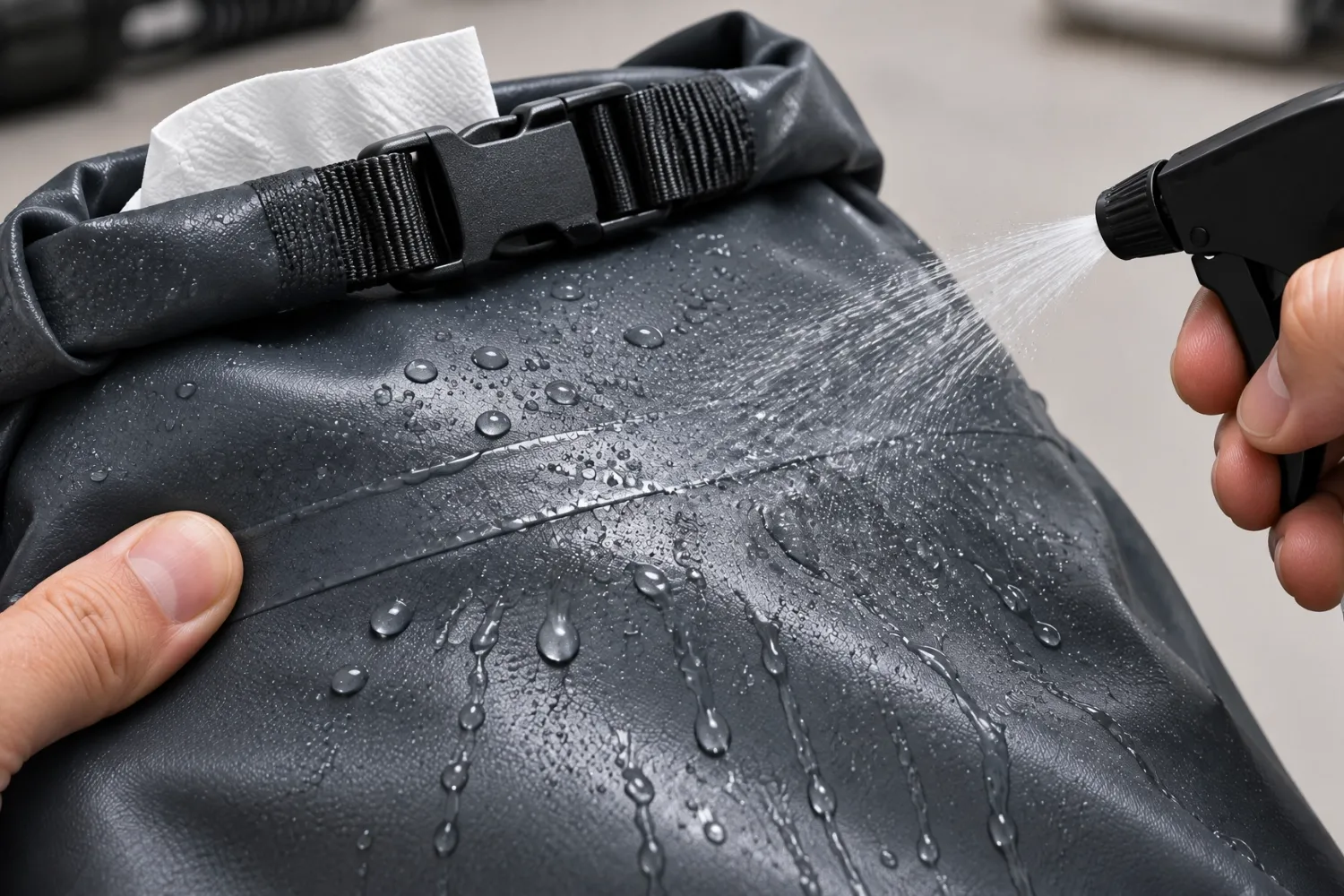
Method 2: Dry Tissue Check
Purpose: A simple screening check for obvious leakage.
- Place dry tissue paper or absorbent paper inside the bag.
- Close the bag according to the manufacturer's instructions.
- Apply a limited amount of water to the outside of the bag, avoiding conditions beyond its intended use.
- Dry the exterior before opening the bag.
- Check the tissue for moisture.
If the tissue becomes wet, inspect the closure, seams, and material to identify the possible leakage area.
This is a basic screening method, not a formal waterproof rating test. The result can be affected by how the bag is closed, how water is applied, and how long the test is performed.
Method 3: Controlled Spray Check
Purpose: Preliminary assessment of resistance to splashing or water spray.
A controlled spray check may help assess whether a bag is suitable for applications involving light rain or splashing.
For a meaningful comparison, the spray direction, duration, distance, and water flow should be kept consistent.
After the check, inspect the inside of the bag for moisture and pay particular attention to closures, seams, and attachment areas.
A simple spray check does not establish an IPX rating or prove suitability for immersion.
Method 4: Dry Bag Leak Test
Purpose: Preliminary screening of a roll-top dry bag.
A dry bag leak test may be carried out using a controlled procedure:
- Place dry absorbent paper inside the bag.
- Close the roll-top according to the manufacturer's instructions.
- Check that the closure is properly secured.
- Apply water under controlled conditions appropriate to the product's intended use.
- Remove the bag, dry its exterior, and inspect the contents.
For more demanding tests, the manufacturer should define the water depth, exposure time, test orientation, and acceptance criteria in advance.
Do not assume that pressing, squeezing, or fully submerging a bag is a suitable test for every product. A bag designed to resist splashes may not be designed for immersion.
Important safety note: Do not put electronic devices, valuables, or other items that could be damaged by water inside a sample during preliminary testing. Use absorbent paper or other suitable test indicators instead.
5. Choose the Right Test for the Intended Application
Not every waterproof bag needs the same level of water protection. Buyers should select testing methods according to how the product will actually be used.
Intended application | Relevant evaluation |
|---|---|
Light rain and everyday outdoor use | Material inspection and an appropriate spray or rain-resistance test |
Water sports and splashing | Closure, seam, and controlled spray checks |
Kayaking and paddleboarding | Closure integrity and application-specific water exposure testing |
Dry bags intended for immersion | Defined immersion testing under specified conditions |
Bags with waterproof zippers | Zipper operation, installation, and complete-bag water testing |
Heavy-duty waterproof gear bags | Material durability, seam integrity, hardware, and application-specific water testing |
The test conditions should be agreed upon before production. Important parameters may include:
- Water exposure method.
- Water depth or pressure, where applicable.
- Exposure duration.
- Bag orientation.
- Closure preparation and number of rolls, where relevant.
- Whether the bag is empty or loaded.
- Acceptable moisture or leakage criteria.
These details make it easier for buyers and manufacturers to understand what is being tested and how the results should be evaluated.
6. Understand IPX Ratings and Standardized Testing
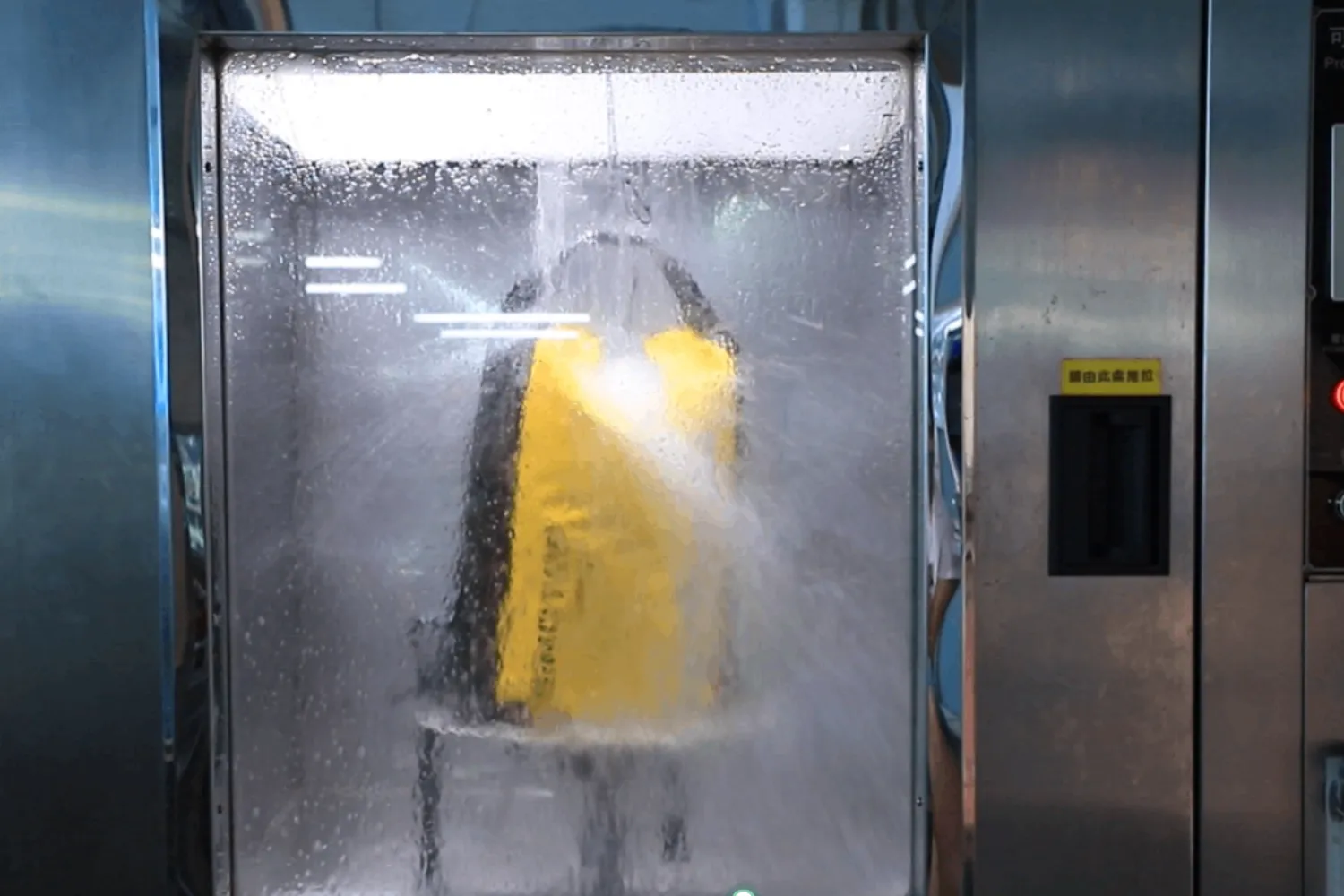
Buyers may encounter IPX ratings when sourcing waterproof bags and other outdoor products.
An IP rating is associated with a defined testing standard. For water ingress protection, the relevant test conditions vary by rating. Different levels may involve dripping water, water sprays, jets, or immersion under specified conditions.
However, an IPX rating should never be assumed simply because a supplier describes a bag as waterproof.
Before accepting an IPX claim, ask:
- Which testing standard was used?
- Which IPX level was tested?
- Was the complete finished bag tested, or only a material sample or component?
- What were the test conditions and duration?
- Was the test performed by an independent laboratory?
- Is there a test report that identifies the tested product or model?
A material water-resistance result, zipper test, or supplier's internal inspection is not automatically equivalent to a complete-product IPX test.
If a specific waterproof rating is required for your market or application, confirm the applicable standard and testing requirements with a qualified testing laboratory before placing a bulk order.
7. What Should Buyers Ask Manufacturers Before Bulk Orders?
Testing should not begin only after mass production. Buyers can reduce quality risks by discussing inspection and testing requirements with the manufacturer during sample development.
Here are useful questions to ask:
1. What materials and construction methods are used?
Confirm whether the bag uses PVC tarpaulin, TPU-based fabric, coated nylon, or another material. Ask whether the seams are welded, sewn, or sealed using another method.
2. How are the closures checked?
Ask how roll-top closures, waterproof zippers, and other opening systems are inspected during production.
3. How are seams inspected?
Find out whether welded seams are checked for continuous bonding and whether sewn seams receive the required sealing treatment.
4. What water-resistance tests are performed?
Ask whether the supplier carries out internal water checks, spray tests, immersion tests, or other application-specific evaluations.
5. Are the test conditions documented?
A useful test record should identify the test method, sample, conditions, inspection result, and acceptance criteria.
6. Can the sample be tested before mass production?
Request a representative sample and evaluate it under conditions that reflect the intended application.
7. How is quality controlled during bulk production?
Discuss incoming material inspection, in-process checks, finished-product inspection, and the handling of defective products.
A clear testing agreement helps both parties avoid misunderstandings about what "waterproof" means for the finished product.
8. A Practical Waterproof Bag Inspection Checklist
Before approving a sample or bulk order, buyers can use the following checklist:
- No visible holes, cuts, cracks, or damaged coating.
- Corners and bottom panels are properly finished.
- Handles and strap attachments are secure.
- Buckles and other hardware operate correctly.
- Roll-top closures align and fasten as intended.
- Zippers operate smoothly and show no visible damage.
- Welded seams have no obvious gaps or incomplete bonding.
- Sewn seams have consistent stitching and appropriate sealing where required.
- Preliminary water checks are performed using an agreed procedure.
- Test conditions and results are recorded.
- Any required standardized testing or third-party report is verified.
- The approved sample and bulk production specifications are consistent.
This checklist is a starting point for procurement inspection. It should be adapted to the bag's design, intended use, and required performance level.
Final Thoughts
Knowing how to test waterproof bags helps buyers make more informed purchasing decisions and identify potential quality issues before committing to a bulk order.
Start with a visual inspection, examine the closure and seams, and use simple water checks only as preliminary screening tools. Most importantly, choose a test method that matches the product's intended application and confirm the test conditions with the manufacturer.
For outdoor brands, retailers, and water sports operators, a clear quality inspection plan is just as important as choosing the right material and design.
At CarryEase Outdoors, we support the development of custom waterproof bags and outdoor gear bags through our manufacturing partners in China. Buyers can discuss material options, closure designs, seam construction, and suitable quality checks during product development.
Contact us to discuss your waterproof bag requirements and sample evaluation plan.