
Product Knowledge
HF Welding vs Sewing for Waterproof Bags: Key Differences
Compare HF welding and sewing in waterproof bag construction. Understand seam design, material compatibility, water resistance, and the questions buyers should ask manufacturers.
HF Welding vs. Sewing for Waterproof Bags: Key Differences
When developing a waterproof bag, choosing the right material is only part of the process. How the fabric panels are joined together also plays an important role in the final product's waterproof performance, durability, and appearance.
Two common methods used in bag manufacturing are High-Frequency (HF) Welding and Sewing.
Both methods have their advantages, but they work in different ways and are suitable for different materials and product requirements.
So, when comparing HF welding vs sewing for waterproof bags, which method should brands and buyers choose?
The answer depends on the material, bag construction, intended application, and required level of water protection.
In this guide, we will explain the key differences and what buyers should consider when evaluating waterproof bag manufacturers.
1. What Is HF Welding in Waterproof Bag Manufacturing?
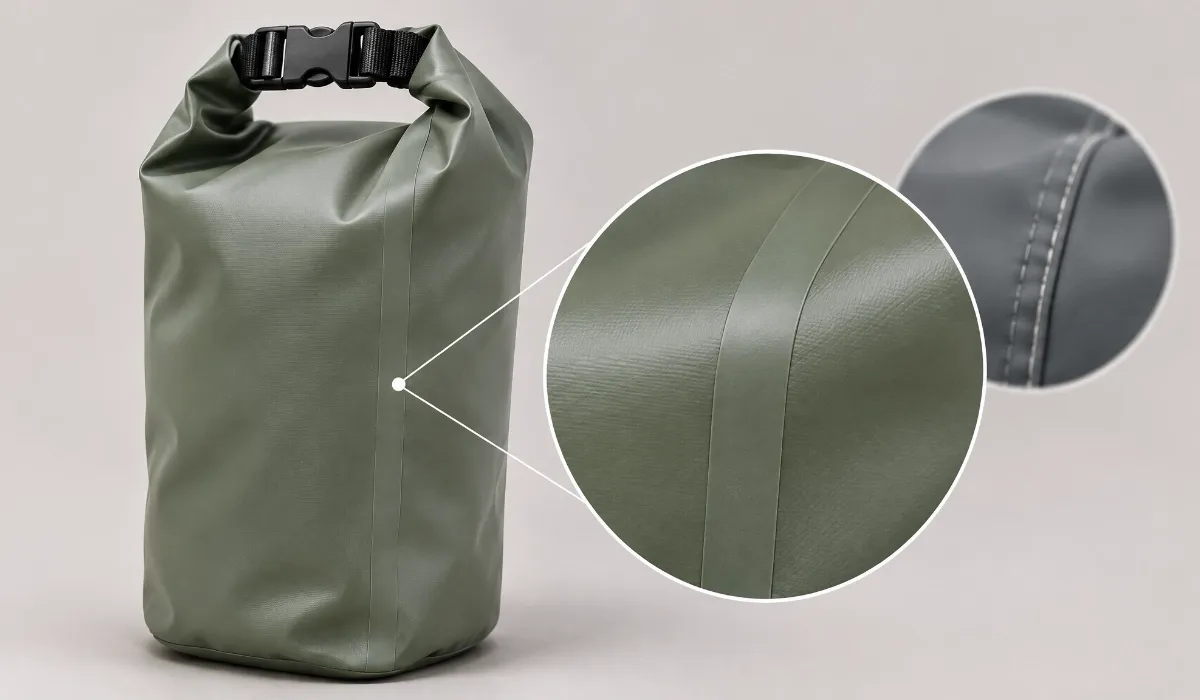
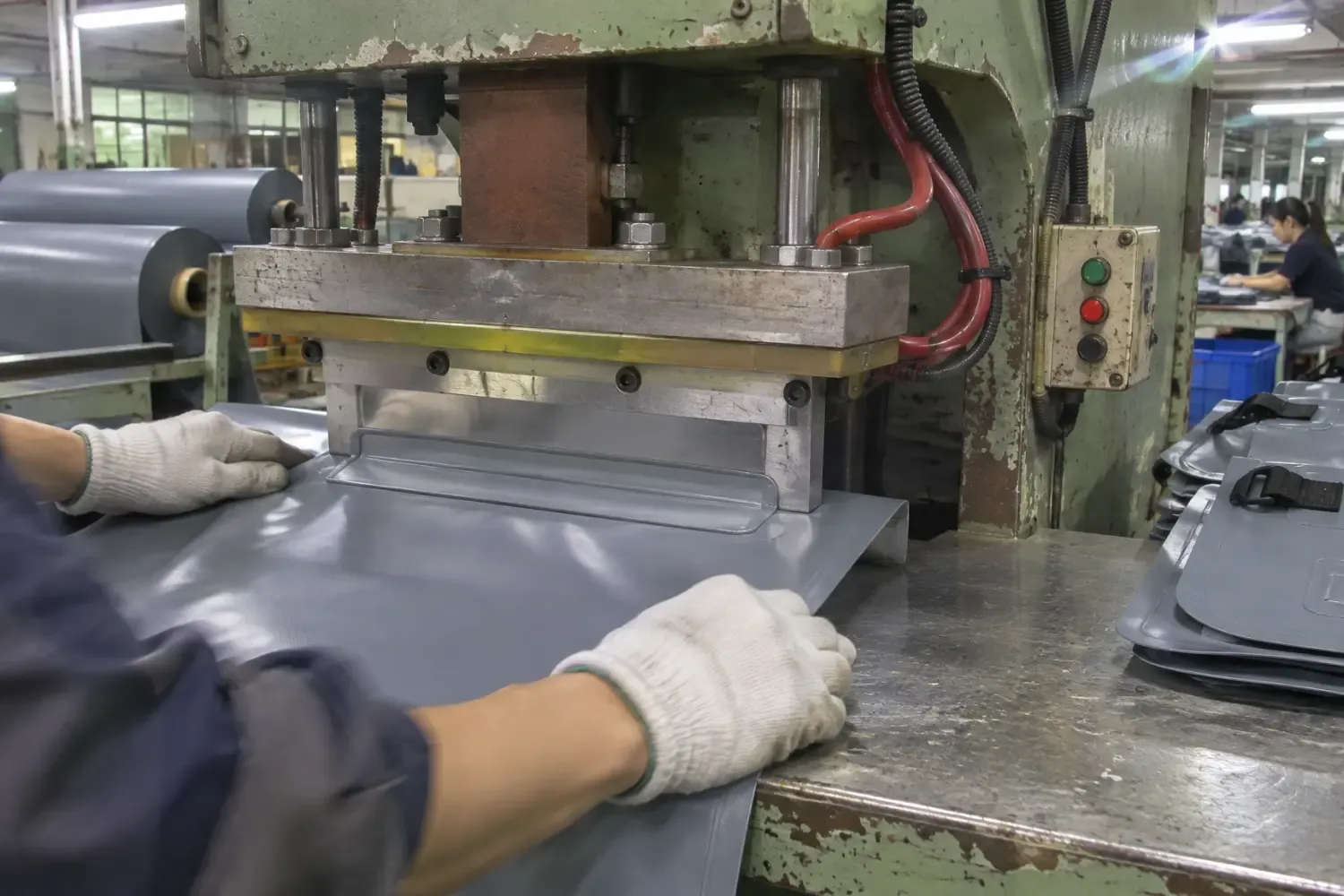
High-Frequency (HF) Welding, also known as Radio Frequency (RF) Welding, is a process that uses electromagnetic energy to generate heat within compatible materials.
Under pressure, the material layers soften and bond together, forming a joined area without traditional stitching.
HF welding is commonly used with suitable PVC and TPU-based materials, depending on their formulation and construction.
How Does HF Welding Work?
The general process involves:
- Placing compatible material layers between specially designed welding electrodes or molds.
- Applying high-frequency electromagnetic energy to generate heat within the material.
- Applying pressure to bond the material layers together.
- Allowing the welded area to cool and stabilize before removing the finished component.
The result is a bonded joint that can create a continuous material connection.
Why Is HF Welding Used for Waterproof Bags?
One important advantage is that the process does not require needle holes through the joined material.
When properly designed and processed, welded seams can help reduce potential water entry points and create a clean, waterproof construction.
For this reason, HF welding is widely used in certain types of waterproof dry bags, waterproof backpacks, phone pouches, and other products made from compatible materials.
However, the quality of the welded seam depends on material compatibility, welding parameters, joint design, and production consistency.
A welded seam should never be assumed to be waterproof simply because it has been welded.
2. What Is Sewing in Waterproof Bag Construction?
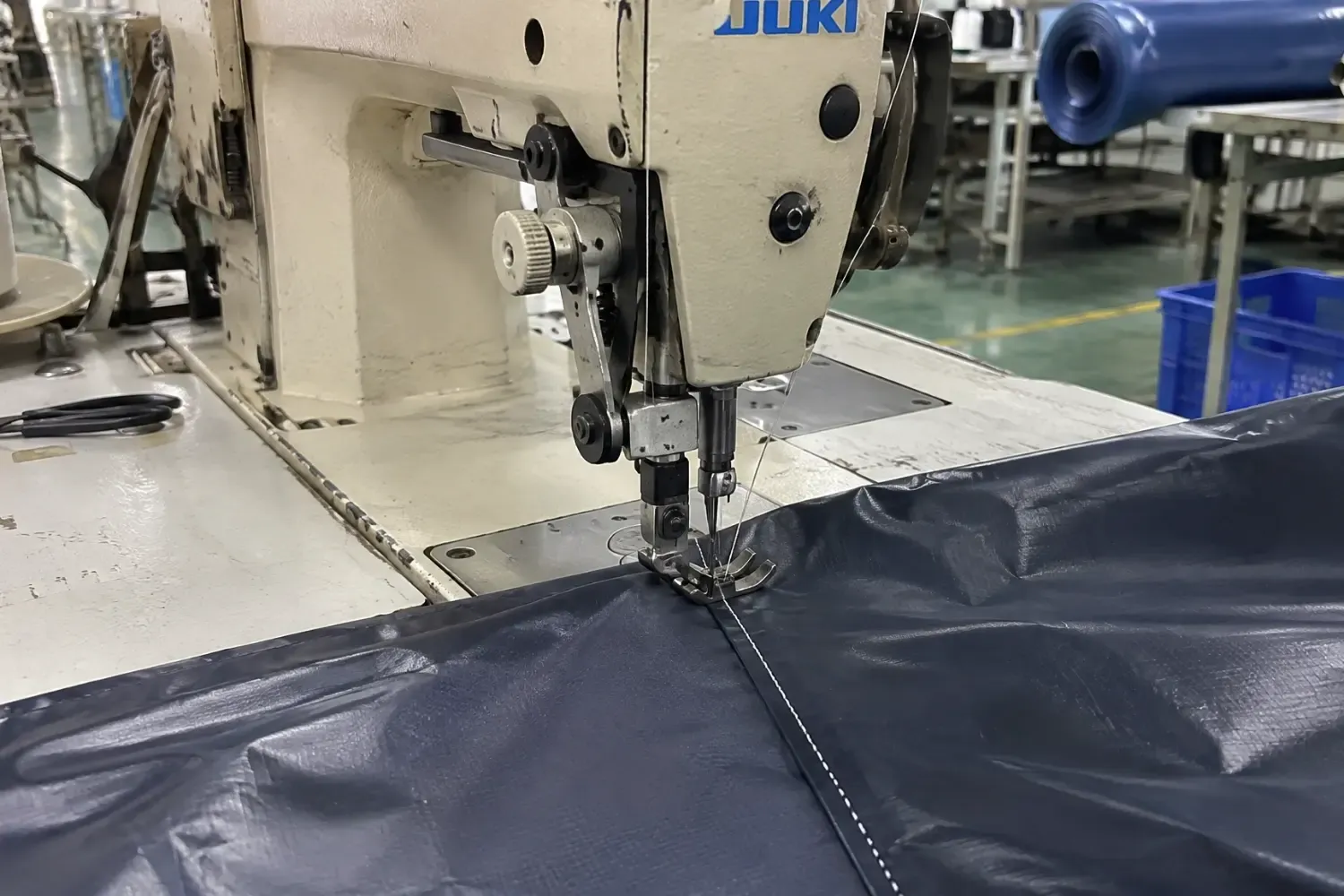
Sewing is a traditional manufacturing method in which two or more fabric panels are joined using needles and thread.
It is widely used in backpacks, outdoor bags, luggage, and other textile products.
Compared with HF welding, sewing offers greater flexibility when working with a wider range of fabrics and complex product structures.
How Does Sewing Work?
During sewing, a needle passes through the fabric layers, creating small holes that allow thread to hold the panels together.
This method is suitable for materials such as:
- Nylon and polyester fabrics.
- Canvas and woven textiles.
- Laminated and coated fabrics.
- Various multi-layer textile constructions.
Can Sewn Bags Be Waterproof?
Yes. Sewing does not automatically mean a bag cannot be waterproof.
However, needle holes can create potential pathways for water to enter.
Manufacturers can address this issue through additional construction methods, such as:
- Seam sealing tape applied over suitable stitched seams.
- Waterproof coatings or laminations.
- Waterproof liners or inner compartments.
- Protective seam construction and overlapping panels.
With appropriate materials and construction, sewn bags can achieve different levels of water resistance and waterproof protection.
The actual performance depends on the complete construction and testing requirements.
3. HF Welding vs Sewing: Key Differences
Understanding the structural differences between these two methods helps buyers select the right manufacturing process.
Comparison | HF Welding | Sewing |
|---|---|---|
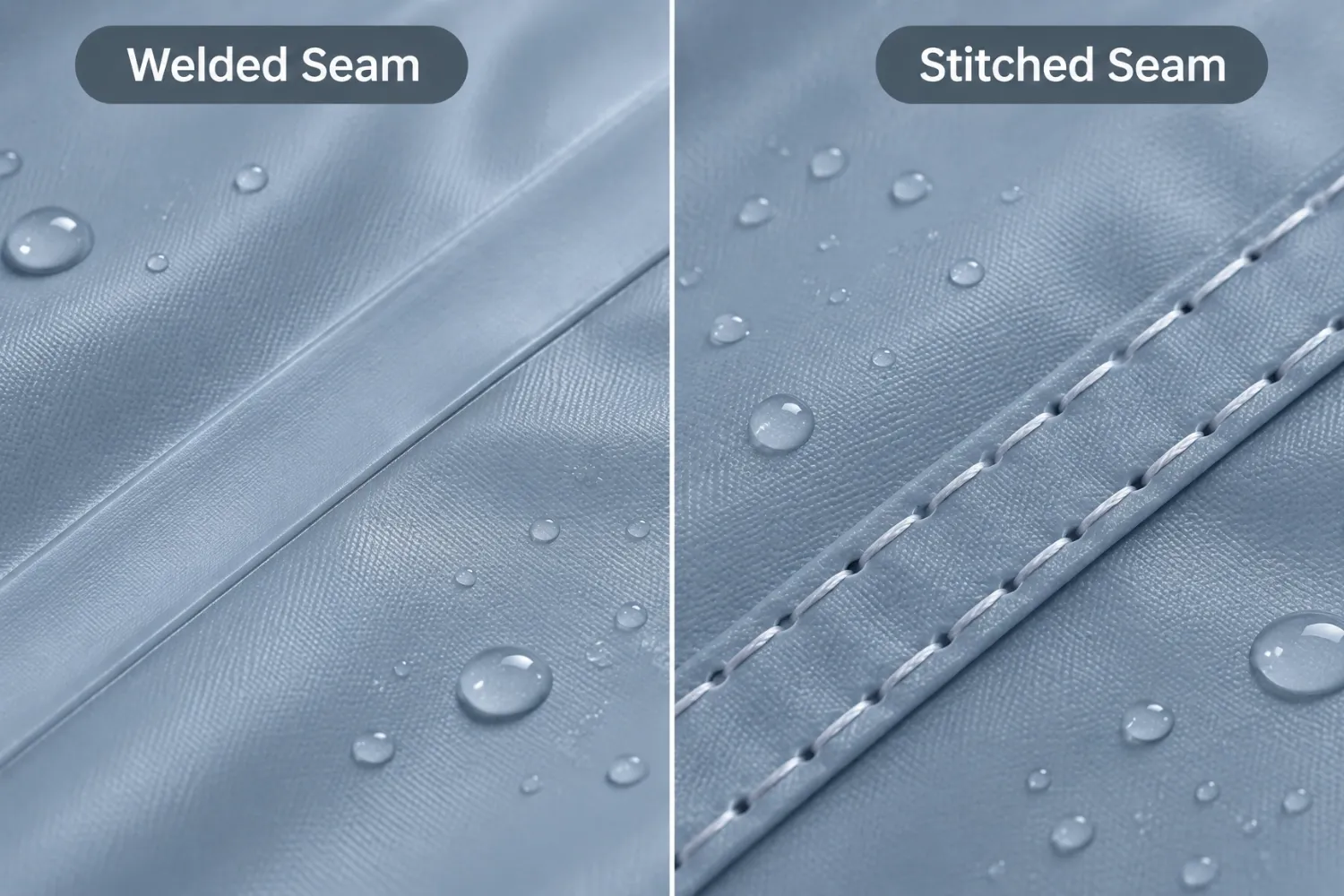
Joining method | Bonds compatible material layers using heat and pressure | Joins fabric panels using needles and thread |
Needle holes | No traditional needle holes in the welded joint | Needle holes are created |
Material compatibility | Best suited to compatible RF-weldable materials | Suitable for a wider range of fabrics |
Seam sealing | Can create a bonded seam without additional seam tape | May require seam sealing for higher waterproof requirements |
Appearance | Can create clean, flat bonded seams | Visible stitching is usually present |
Design flexibility | Depends on electrode design and material construction | Flexible for complex shapes and textile structures |
Typical applications | PVC/TPU waterproof dry bags and pouches | Fabric backpacks, outdoor bags, and textile products |
The Main Difference
The key structural difference is how the materials are joined.
HF welding bonds compatible material layers together without needle penetration through the joint.
Sewing creates a mechanical connection using thread, but the needle holes may require additional sealing when water protection is important.
Neither method is automatically better for every waterproof bag.
The right choice depends on the product's intended use and required performance.
4. Material Compatibility: Which Materials Work with Each Method?
Not every waterproof-looking material is suitable for HF welding, and not every sewn construction requires the same level of seam protection.
PVC Tarpaulin
PVC tarpaulin is widely used in waterproof bag production.
Its thermoplastic properties make suitable PVC constructions compatible with HF welding.
Common applications include:
- Heavy-duty waterproof dry bags.
- Roll-top waterproof backpacks.
- Waterproof duffle bags.
- Waterproof gear storage bags.
Depending on the construction, PVC materials can also be sewn, although additional seam sealing may be necessary to meet specific waterproof requirements.
TPU-Coated Fabrics
TPU-based materials are another option for waterproof bag manufacturing.
Certain TPU constructions can be HF welded, making them suitable for products requiring bonded seams.
However, compatibility depends on the TPU formulation, coating structure, fabric backing, and material thickness.
Not all TPU-coated fabrics can be processed using the same welding parameters.
Nylon and Polyester Fabrics
Nylon and polyester are commonly used in lightweight outdoor bags and backpacks.
These woven fabrics are generally well suited to sewing.
When additional waterproof protection is required, manufacturers may use coated or laminated fabrics, seam sealing tape, waterproof liners, or other suitable construction techniques.
Some specialized material constructions may also support alternative bonding processes, but standard woven nylon and polyester should not be assumed to be directly HF-weldable.
5. Which Construction Method Is Better for Different Waterproof Bags?
Instead of choosing a manufacturing method based only on the word "waterproof," buyers should consider the complete product design.
Here are some practical examples.
HF-Welded Dry Bags
For PVC or compatible TPU dry bags, HF welding is often a suitable construction method.
It allows manufacturers to create bonded seams without traditional needle holes.
This makes it a practical choice for products designed to protect clothing, electronics, and personal belongings from water exposure.
Waterproof Backpacks
Waterproof backpacks may use different construction methods depending on their materials and design.
For example:
- A PVC roll-top backpack with welded main seams.
- A lightweight nylon backpack with stitched panels and sealed seams.
- A hybrid design combining welded waterproof compartments with sewn shoulder straps and external accessories.
The hybrid approach can be useful when the product needs both waterproof storage and comfortable textile-based carrying components.
Water Sports Gear Bags
Products such as dive gear bags and wetsuit bags may prioritize drainage, ventilation, abrasion resistance, or storage capacity rather than complete waterproof protection.
In these cases, sewing, mesh construction, welding, or a combination of methods may be appropriate.
The best method depends on what the bag is designed to carry and how it will be used.
6. How to Verify Waterproof Seam Performance
For B2B buyers, understanding the manufacturing process is important, but verifying the finished product is even more important.
A bag made with HF welding can still develop leaks if the seams are poorly processed, while a properly sealed sewn construction can also achieve its specified level of water protection.
When evaluating waterproof bag construction, consider the following checks.
1. Welded Seam Inspection
For HF-welded products, inspect:
- Whether the welded area is continuous.
- Whether there are visible gaps or weak bonding points.
- Whether corners and intersections are properly reinforced.
- Whether the material shows signs of overheating or deformation.
2. Sewn Seam Inspection
For sewn waterproof products, check:
- Stitch consistency and thread quality.
- Whether seam sealing tape is correctly applied when required.
- Whether the tape fully covers the intended seam area.
- Whether corners and stress points receive appropriate reinforcement.
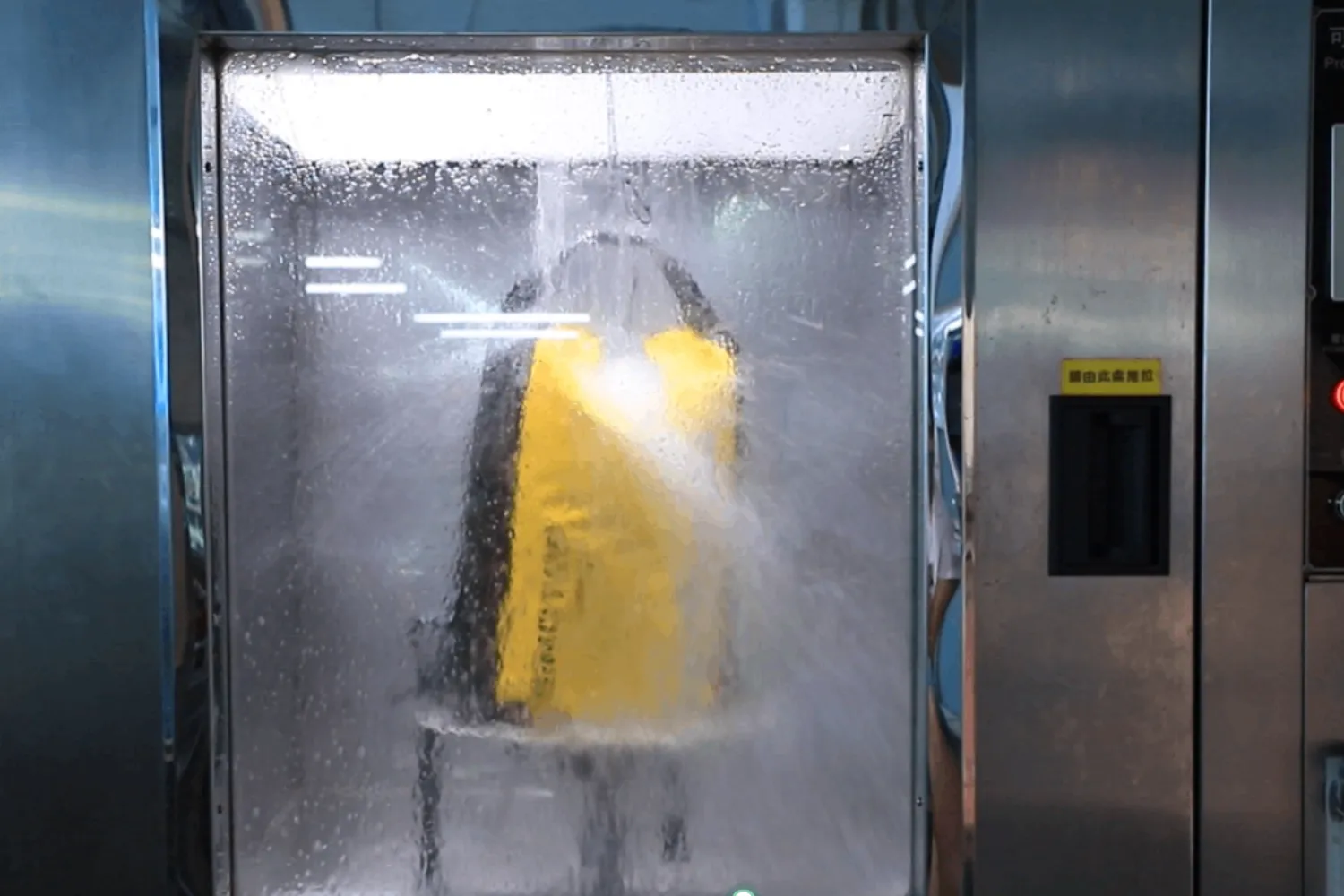
3. Water Resistance Testing
Testing should reflect the intended application.
Possible methods include:
- Water spray or water-drop testing for basic water resistance.
- Controlled water exposure testing for finished products.
- Immersion testing when temporary submersion protection is required.
- Air-leak or inflation testing as a supplementary inspection method for suitable bag designs.
Each method has different limitations.
For example, an air-leak test may help identify certain construction defects, but it does not automatically establish an official waterproof rating.
Similarly, a product that passes a splash test should not be advertised as suitable for prolonged immersion.
If buyers require a specific IPX rating or other defined waterproof performance level, the complete product should be tested under the corresponding standard and conditions.
7. Questions Buyers Should Ask Waterproof Bag Manufacturers
Before placing an OEM or ODM order, buyers should understand how the supplier plans to construct the bag.
Here are some useful questions:
1. Which Joining Method Do You Recommend for This Material?
Ask whether the selected material is suitable for HF welding, sewing, or another bonding method.
2. How Are the Seams Constructed and Sealed?
Request details about welded seam structures, seam sealing tape, liners, and reinforcement methods.
3. How Do You Inspect Seam Quality During Production?
A reliable production process should include inspection of critical joints and construction details.
4. What Waterproof Testing Can You Provide?
Clarify whether the supplier performs spray testing, water-drop testing, immersion testing, or other checks.
Also confirm whether the test applies to the material, seam sample, or complete finished bag.
5. Can You Provide a Sample for Evaluation?
A pre-production sample allows buyers to inspect the construction, closure system, material quality, and overall waterproof performance before moving into bulk production.
These questions can help buyers compare suppliers based on actual manufacturing capabilities rather than marketing claims alone.
Final Thoughts
HF welding and sewing are both useful manufacturing methods for waterproof bags, but they serve different construction needs.
HF welding is particularly suitable for compatible PVC and TPU materials when a bonded seam without traditional needle holes is required.
Sewing offers greater flexibility for woven fabrics and complex backpack structures, while additional seam sealing or waterproof construction features can help achieve the required water protection.
For brands developing custom waterproof bags, the best manufacturing method should be selected based on material compatibility, product design, intended use, and verified performance.
At CarryEase Outdoors, we support custom waterproof bag development with material selection, construction planning, and product customization options.
Whether you are developing a welded PVC dry bag, a lightweight TPU backpack, or a hybrid waterproof gear bag, choosing the right construction method is an important step toward creating a reliable product.